
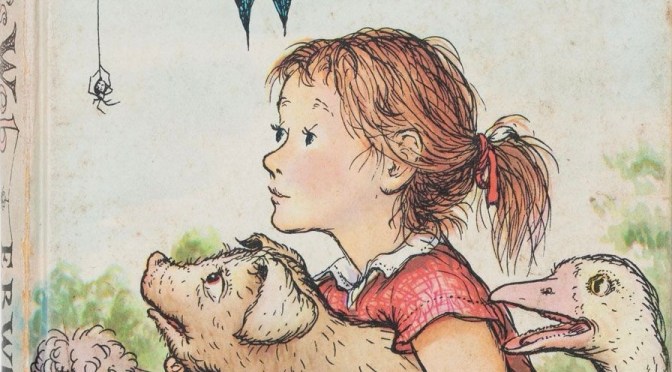
.
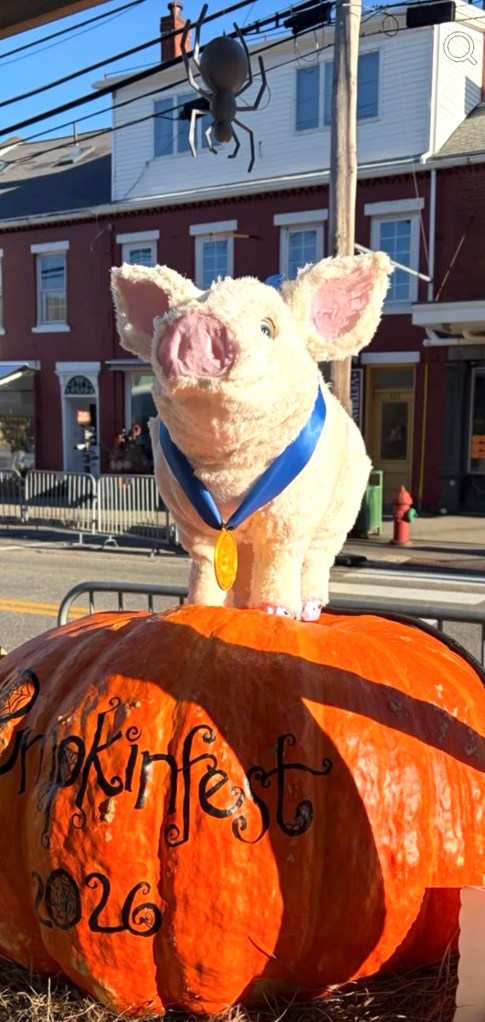
I posted some photos of the pumpkins from the annual festival in Damariscotta recently… and among them was Wilbur.
.
.
With Charlotte, the beloved spider from the classic children’s story above his head.
I dropped some literary trivia that the story was written in Maine, about two hours up the coast from our home and thought I’d share some more history.
.
.
It really is a sweet origin story.
If you can get past the fact he had hundreds of baby spiders in his bedroom… by choice.
😳
.
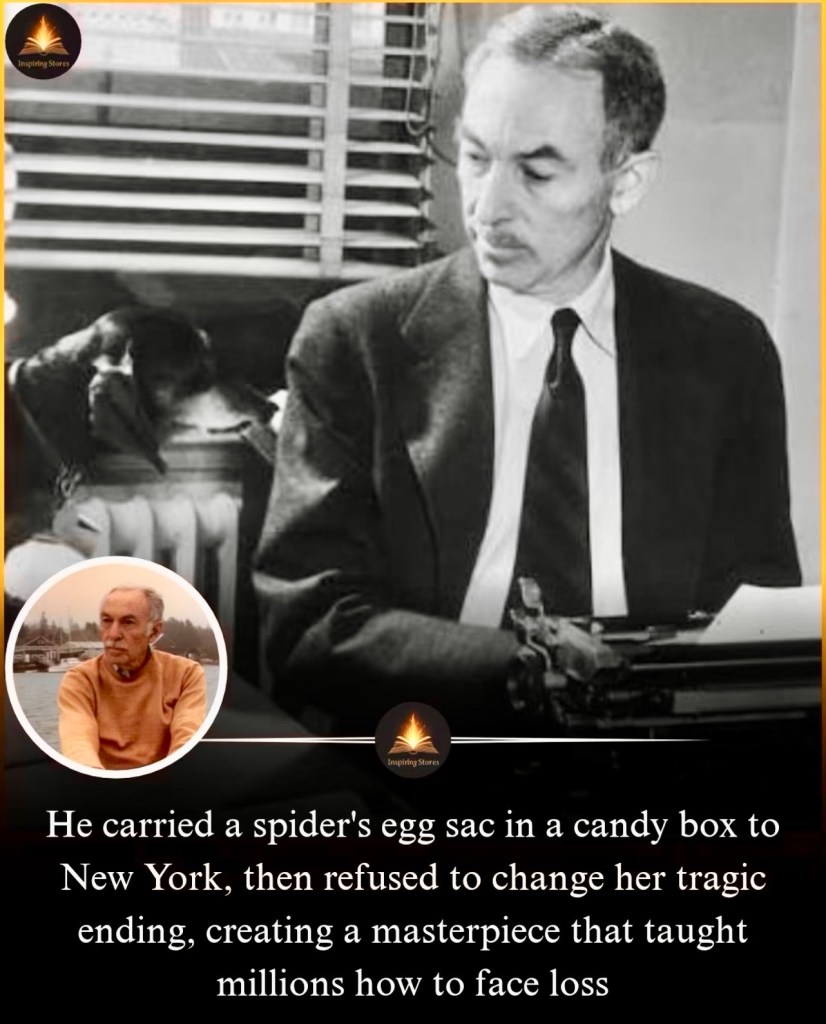
In the late 1940s, author and essayist E.B. White was performing routine farm chores in his barn in Brooklin, Maine, when he began observing an orb-weaver spider residing near the doorway. Night after night, he watched her repair her web and capture prey with quiet, mechanical devotion. In October, as her life neared its natural end, she spun a silk egg sac containing hundreds of eggs before disappearing.
Before leaving Maine for New York City that winter, White carefully removed the egg sac using a razor blade, placed it in a candy box with air holes, and set it on his bedroom bureau.
Weeks later, hundreds of microscopic spiderlings emerged, spinning delicate silk lines across his hairbrush and scissors. Moving by the devotion of a creature constructing a future she would never live to see, White resolved to write a story about friendship, mortality, and survival.
Determined to ground the narrative in factual accuracy, White studied the works of arachnologist Willis J. Gertsch and John Henry Comstock’s The Spider Book. Discovering the spider in his barn was Araneus cavaticus, he named his protagonist Charlotte A. Cavatica.
Published in 1952, Charlotte’s Web tells the story of Wilbur, a runt pig saved from slaughter by Charlotte, a barn spider who weaves praised words into her web, including SOME PIG, TERRIFIC, and RADIANT.
Exhausting her remaining strength at the county fair, Charlotte lays her egg sac, bids Wilbur farewell, and passes away alone at the fairgrounds after securing his future.
When editors urged White to alter the ending to spare young readers, he adamantly refused. He insisted that the emotional weight and integrity of the story depended on Charlotte’s mortality, giving children an honest reflection on grief, devotion, and friendship.
Decades later, when White recorded the unabridged audiobook, it took him seventeen takes to read Charlotte’s final scene without his voice breaking.
Passing away in October 1985 at age eighty-six, E.B. White left behind a literary masterwork that taught generations of children that love and care poured out for others endure long after we are gone.
.
❤️
.

