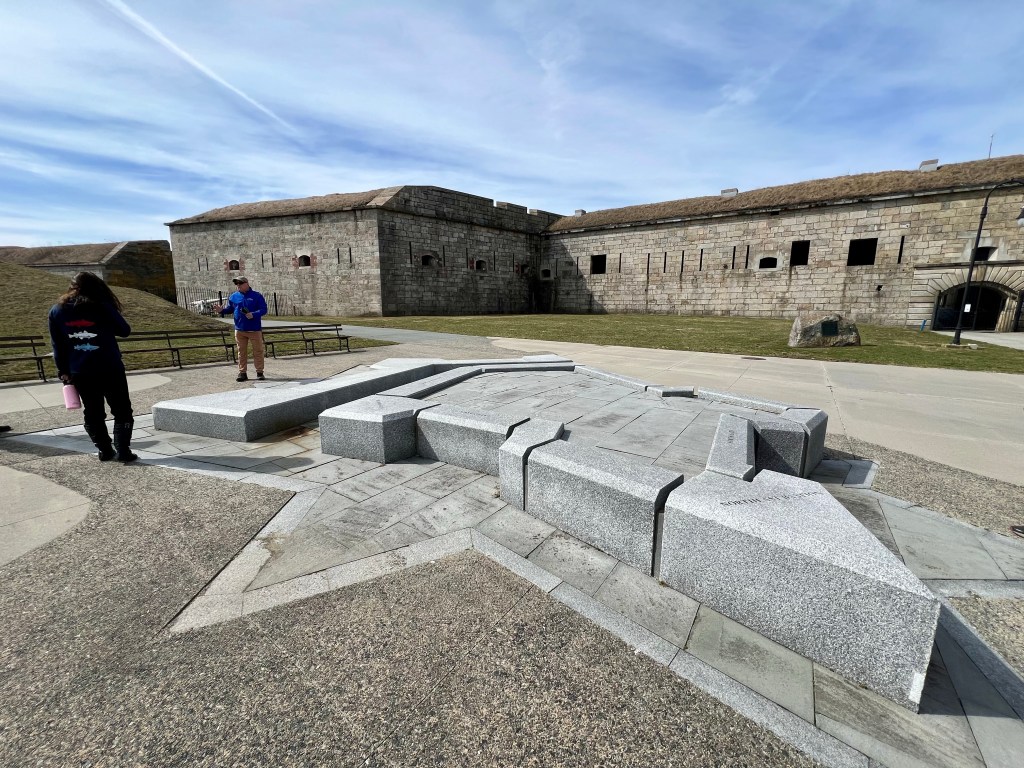
The tour of the fort starts in front of this granite block facsimile.
.
.
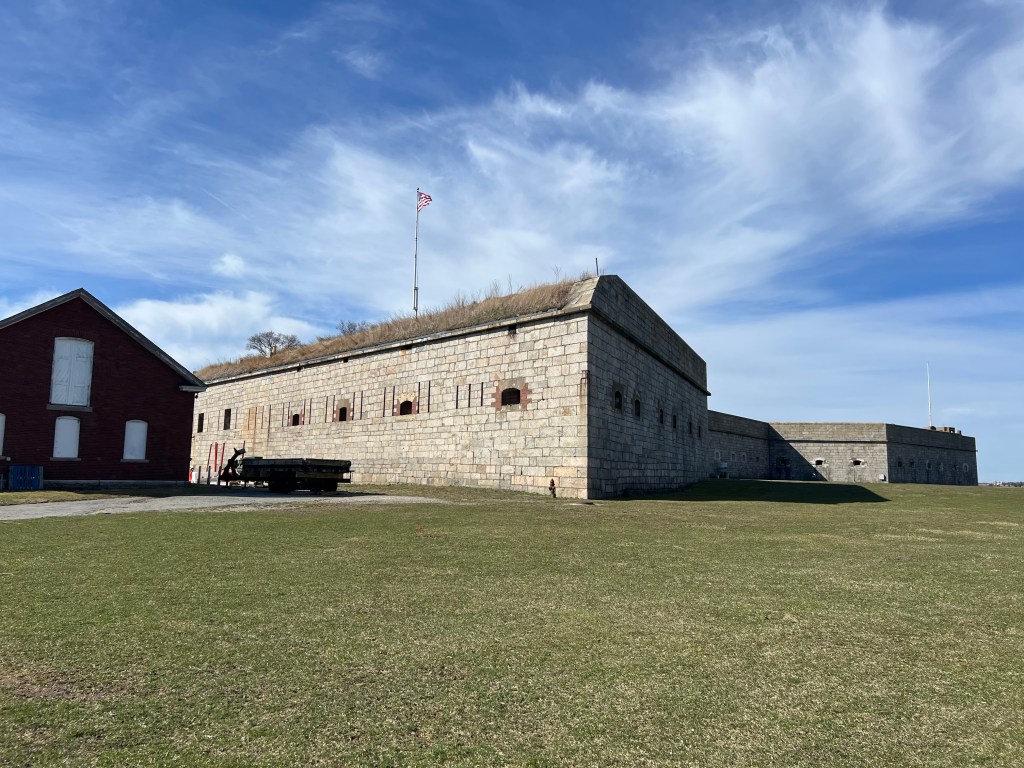
It represents the current fort which replaced the original build from 1799 that was named to honor President John Adams. Construction began in 1824 and was completed by 1857, though soldiers were stationed here in 1841. Designed by a French engineer who was an aide to Napoleon, it was a temporary site of the Naval Academy before the Civil War.
.
.
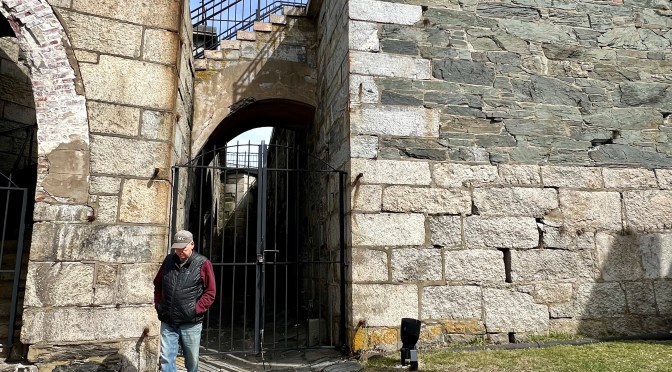
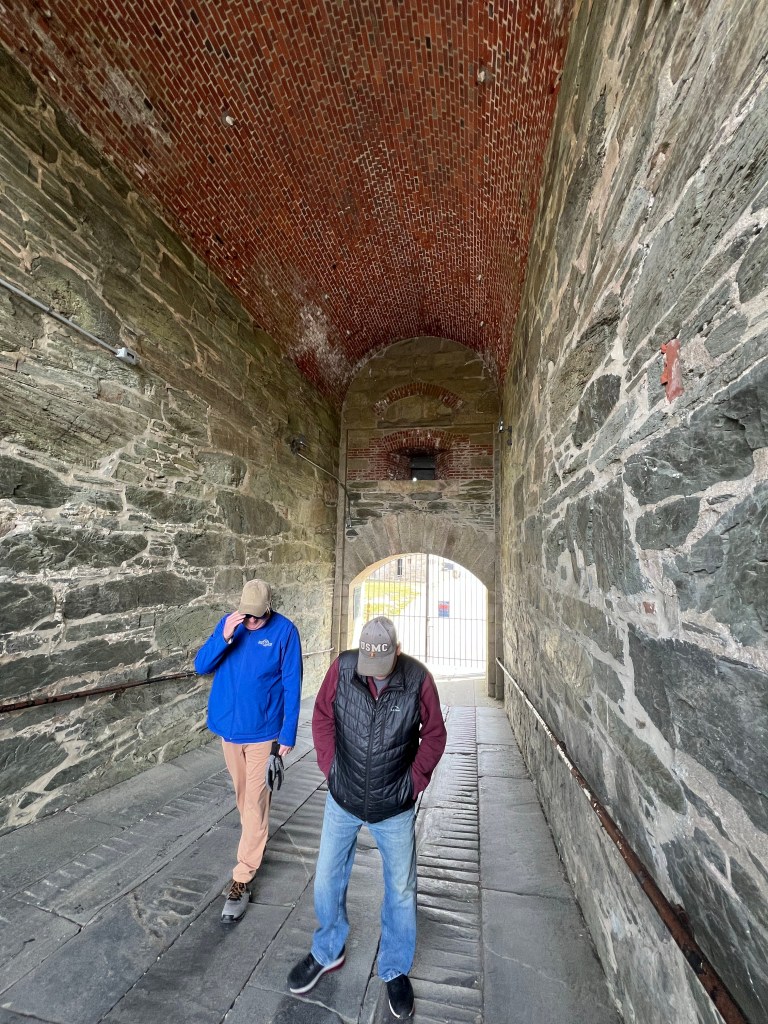
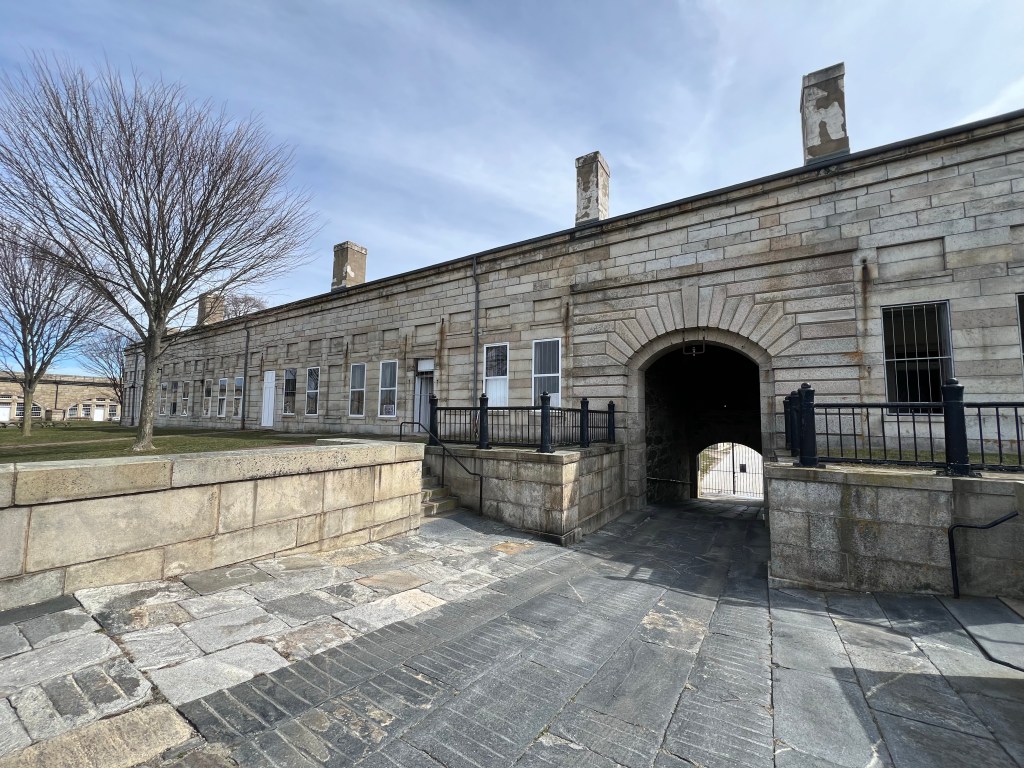
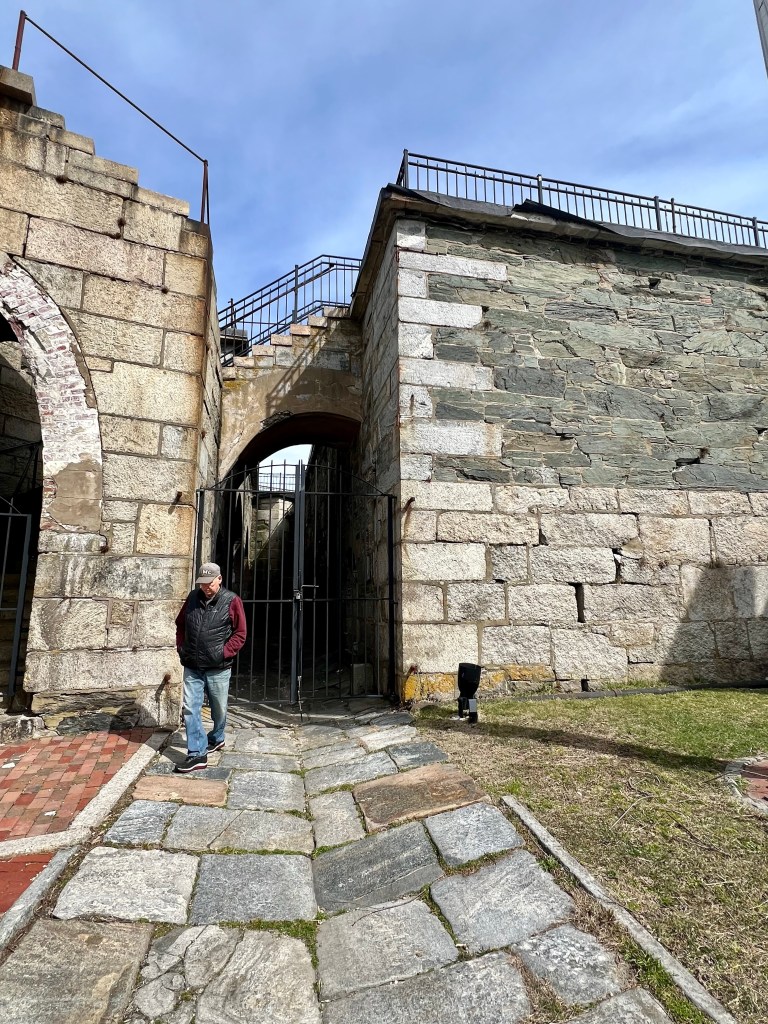
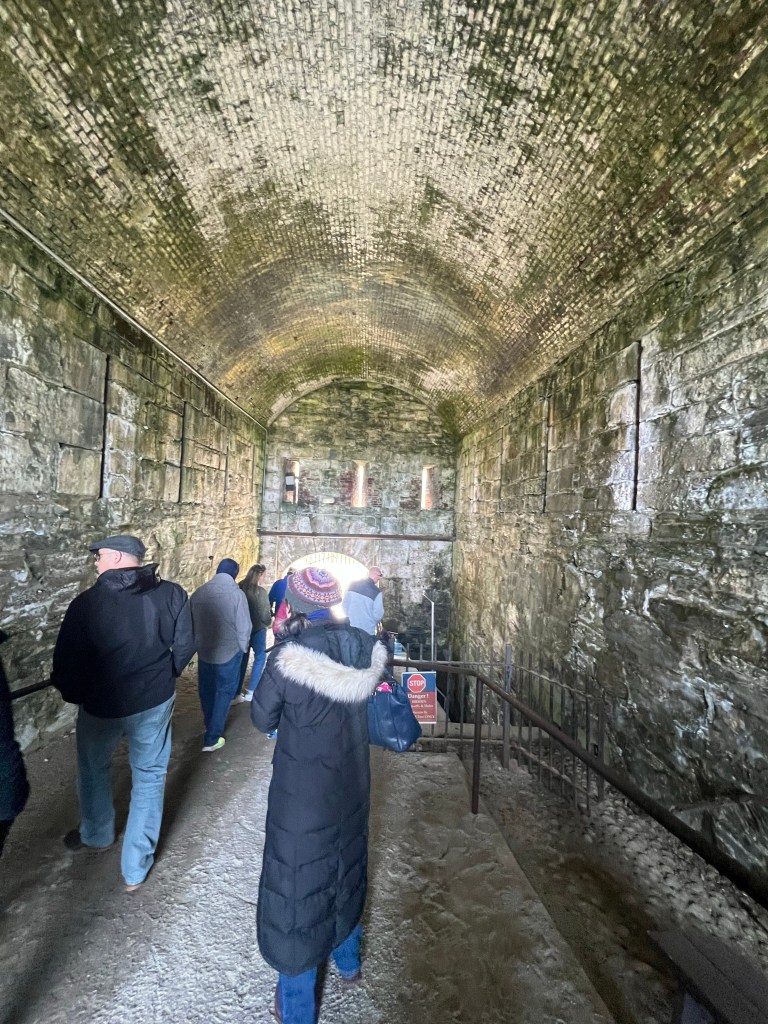
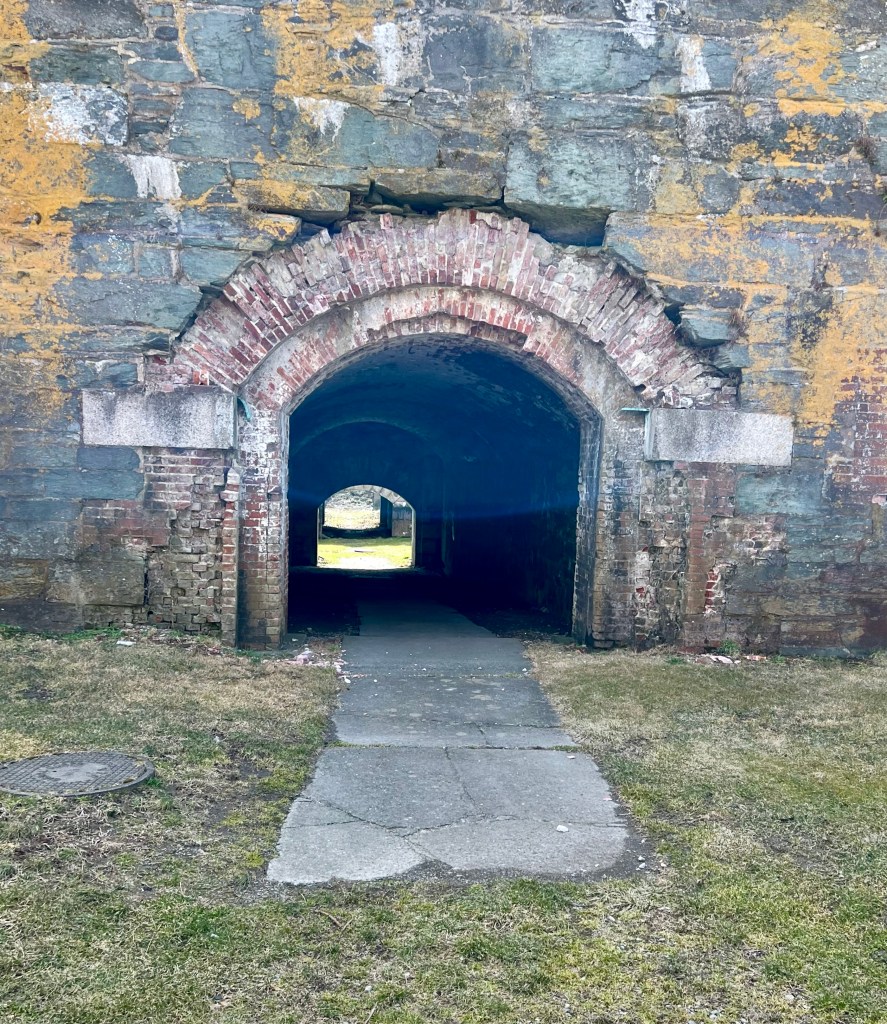
Entering through the east gate you’re surrounded by granite, shale and brick.
.
.
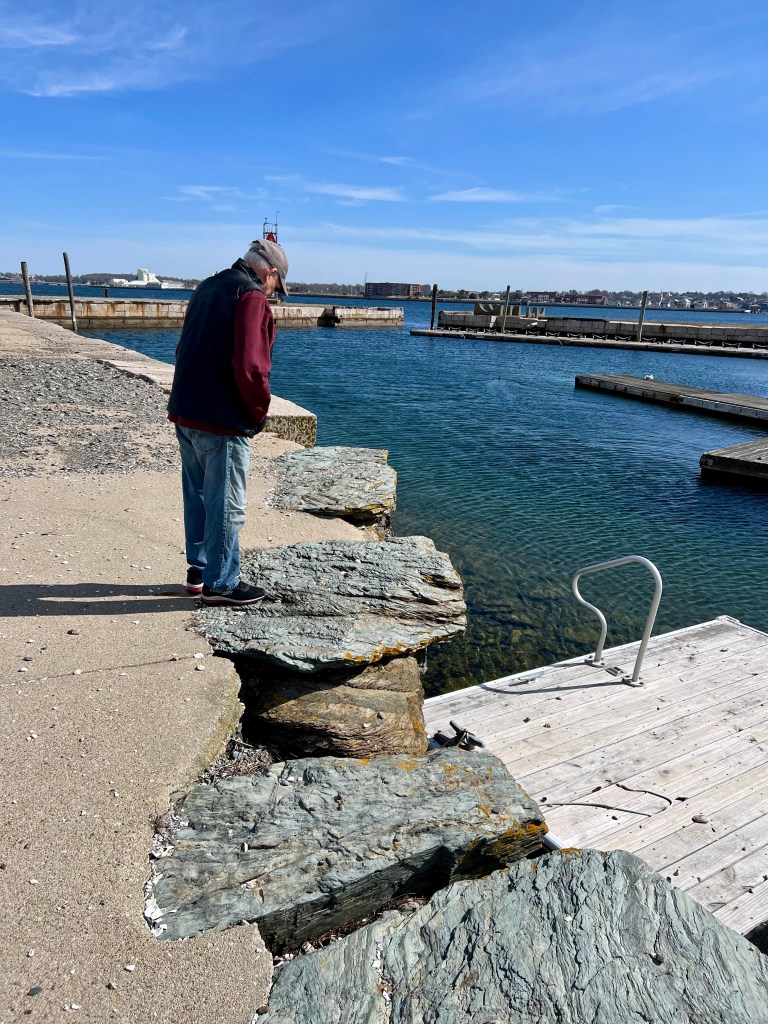
The grooves my husband is examining were cut to give traction to the mules and horses who were dragging supplies and canons up the ramp.
.
.
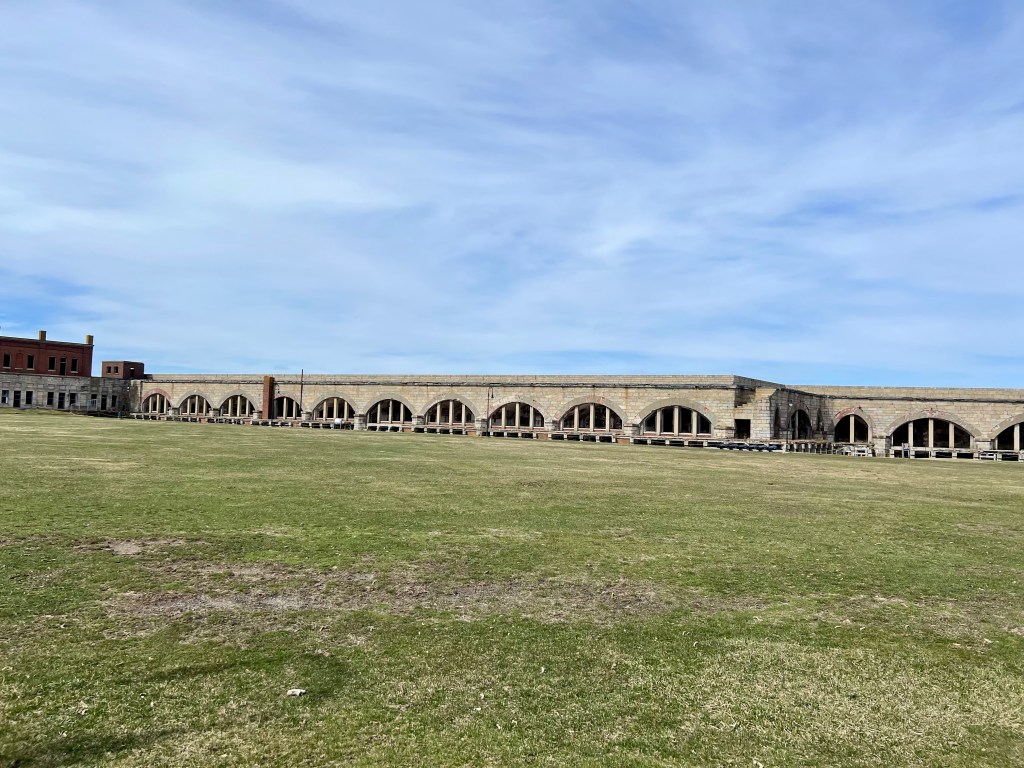
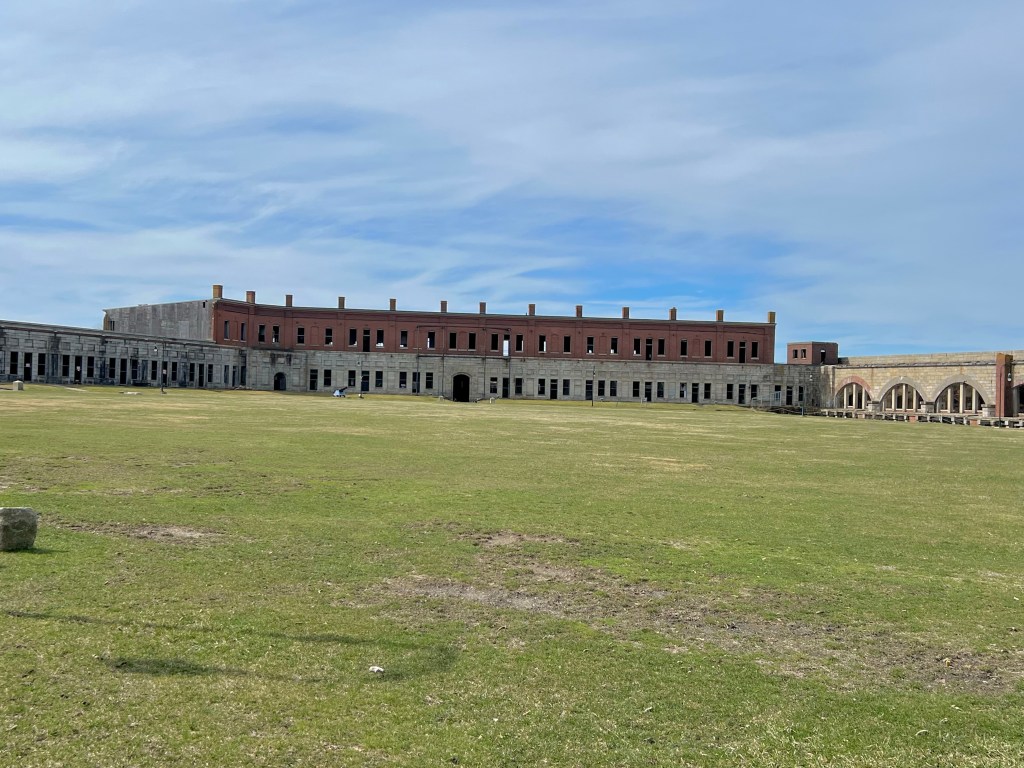
Fort Adams is an impressive place.
.
.
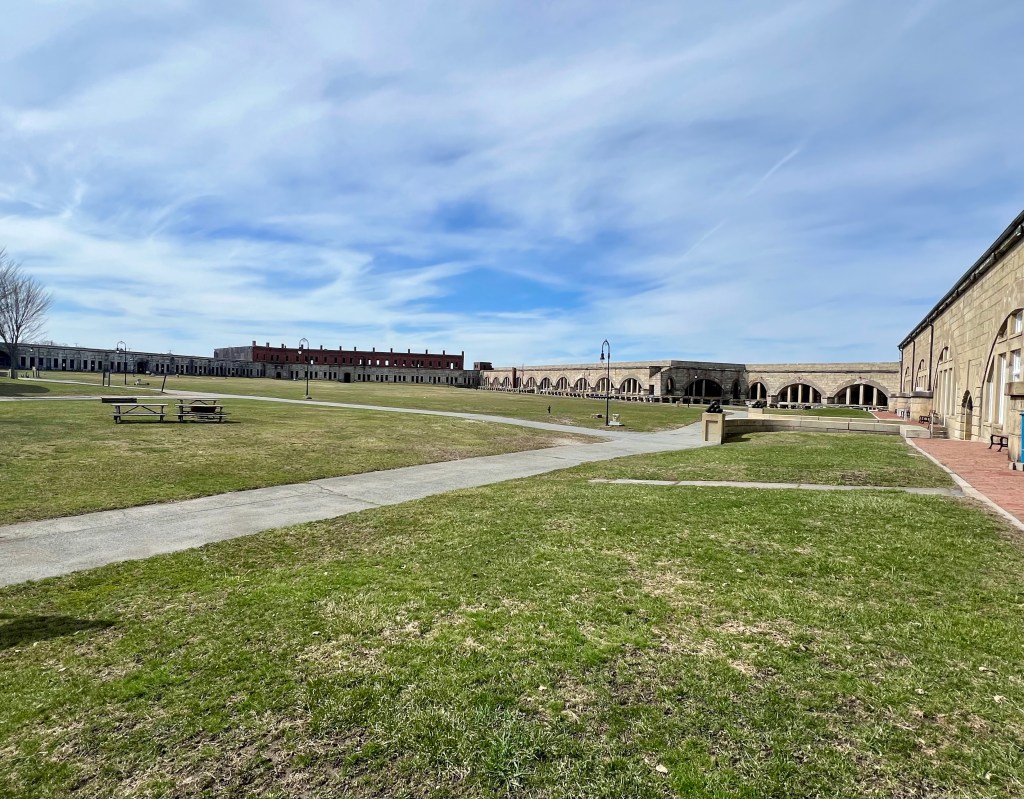
The parade field alone is over six and a half acres. For reference… Fort Sumter, Fort McHenry and Fort Ticonderoga could all easily fit inside.
.
.
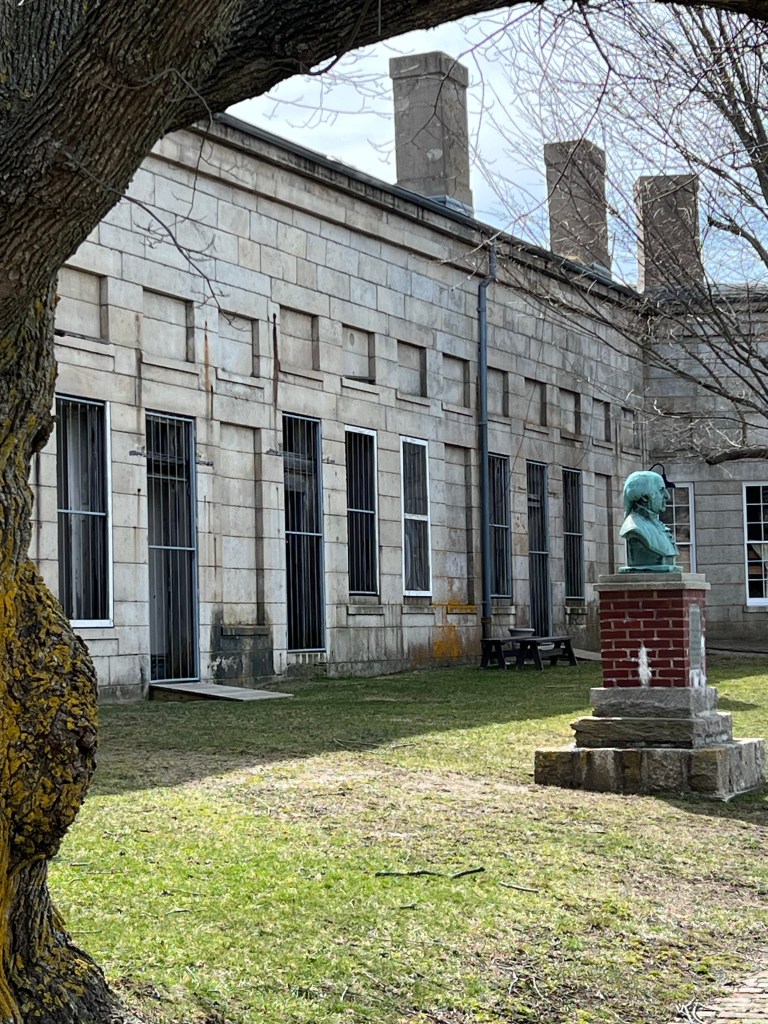
Behind the bust of John Adams are the officer’s quarters.
.
.
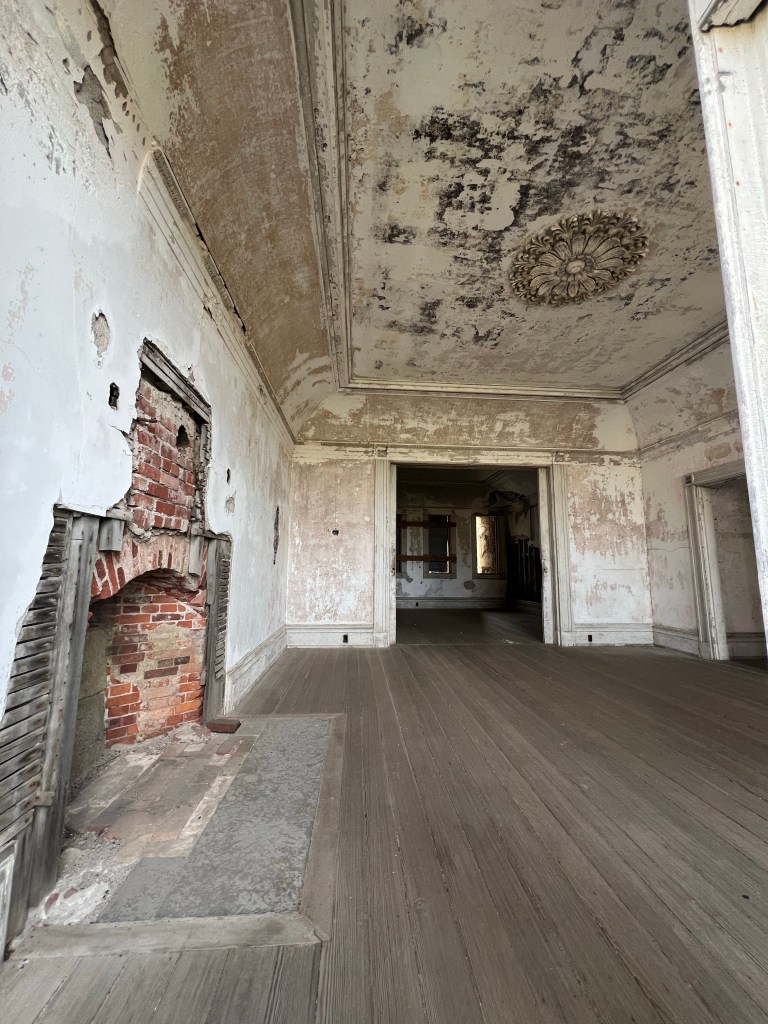
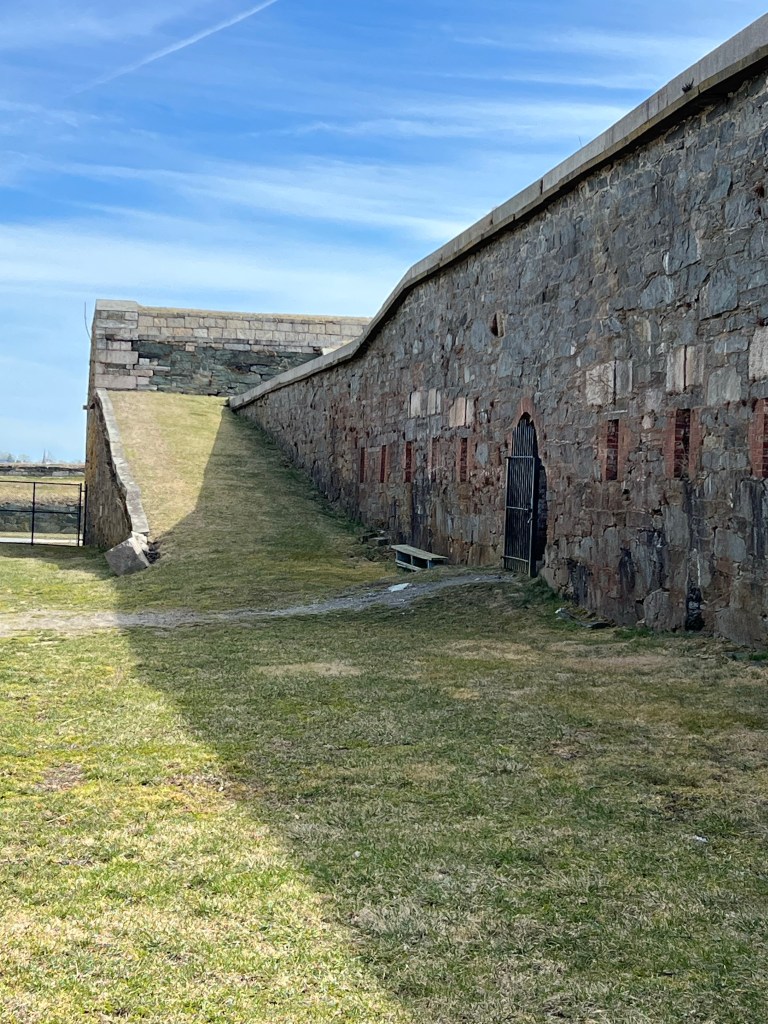
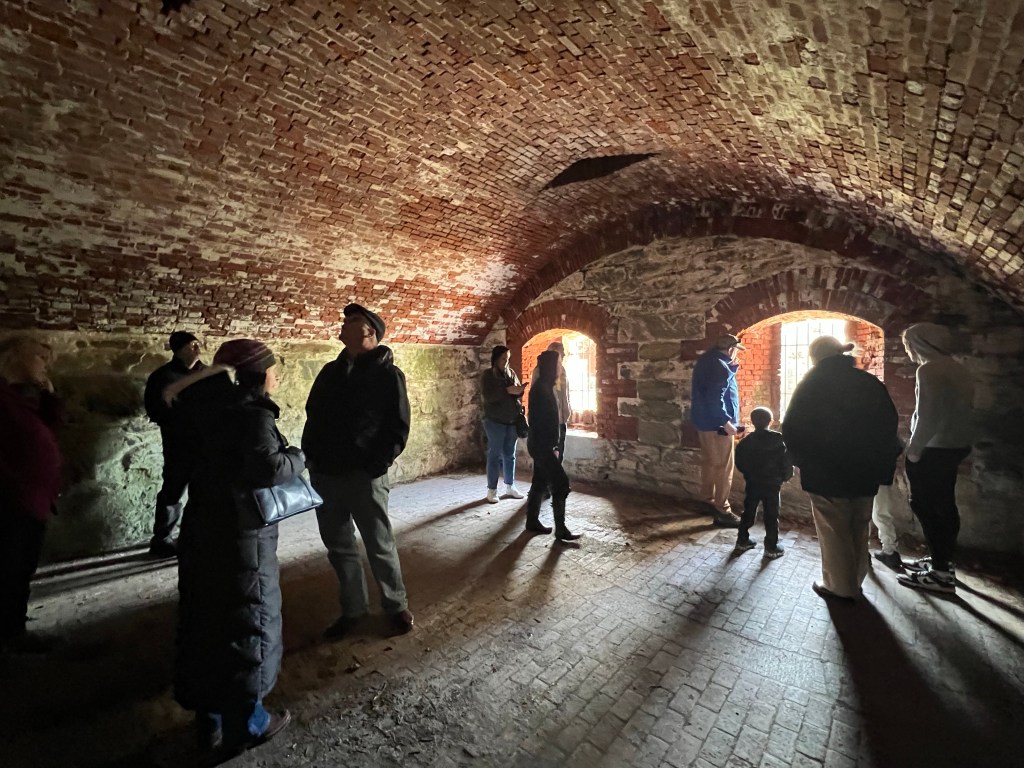
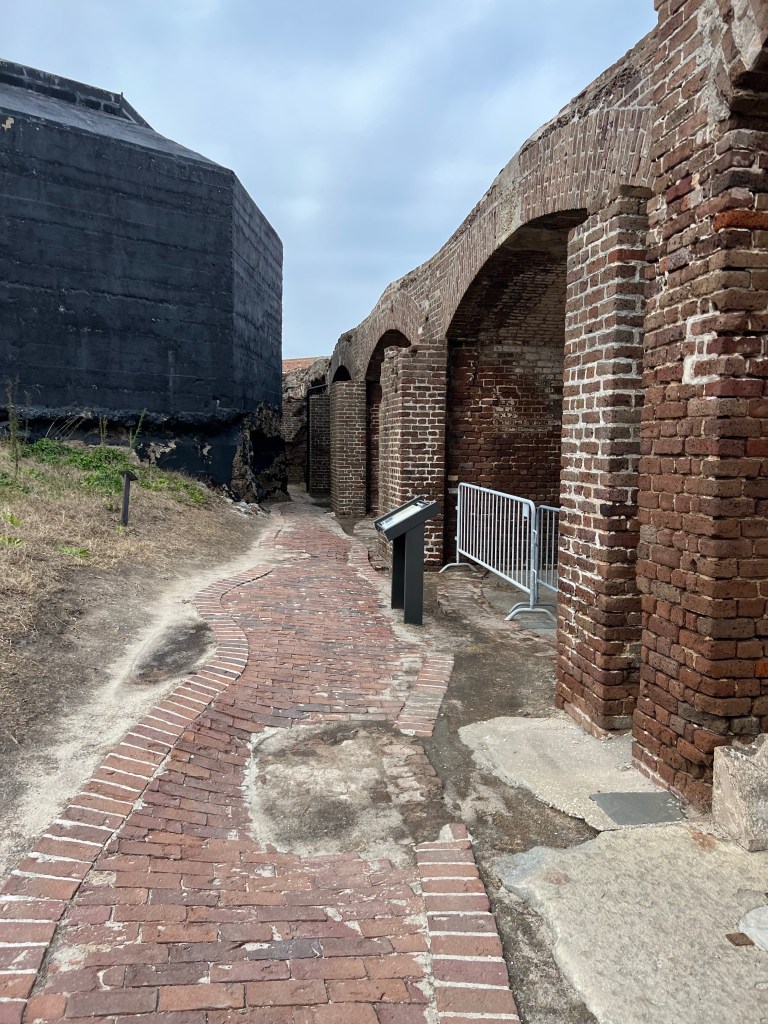
Some still in their original condition. Every room of the fort was defensible. See the light shining through in the back? That’s a rifleman’s slit.
.
.
I love history and have visited all the forts mentioned above, but strategically and for sheer firepower? Adams puts the others to shame.
.
.
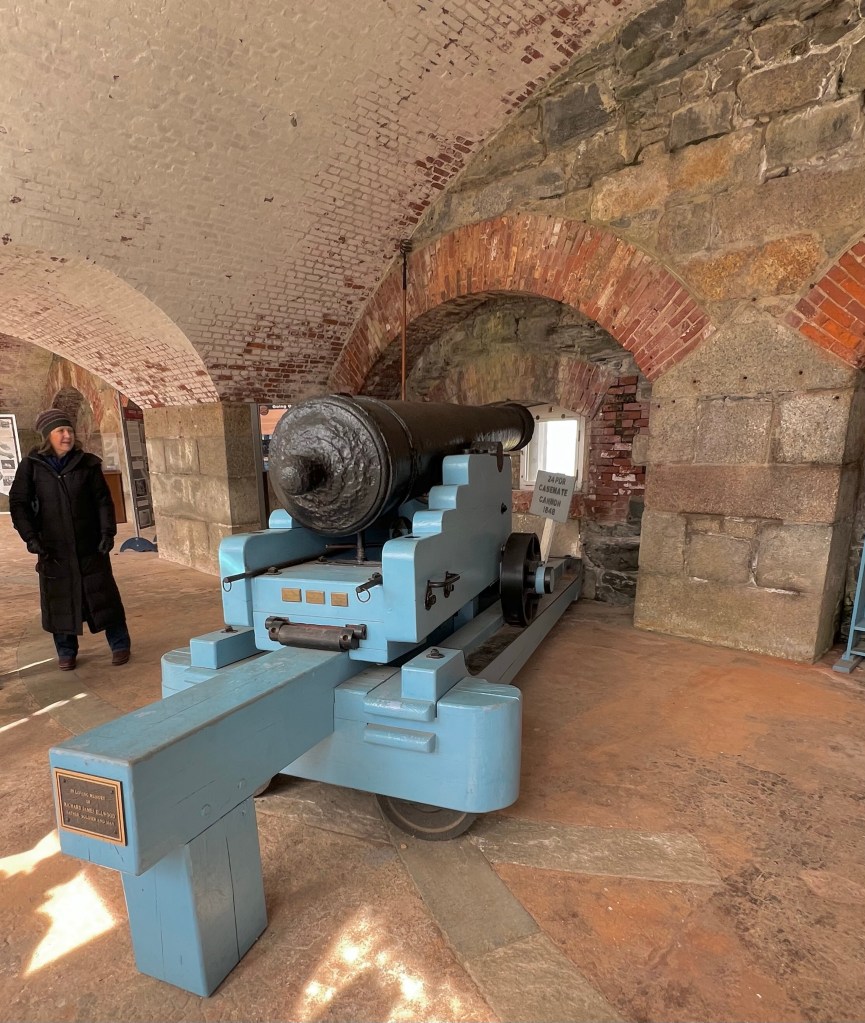
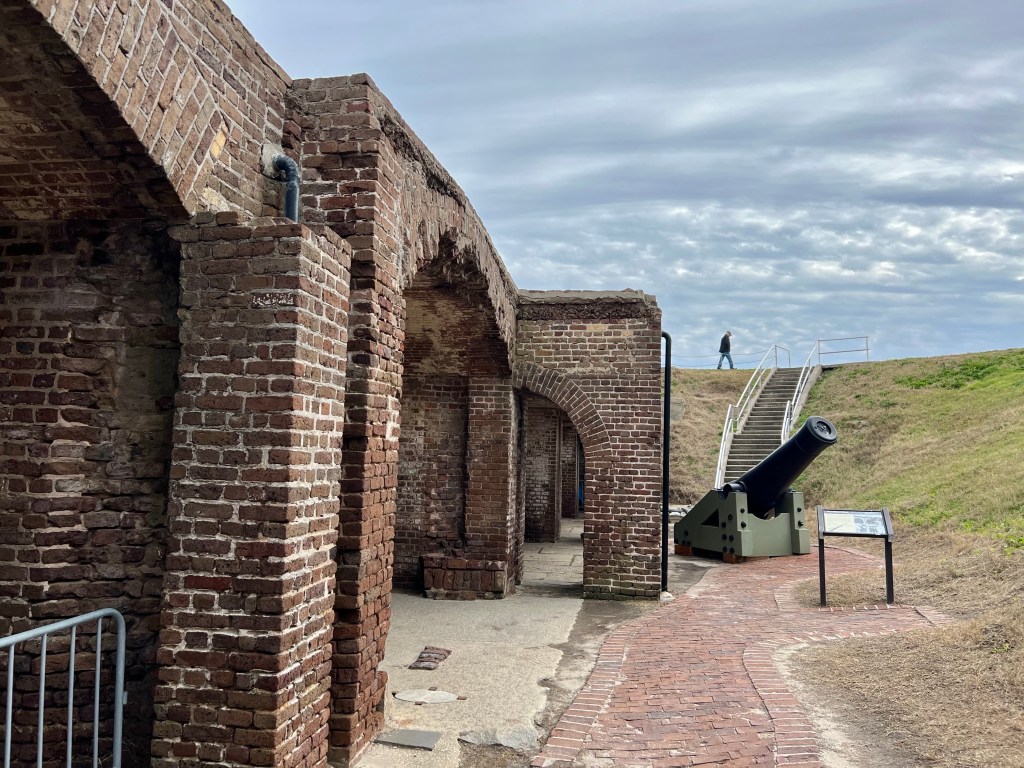
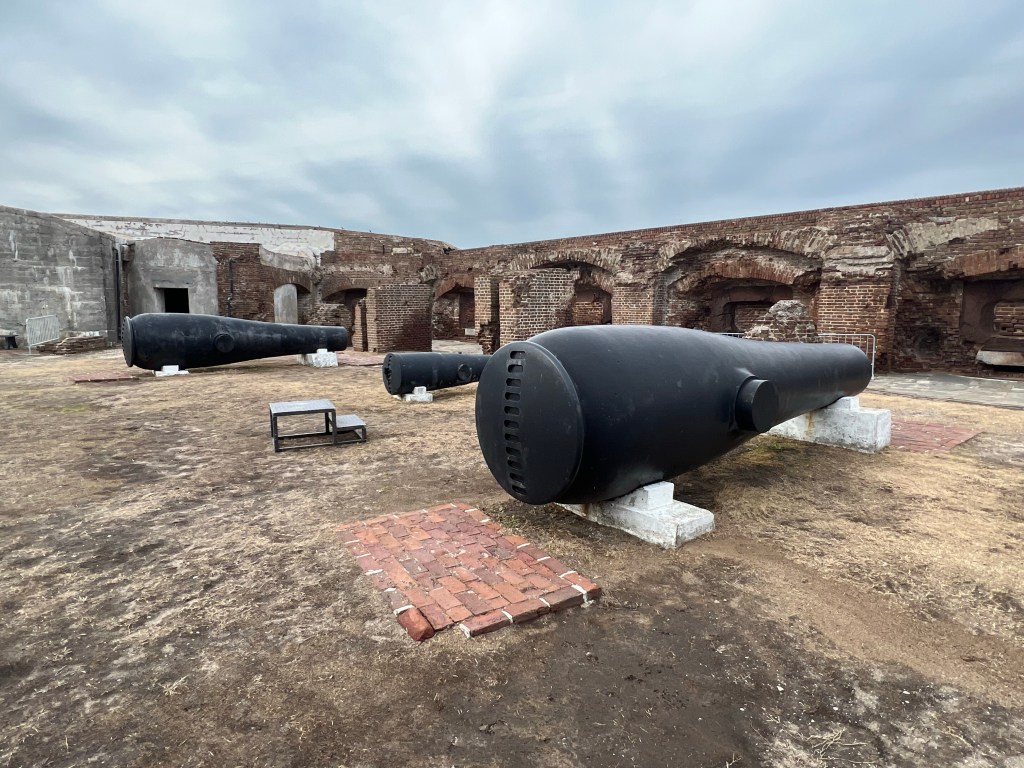
There were 117 canons on three tiers mounted in the west wall alone. This is a 32 pounder. A serious boomer and the reason most of its 8 man crews suffered severe hearing loss.
.
.
I won’t bore you with all the facts I find fascinating. For those who are interested, the full history is here.
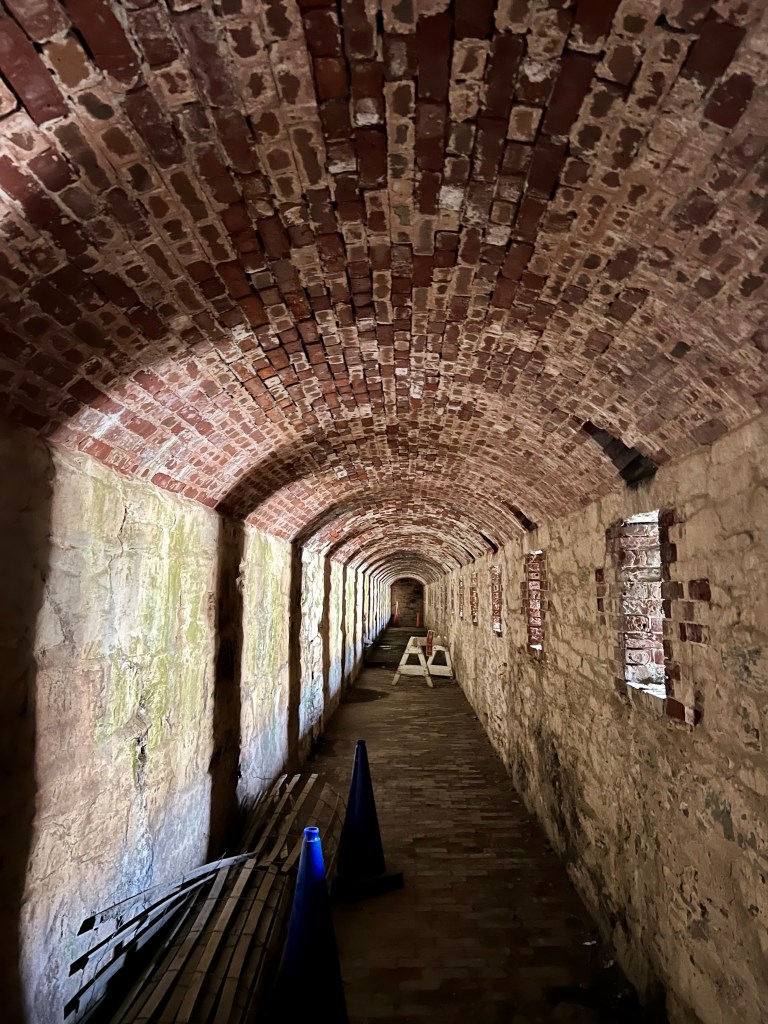
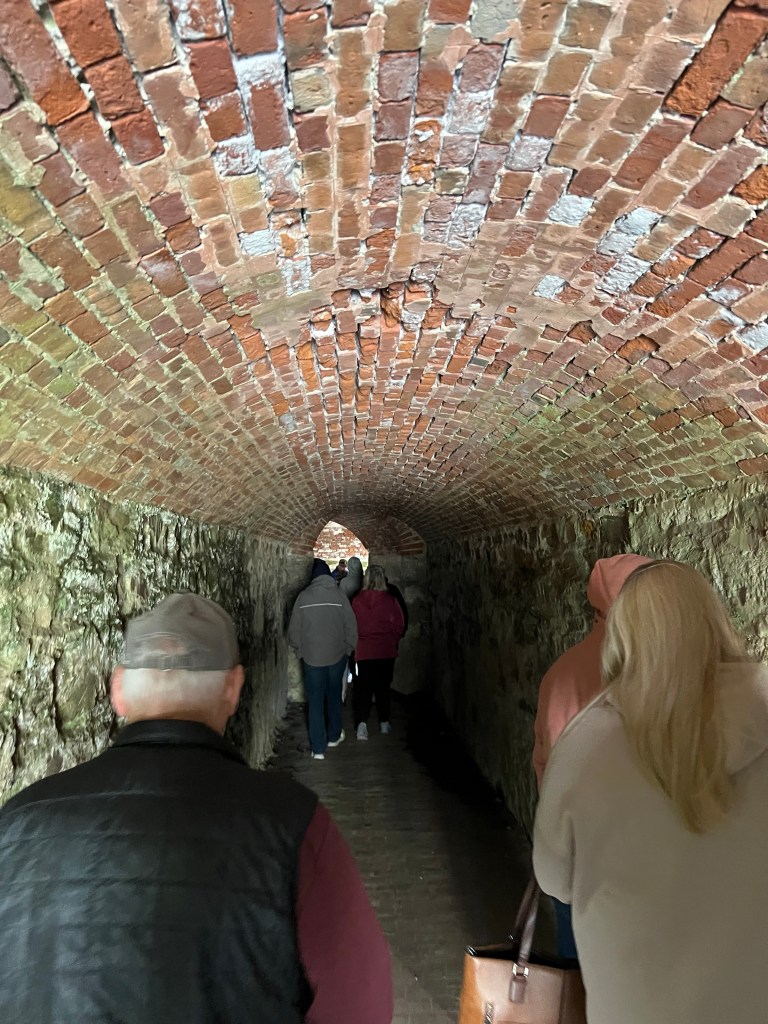
Back in the day, enemies who couldn’t breach the fort’s walls tried to tunnel underneath them and blow them up from underground.
.
.
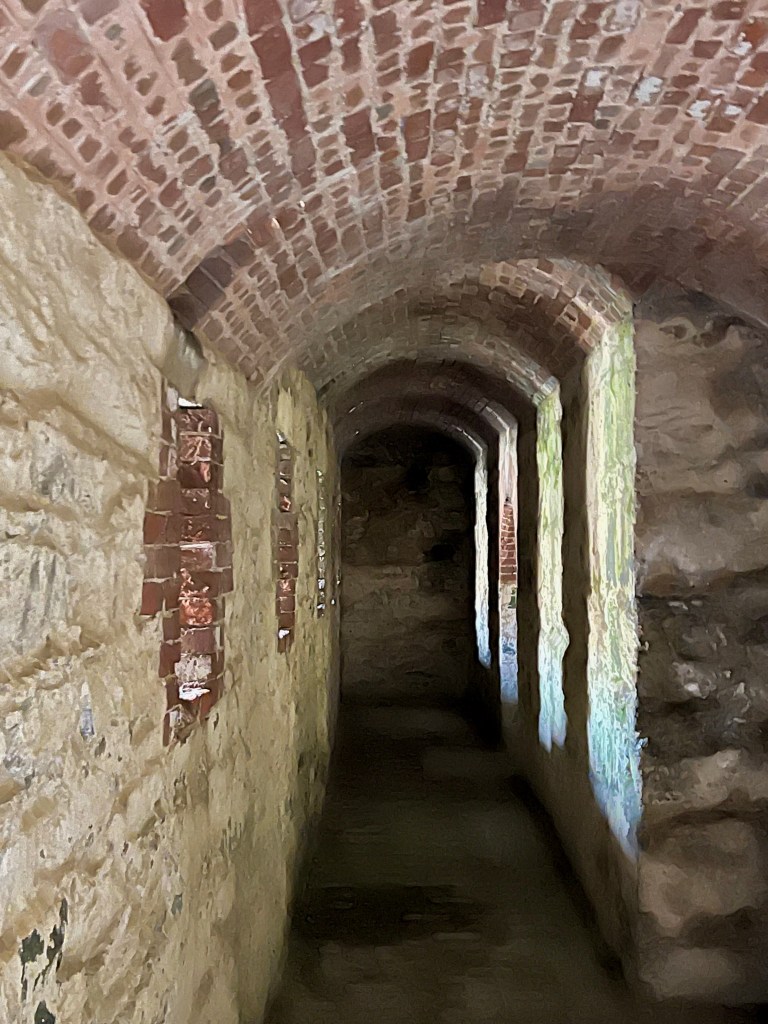
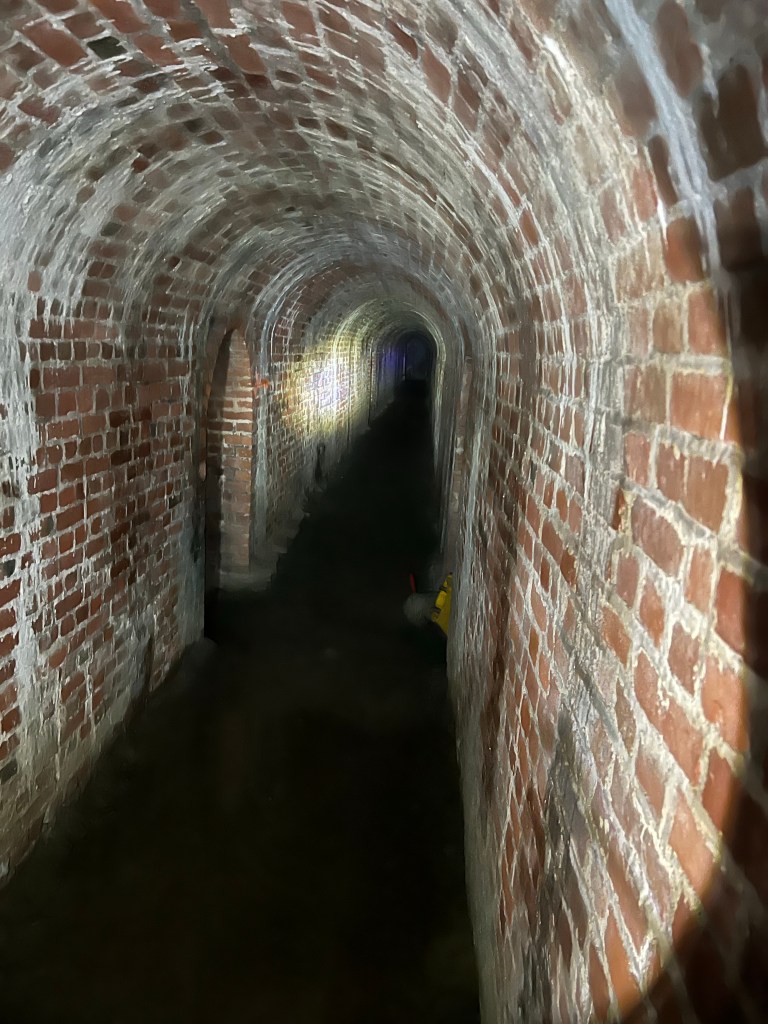
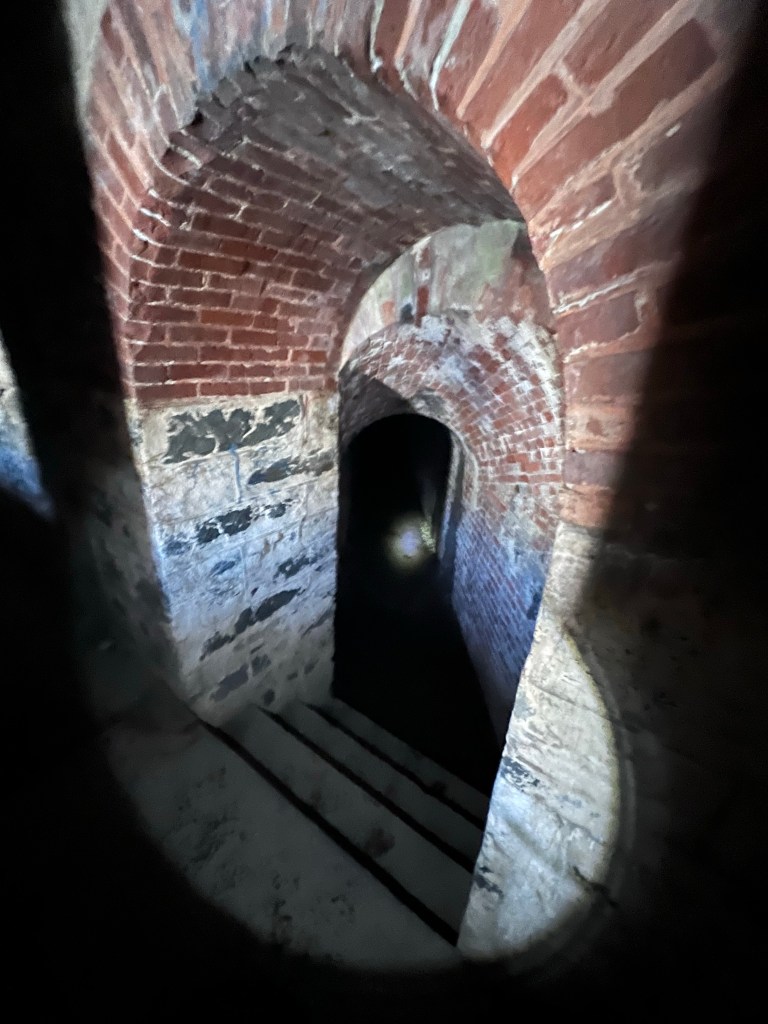
So a half mile network of tunnels was built and manned.
.
.
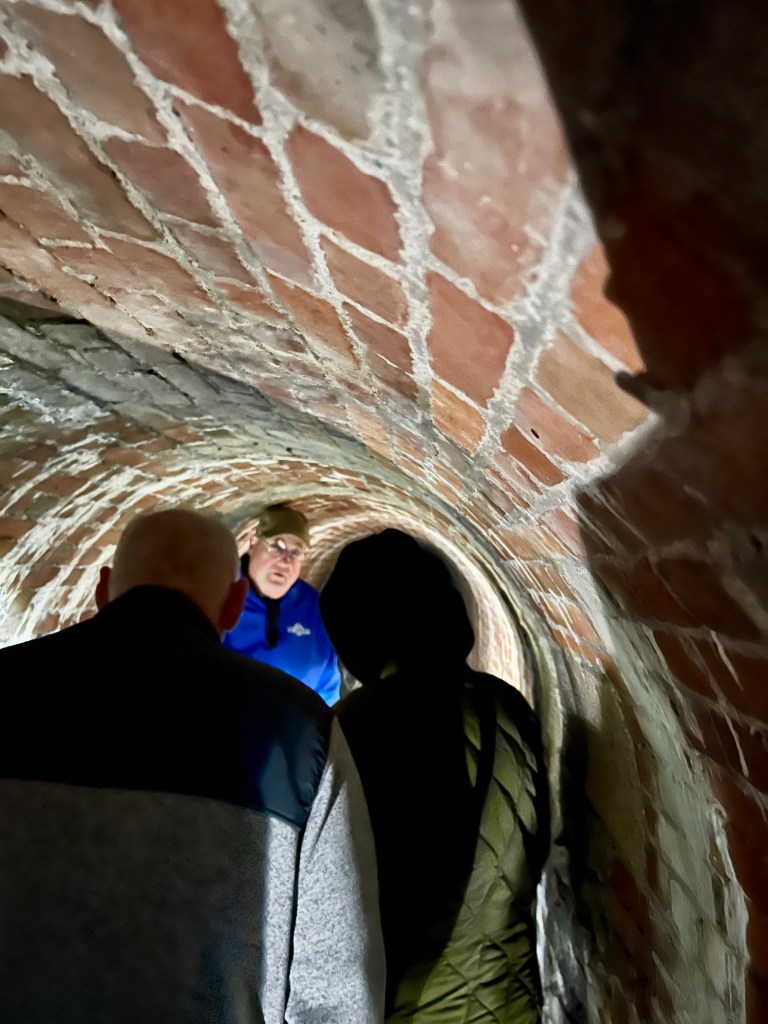
Ready made holes on the side made it easier to start a countermining attack.
.
.
It was dark and damp and the farther you went, the smaller it became.
.
.
A few people in our group had to turn back due to claustrophobia.
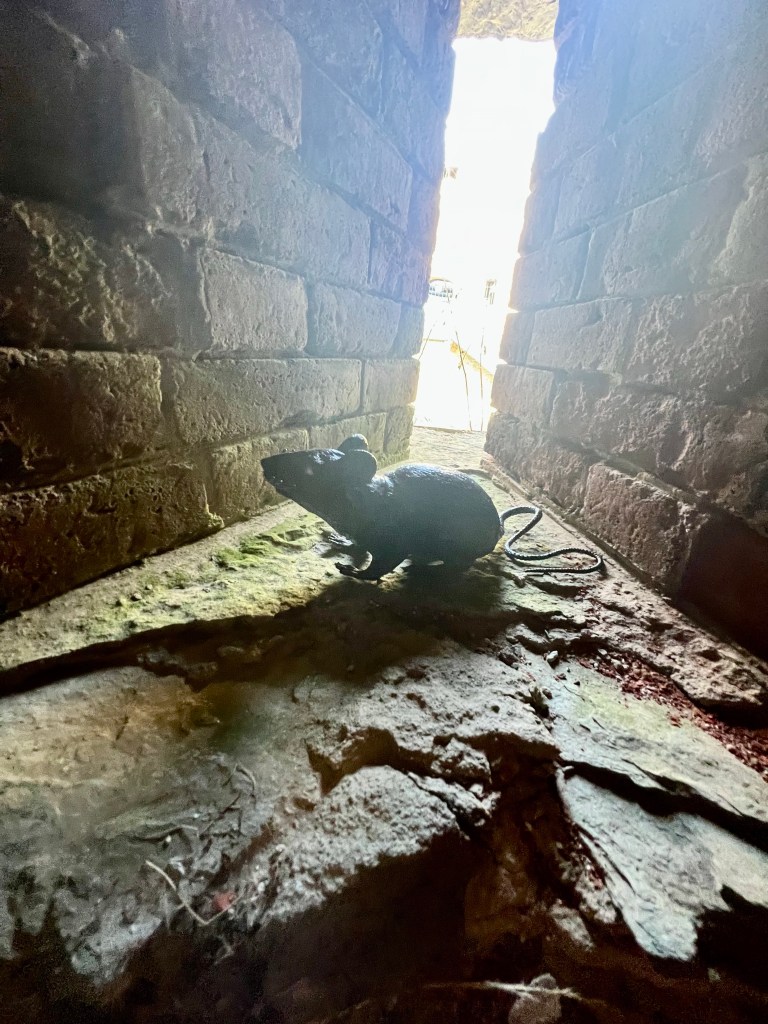
Rats?
.
.
This one was fake, but it was put there to remind tourists they’re never truly alone down here.
.
.
I could have happily explored the entire system…
.
.
But our guide brought us back to the light.
.
.
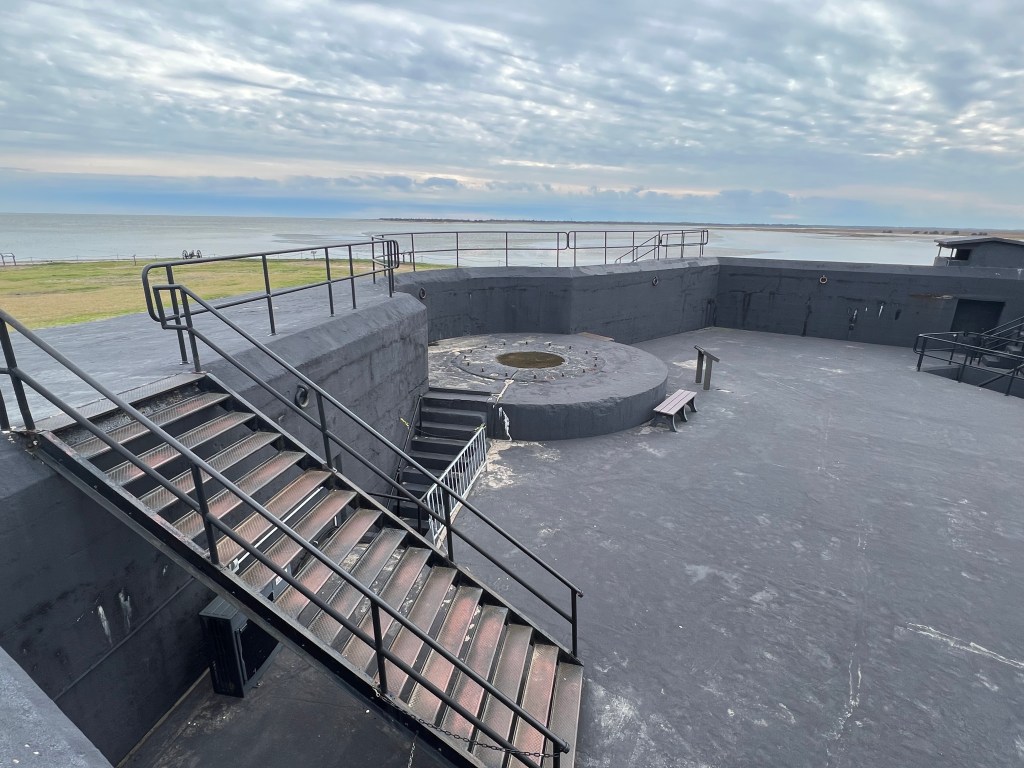
Fort Adams was designed to garrison 200 soldiers in peacetime and 2,400 in time of war. She could hold 468 cannon but was never armed or staffed at full strength. As a testament to her superb defensive planning, the fort never saw action and was decommissioned in the early 1950’s.
.
.
If you’re ever in the area, I highly recommend the tour. It’s ten dollars well spent.
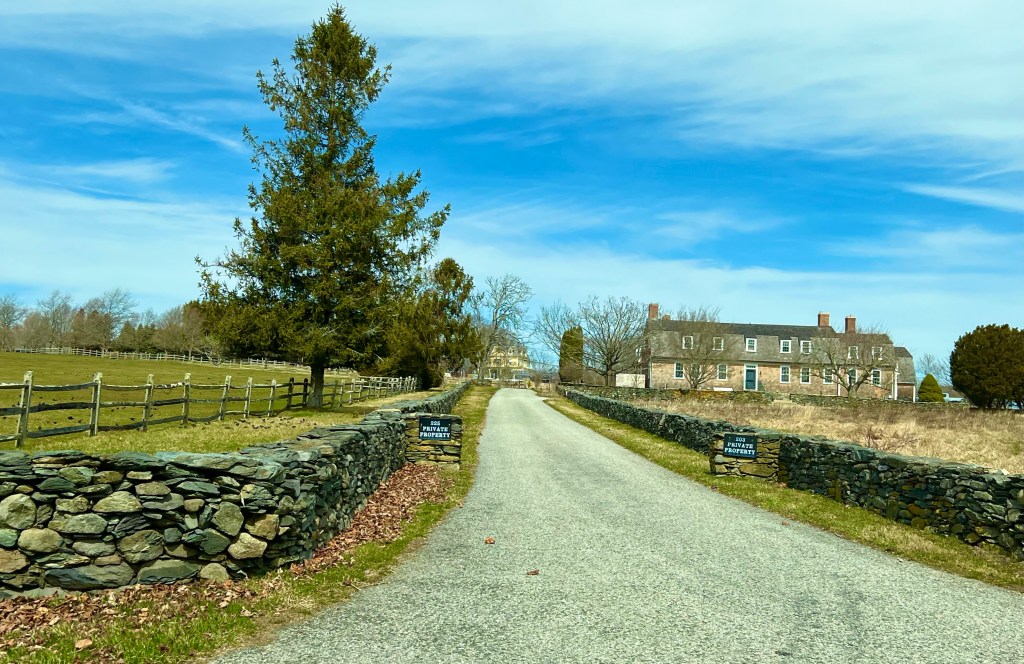
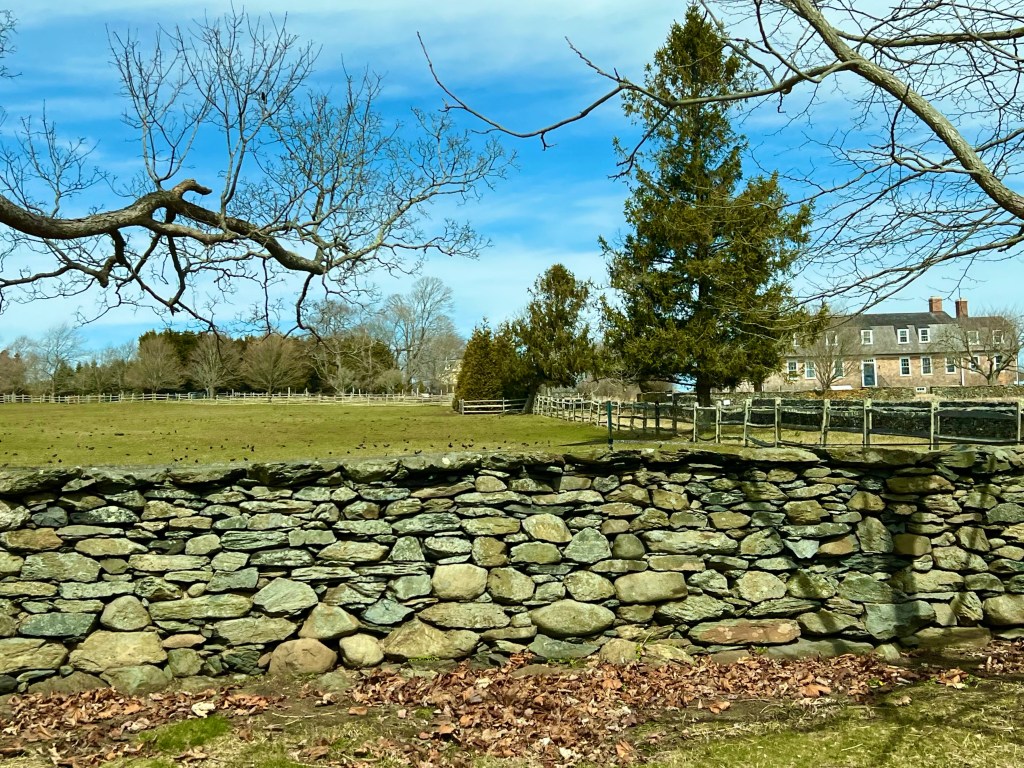
Leaving the fort, we passed a home with a stone wall.
.
.
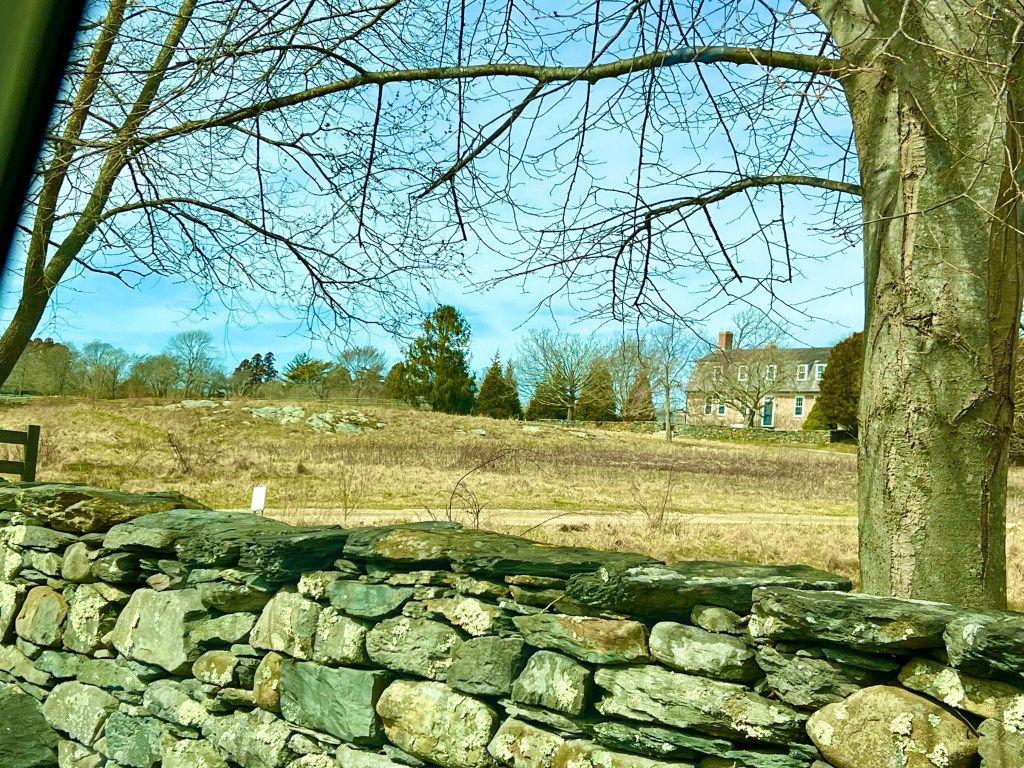
A stone wall that wrapped around the entire property…
.
.
Lined the driveway on both sides…
.
.
And seemed endless.. like many we would discover on our tour of this area.
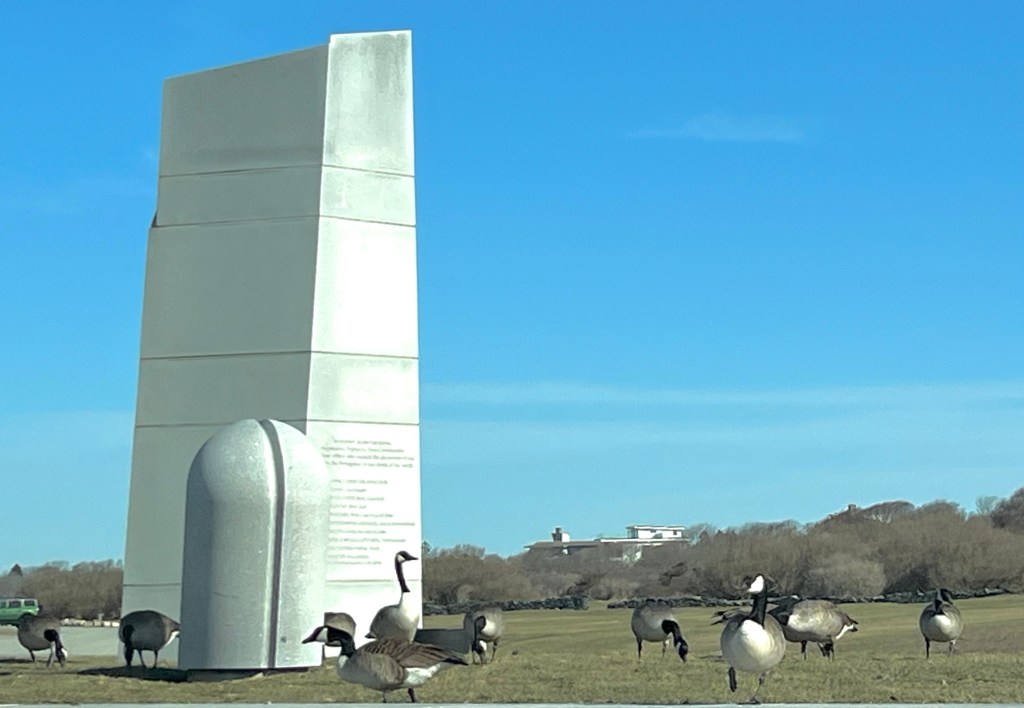
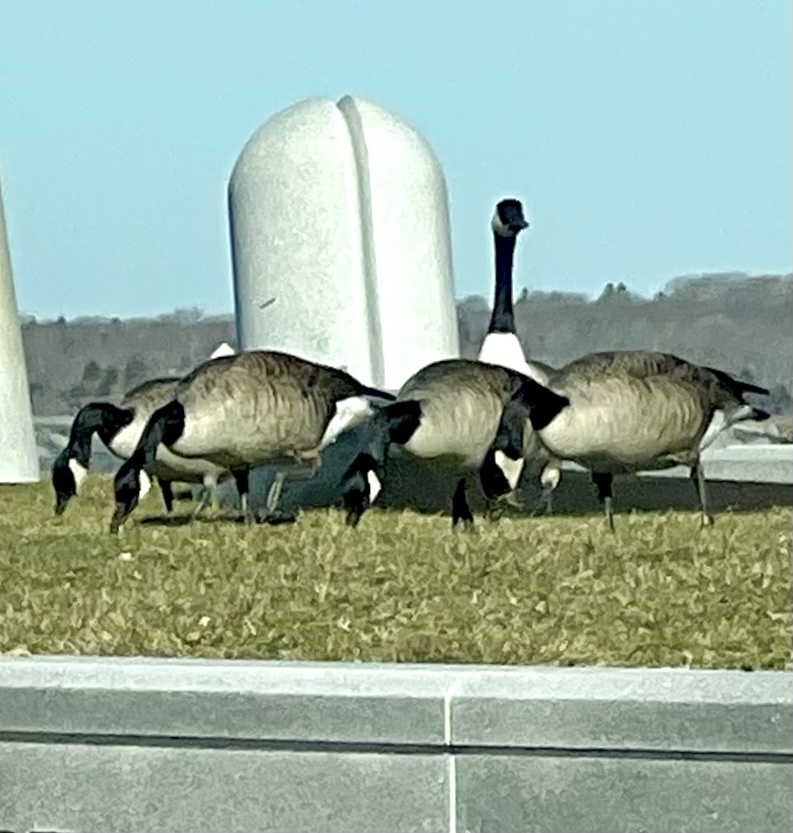
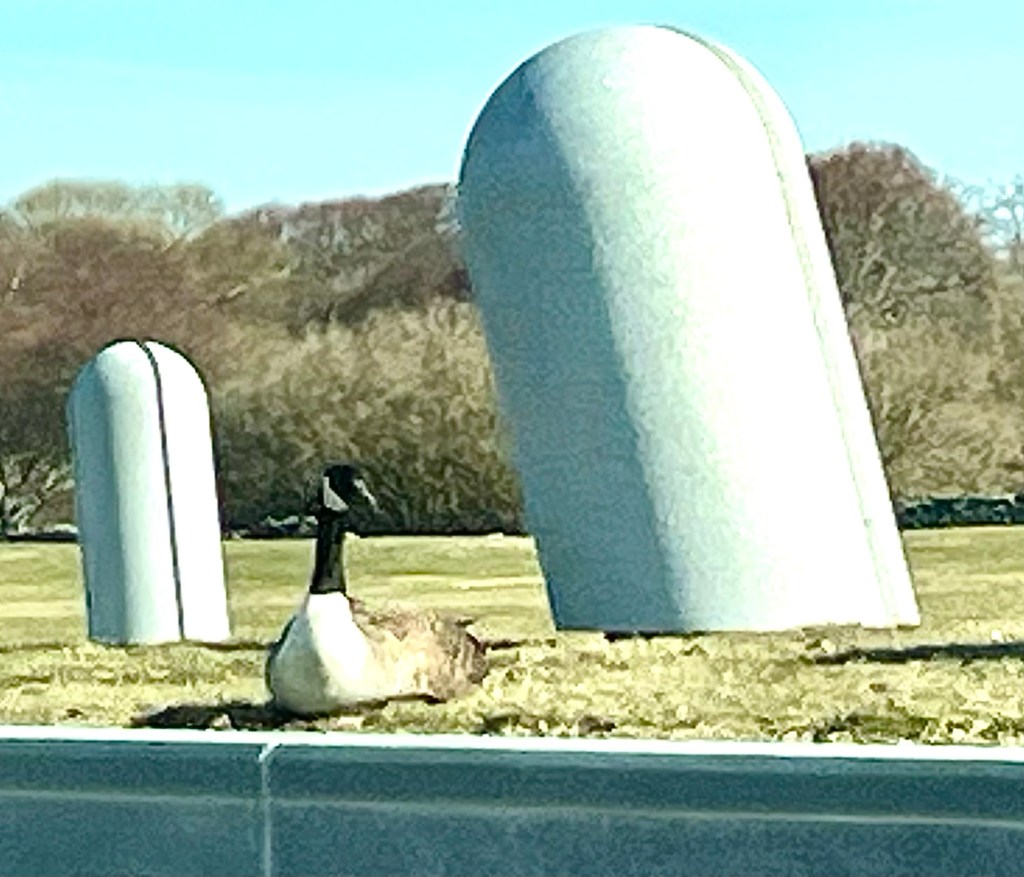
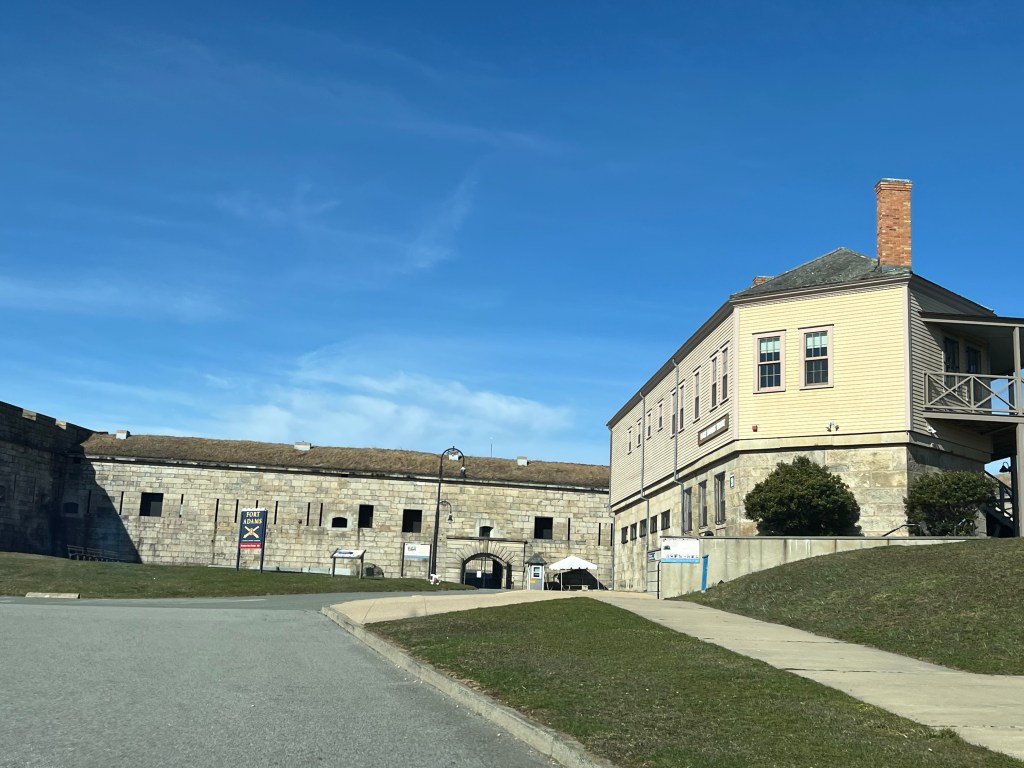
Next up on the list was Fort Adams, a coastal fortification built in 1824 at the mouth of Newport Harbor. On the way there we passed a memorial to Portuguese sailors, which of course….
.
.
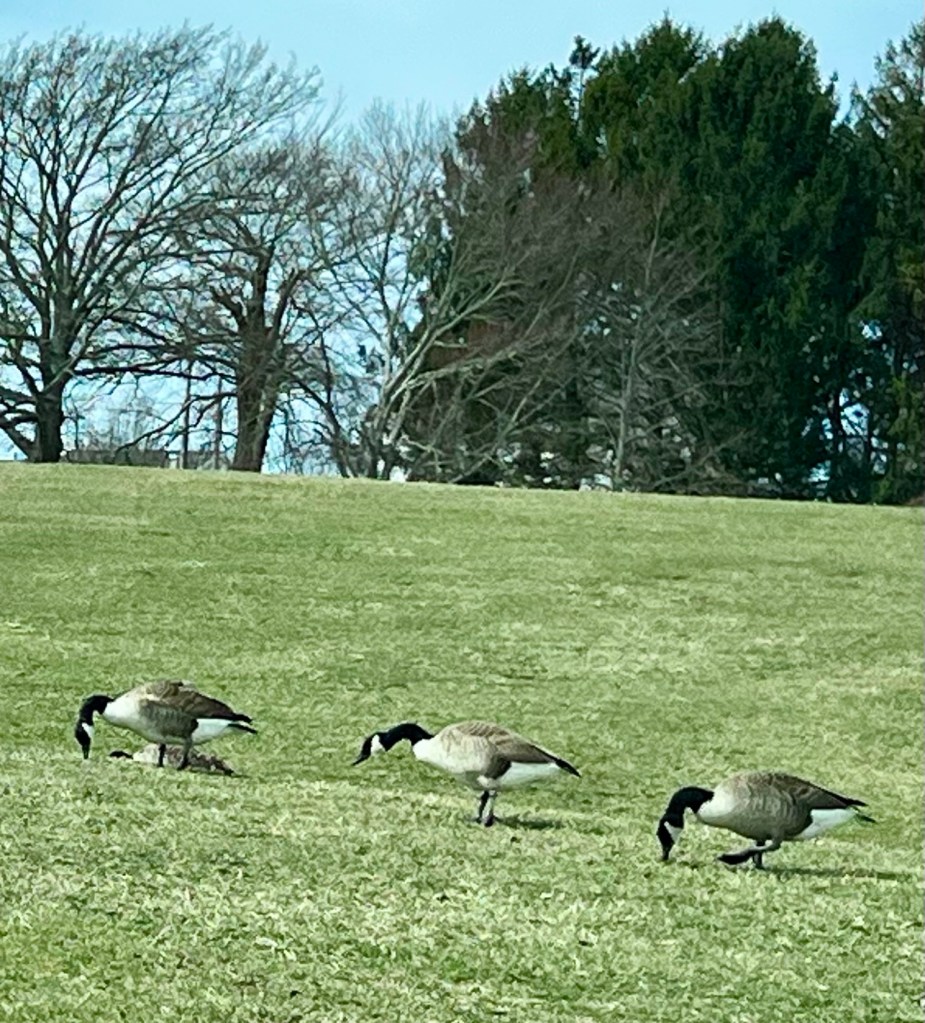
Was surrounded by geese.
.
.
We live in Maine.
Canada is our neighbor.
We have a lot of Canada geese, but I swear Rhode Island has more.
.
.
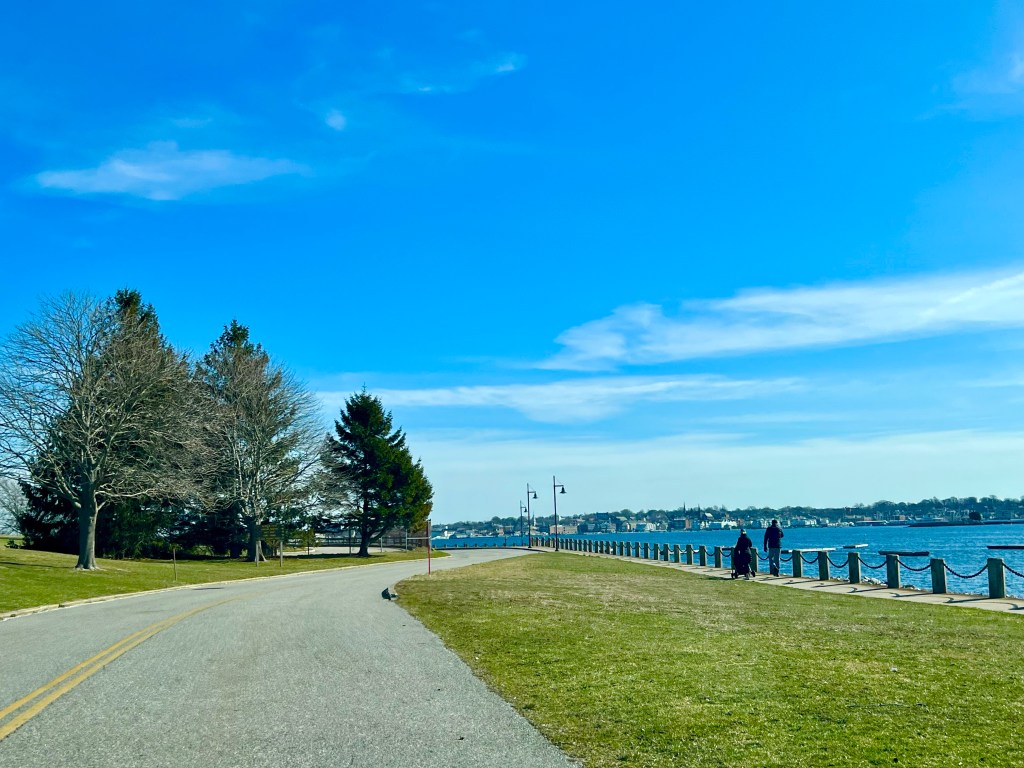
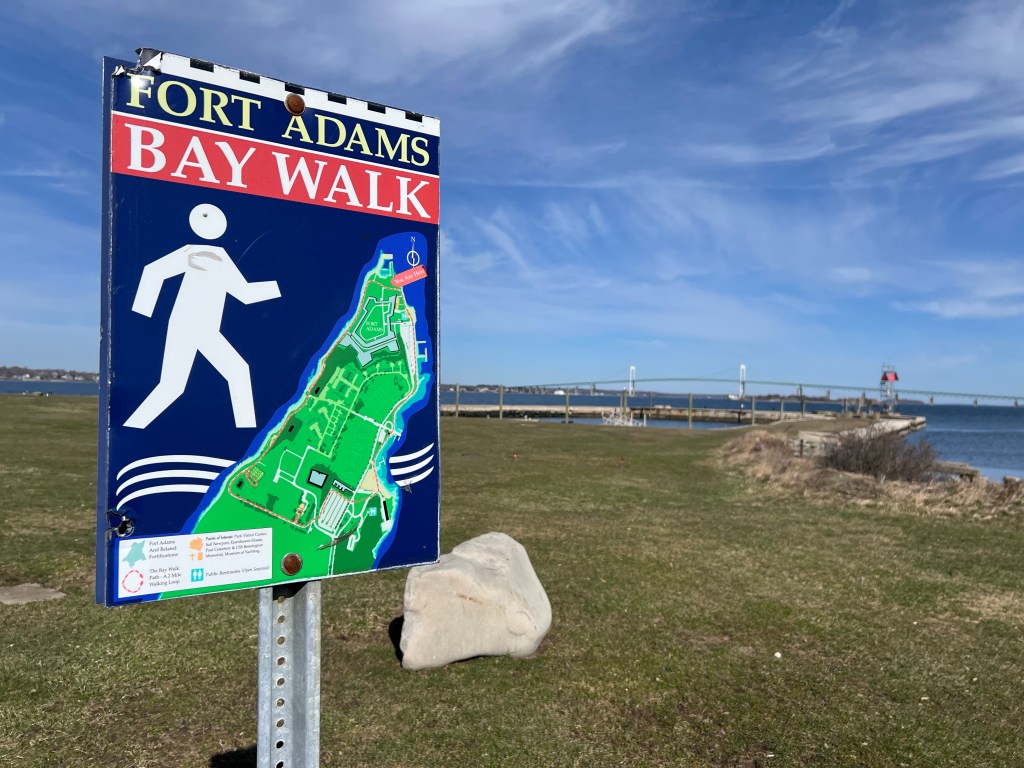
Fort Adams State Park is a lovely area.
.
.
But unfortunately you can’t tour the fort by yourself and the ticket office didn’t open until 10:00am.
.
.
Since we had half an hour to kill, we explored.
.
.
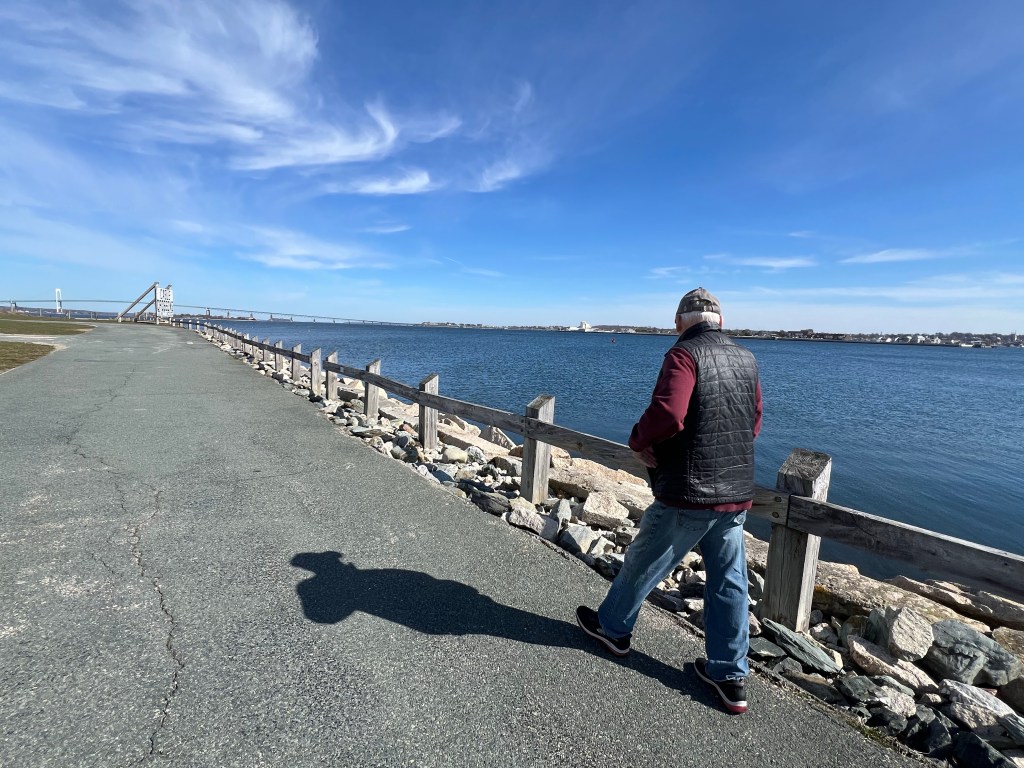
And took what turned out to be one very cold walk.
.
.
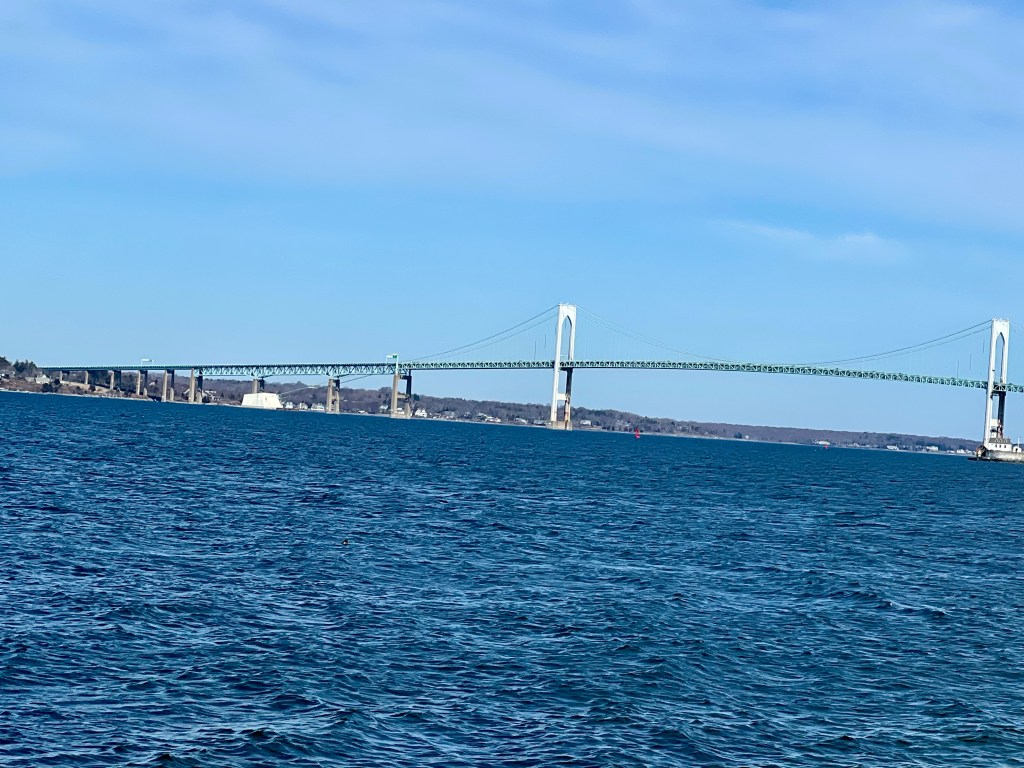
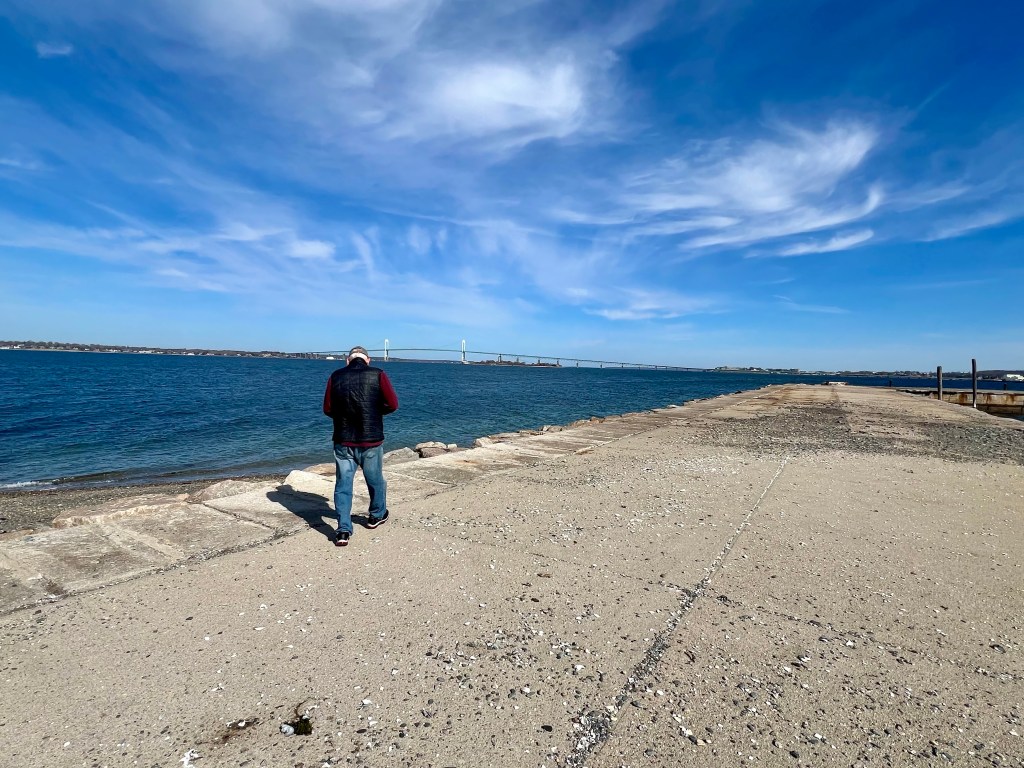
This is Narragansett Bay…
.
.
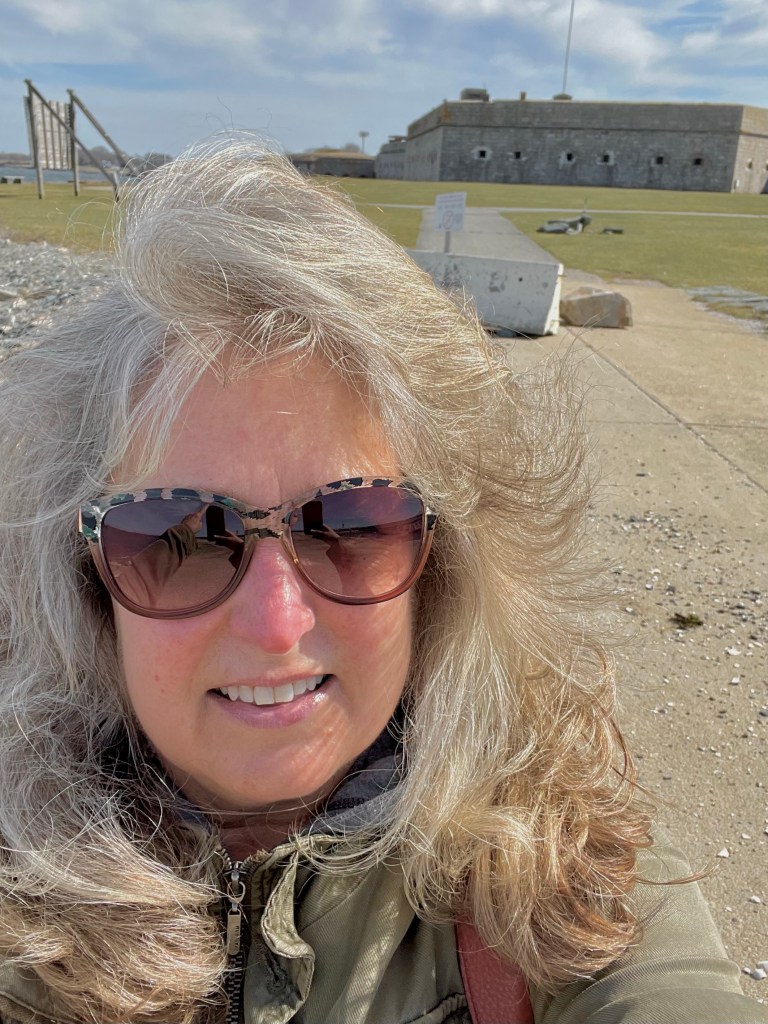
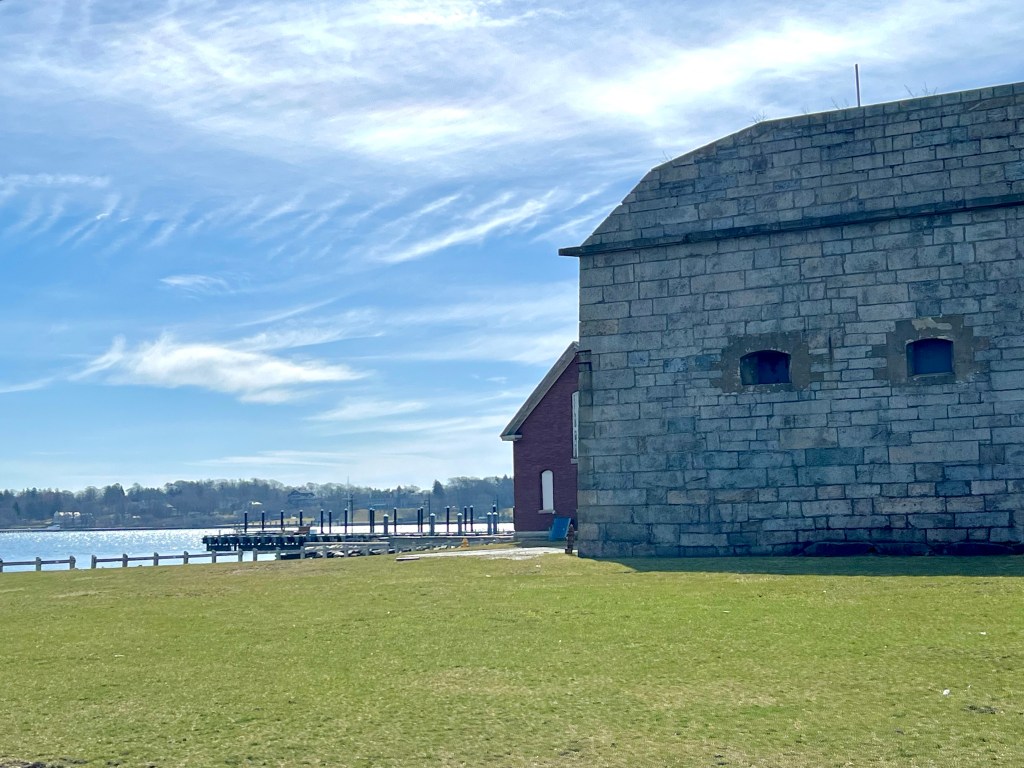
This is the fort.
.
.
And this is the husband ducking against the gale force wind.
.
.
There was no escaping it, and had I taken a video you wouldn’t have been able to hear me speak.
.
.
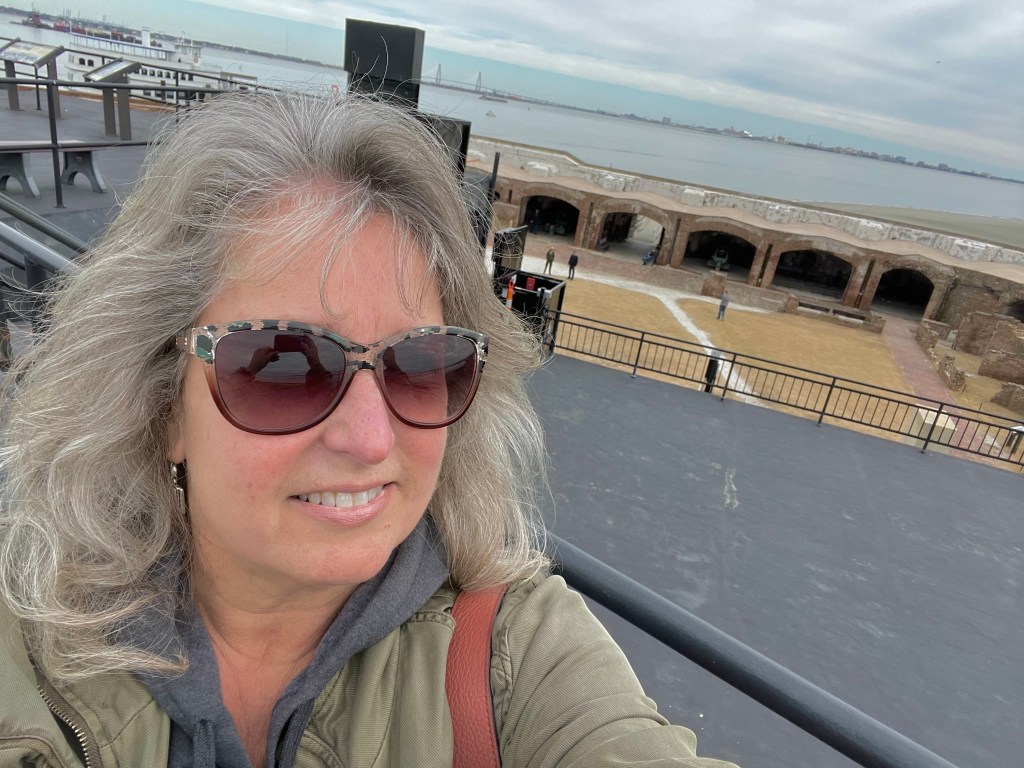
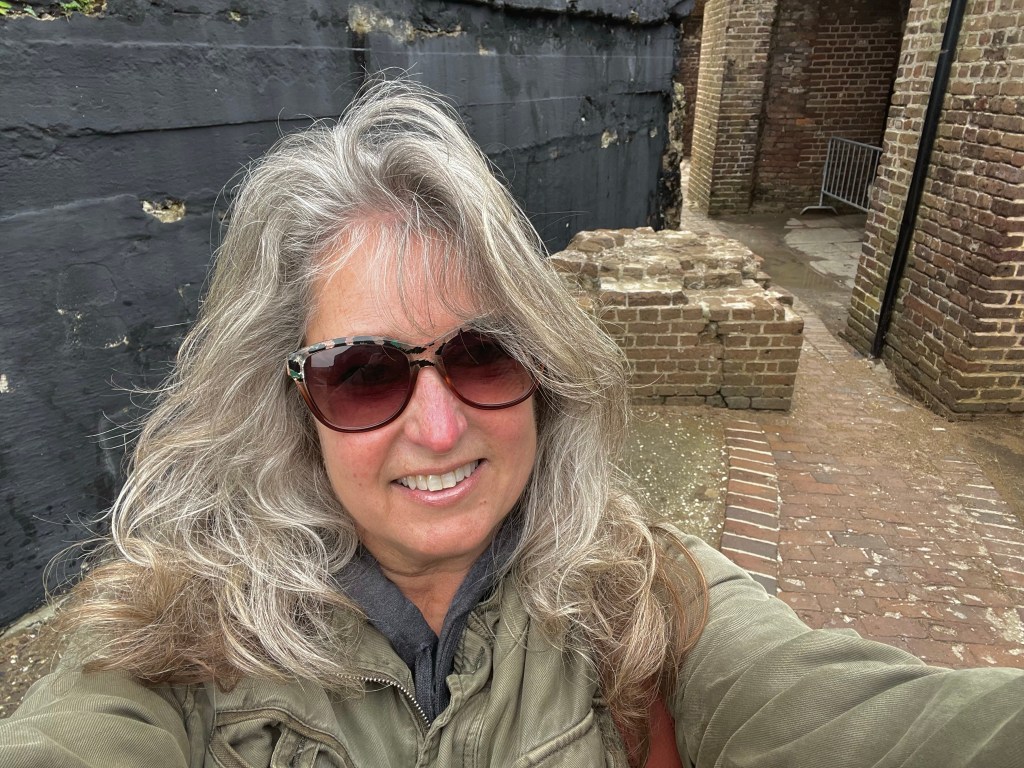
My jacket is zipped up to my neck and my nose is red. I have half a smile, but inwardly I was cursing the nonstop buffeting.
.
.
The husband might have been thinking about jumping and ending it all right here, it was that bad.
.
.
Did I mention Fort Adams is the site of the famed Newport Folk Festival? Where Dylan notoriously plugged in and went electric? After experiencing the strength of the wind, I no longer think he was making a statement. He was simply anchoring himself.
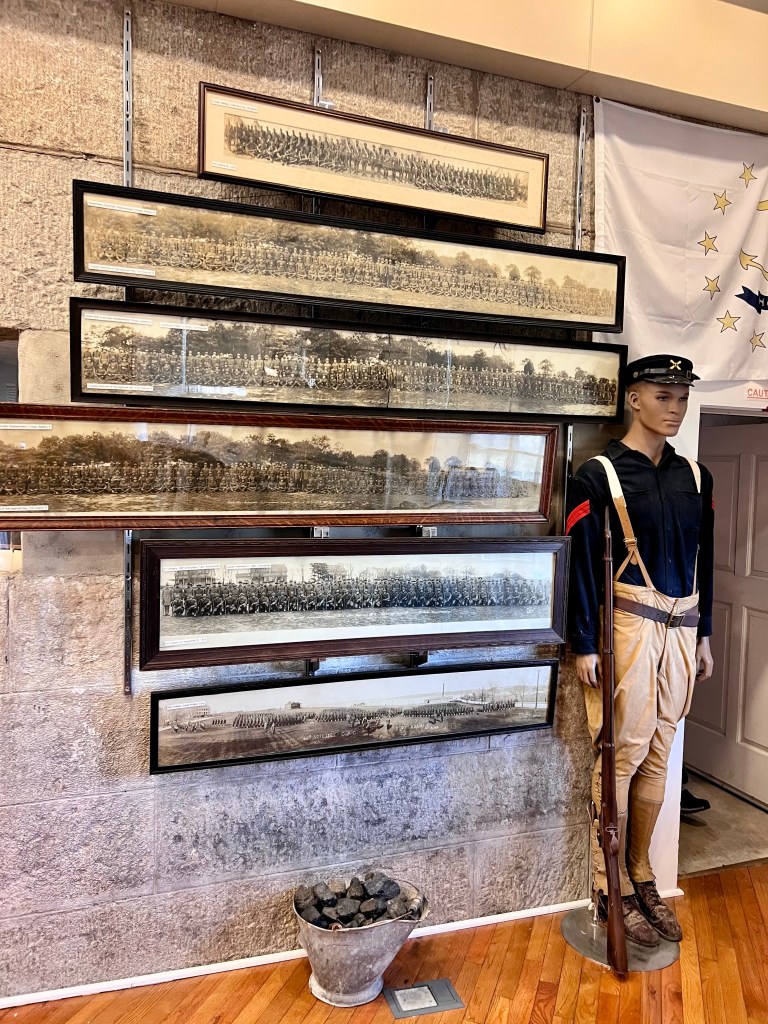
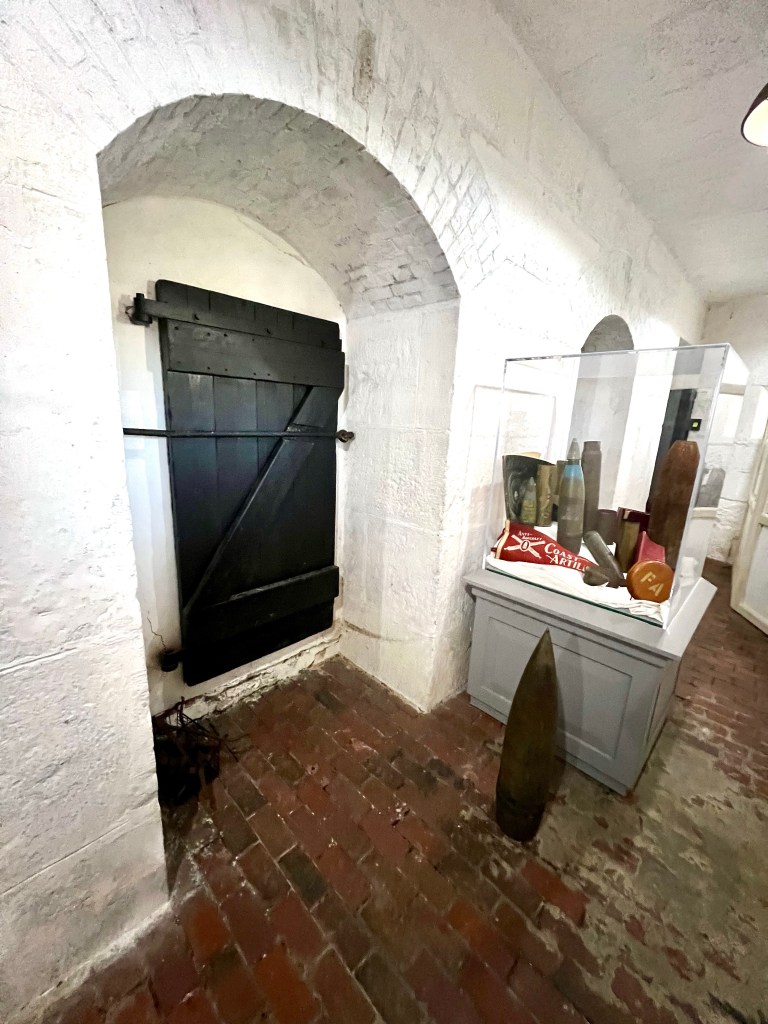
At 10:00 we happily stepped inside the small museum.
.
.
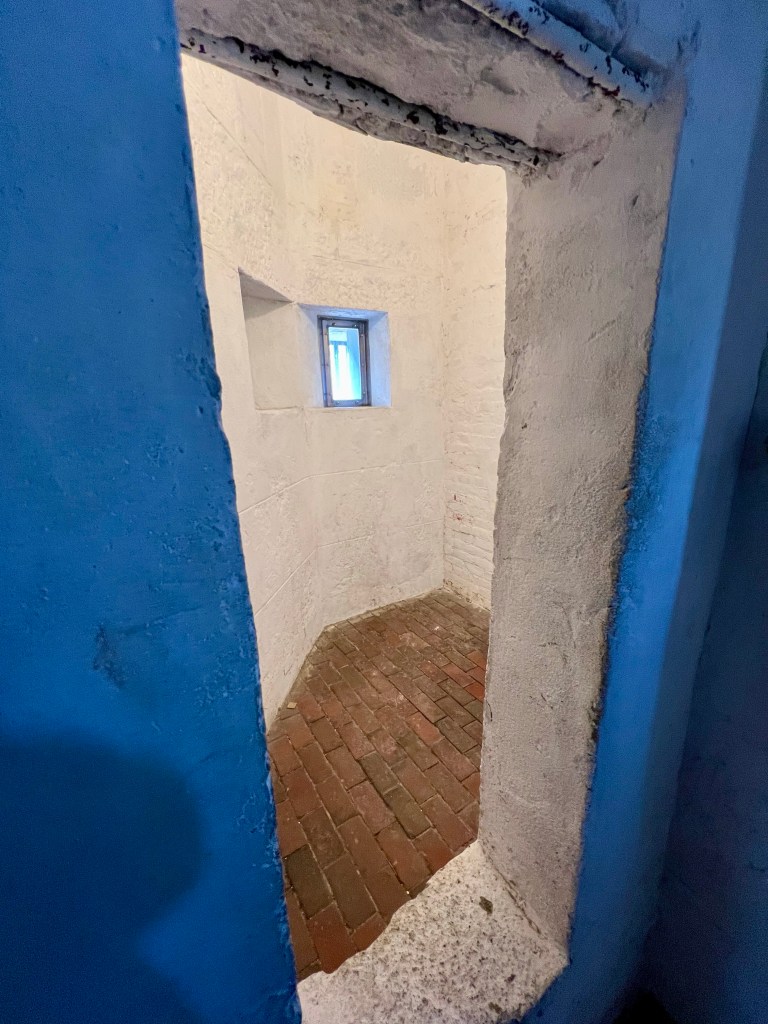
It was previously used as the fort’s jail.
.
.
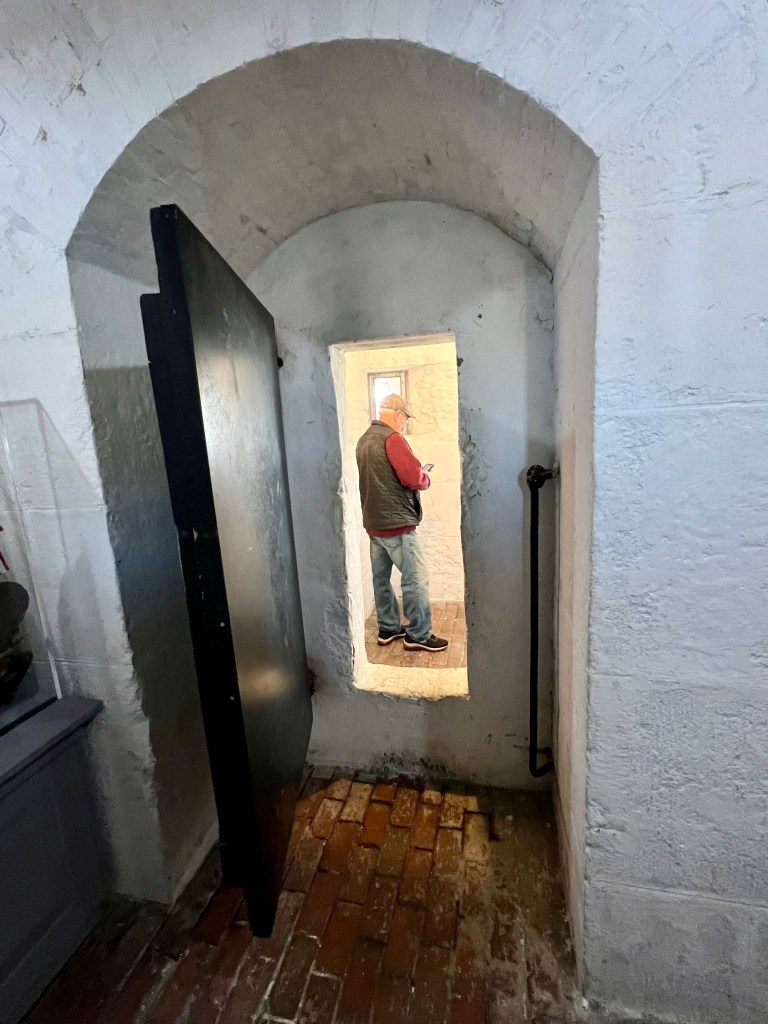
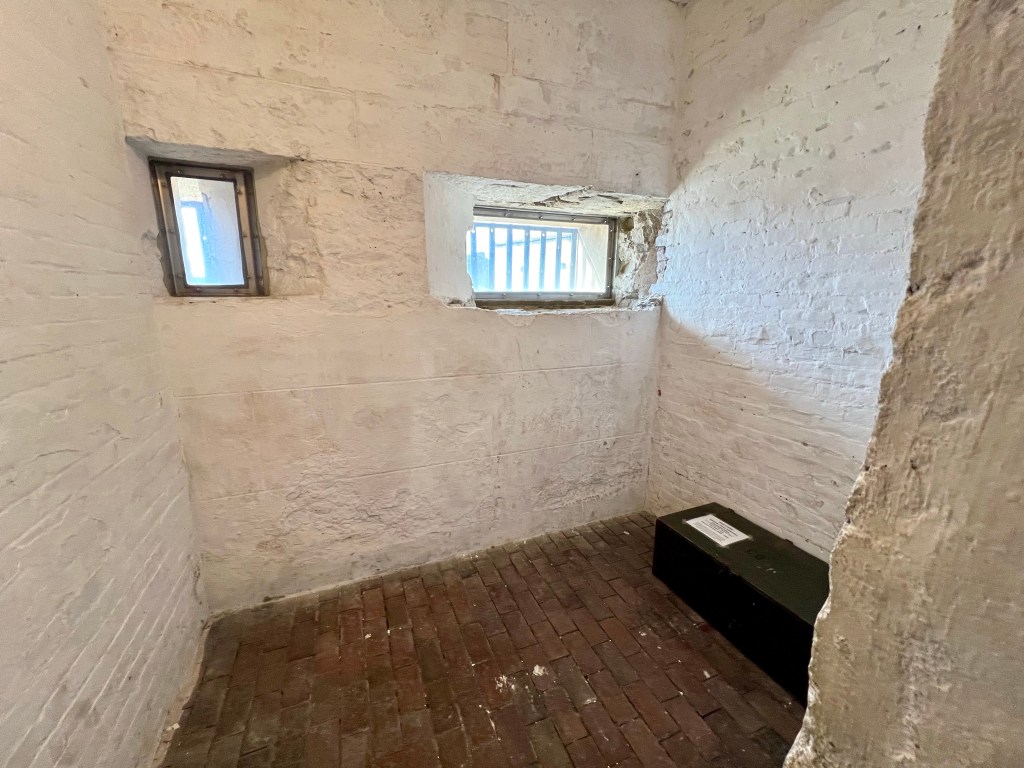
And the cells were pretty grim.
.
.
Not to mention small.
.
.
Really, really small.
.
.
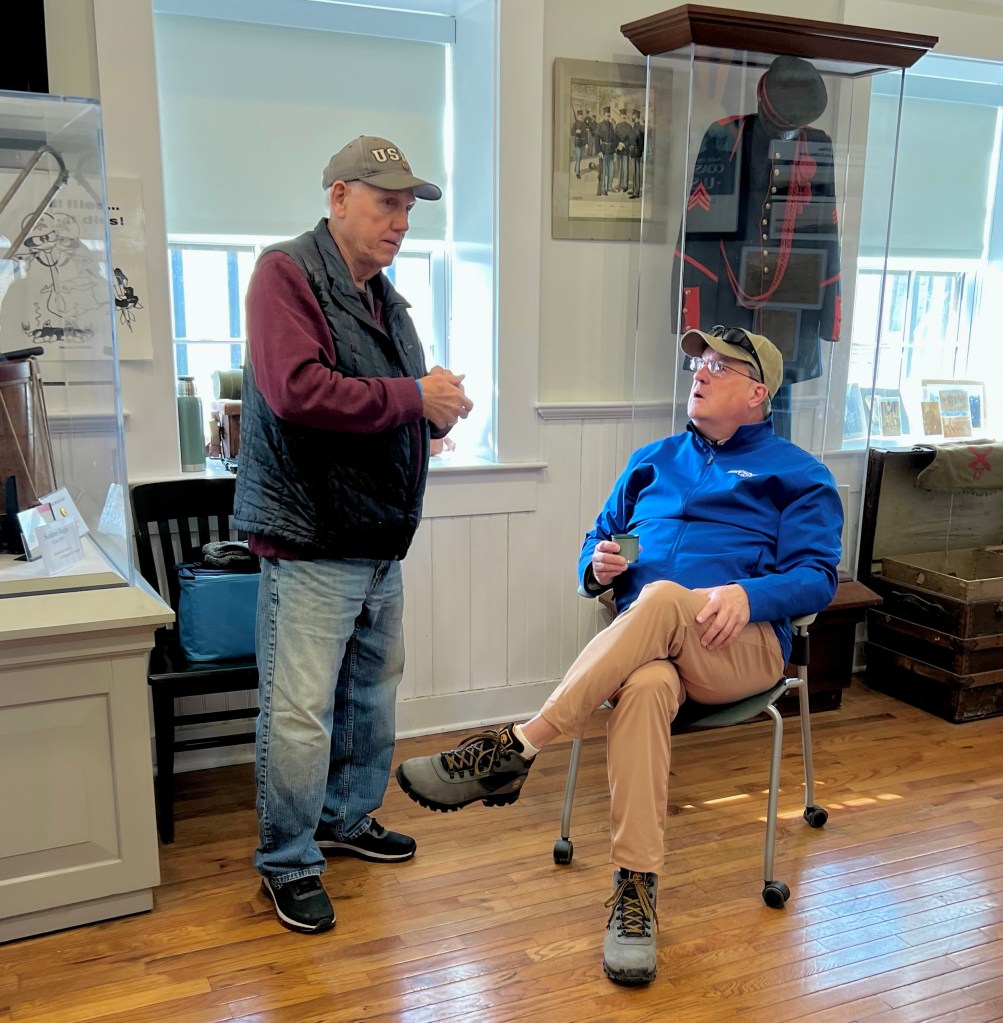
The first tour was at 11:00am so I’ll give you one guess how my husband passed the time.
.
.
In deep conversation with the tour guide.
It started with my spouse comparing those cells with the cells he patrolled as a brig guard when he was stationed at the Portsmouth Naval Prison in New Hampshire many moons ago. That was at the tail end of the Vietnam era, which led to stories about my guy’s time in the war.
In his element, the stories continued for the full hour. When it was time to start the tour, the guide was so impressed with my husband’s gift of gab… he offered him a job.
It’s a shame we live too far away because talking all day would be right in my husband’s wheelhouse.
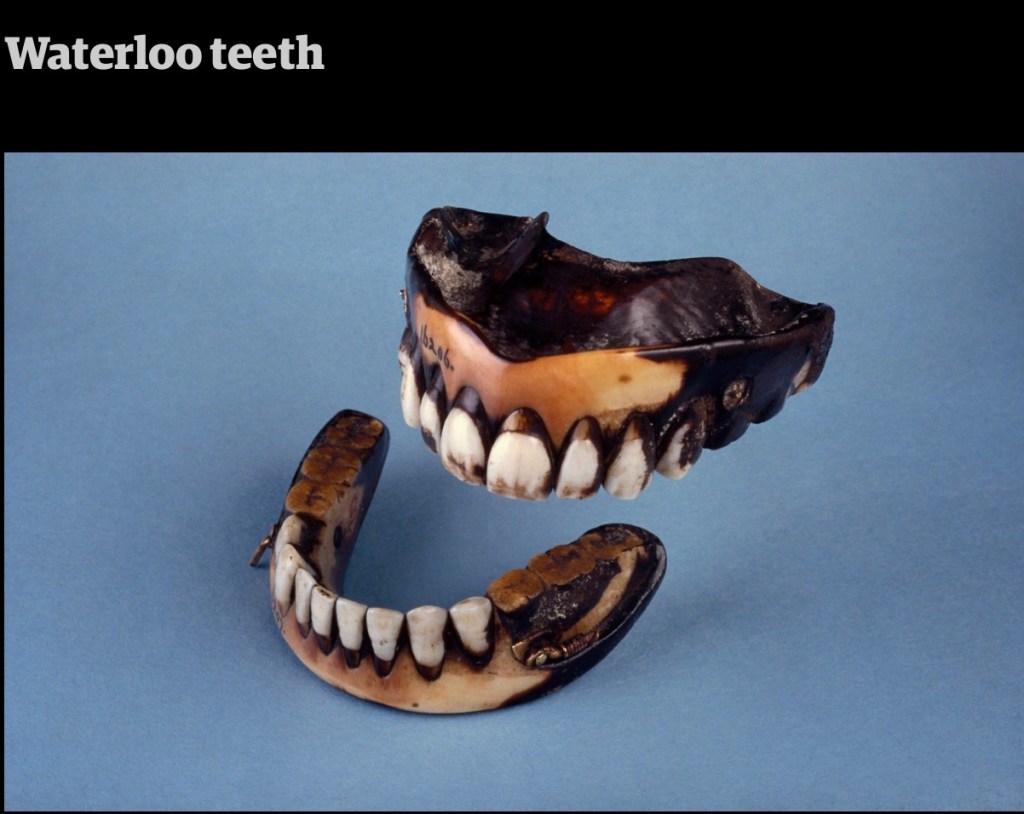
Let’s take a walk back in time with our teeth shall we…
.
.
Cosmic tooth worm. I think I’ve known a few people with those.
.
.
.
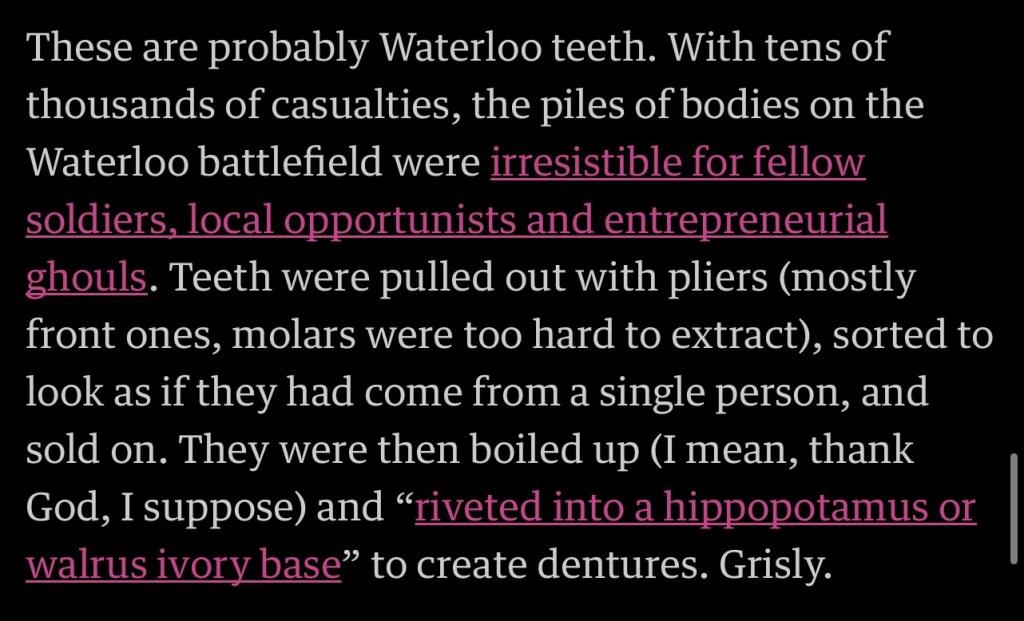
Talk about the birth of free enterprise.
Yikes.
.
.
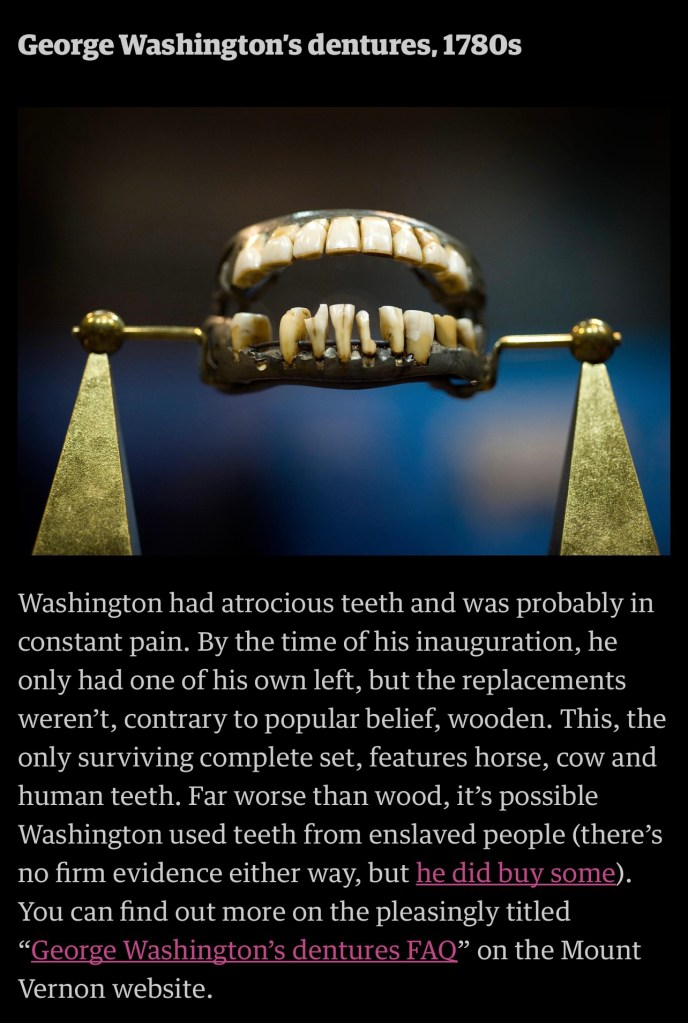
George’s top choppers look okay, but I think his dentist was hitting the sauce when he put together that bottom plate. I can’t imagine giving a state of the union speech in those.
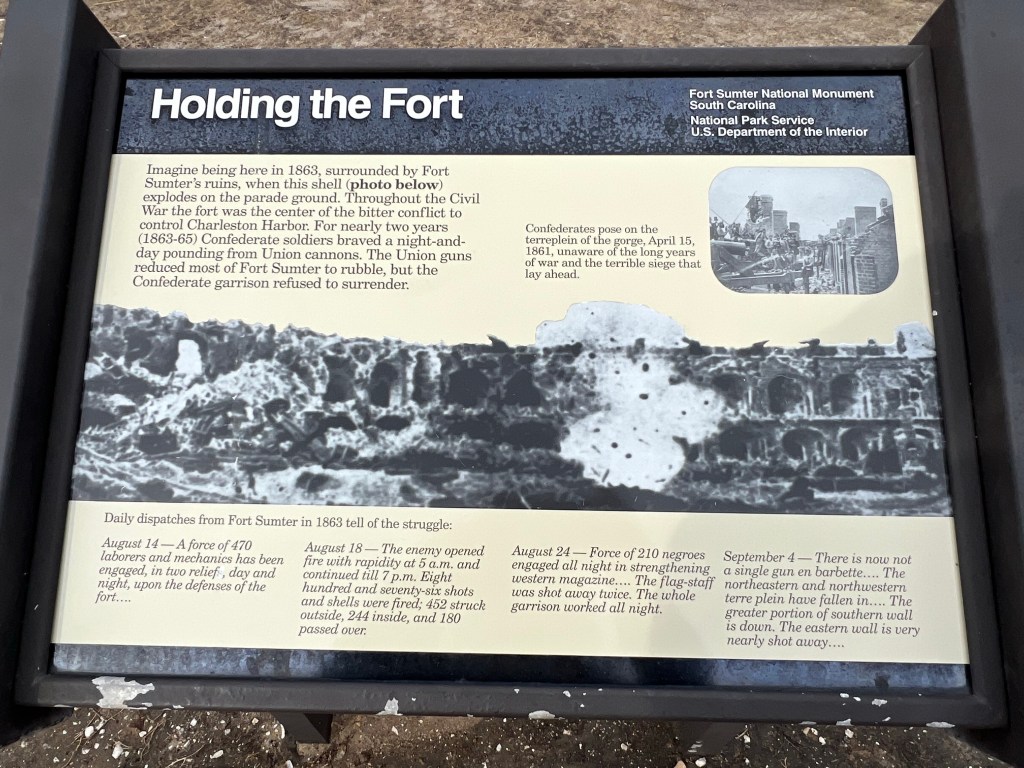
I’m a history nerd buff with a specific interest in the Civil War and was really looking forward to exploring Fort Sumter.
.
.
But there was a problem.
.
.
The only way on and off the island is by ferry and even though it was the slow season and there was just one trip a day from Patriots Point? Our time limit was an hour.
60 measly minutes wasn’t nearly enough and to be honest it ticked me off. I understand during the tourist season they have to move as many people on and off as they can, but with only one lousy trip scheduled in the winter you’d think they would allow us more time… but no.
This meant kicking my husband into high gear and almost jogging around the fort to make sure we saw it all. No lollygagging and absolutely no chatting with strangers!
.
.
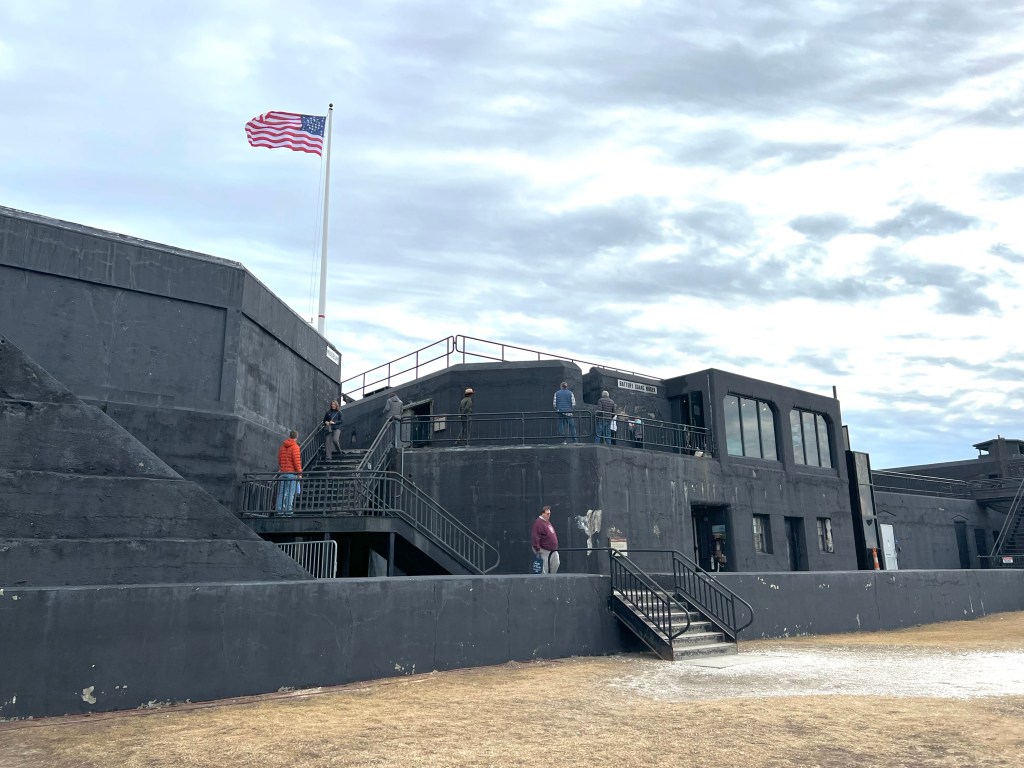
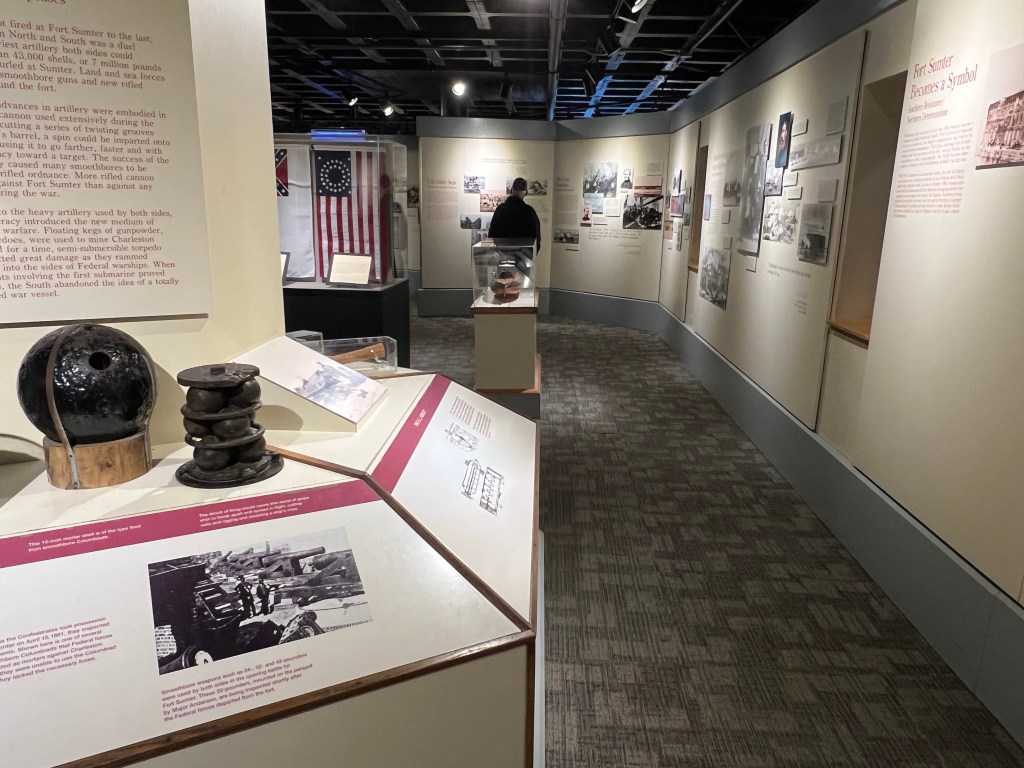
This is the old battery that they’ve turned into a museum… so we started there.
.
.
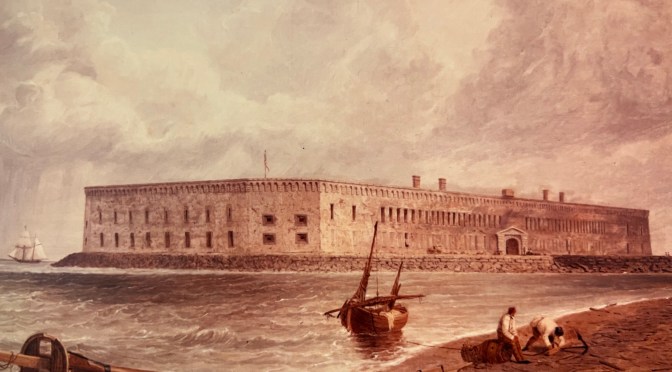
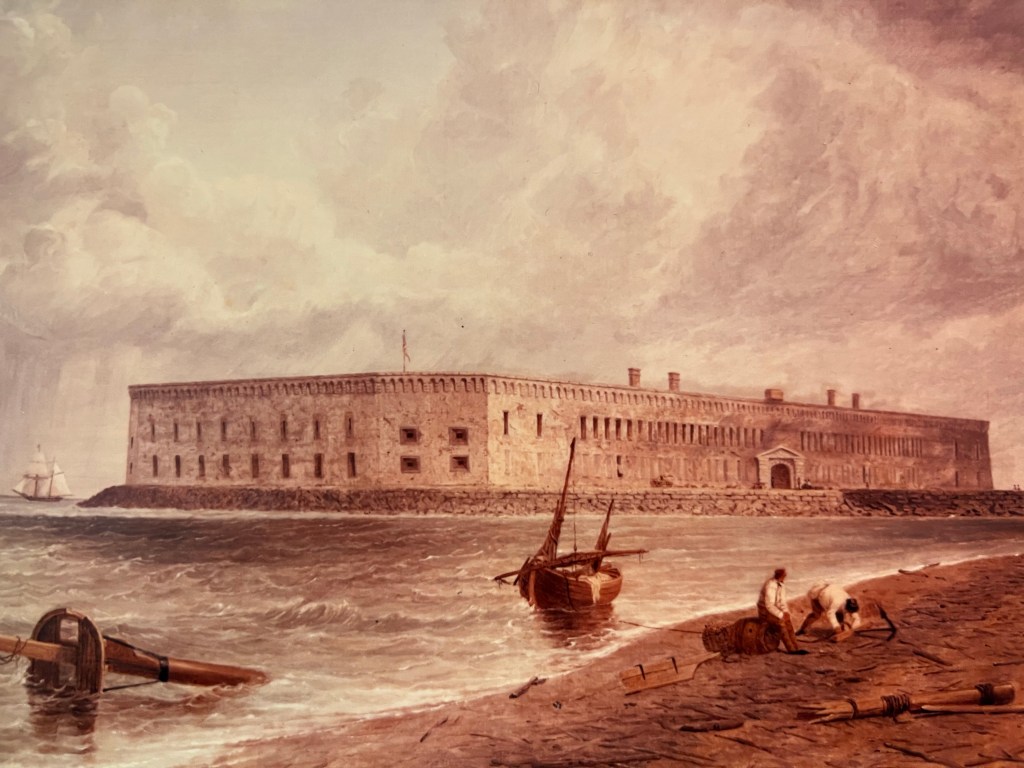
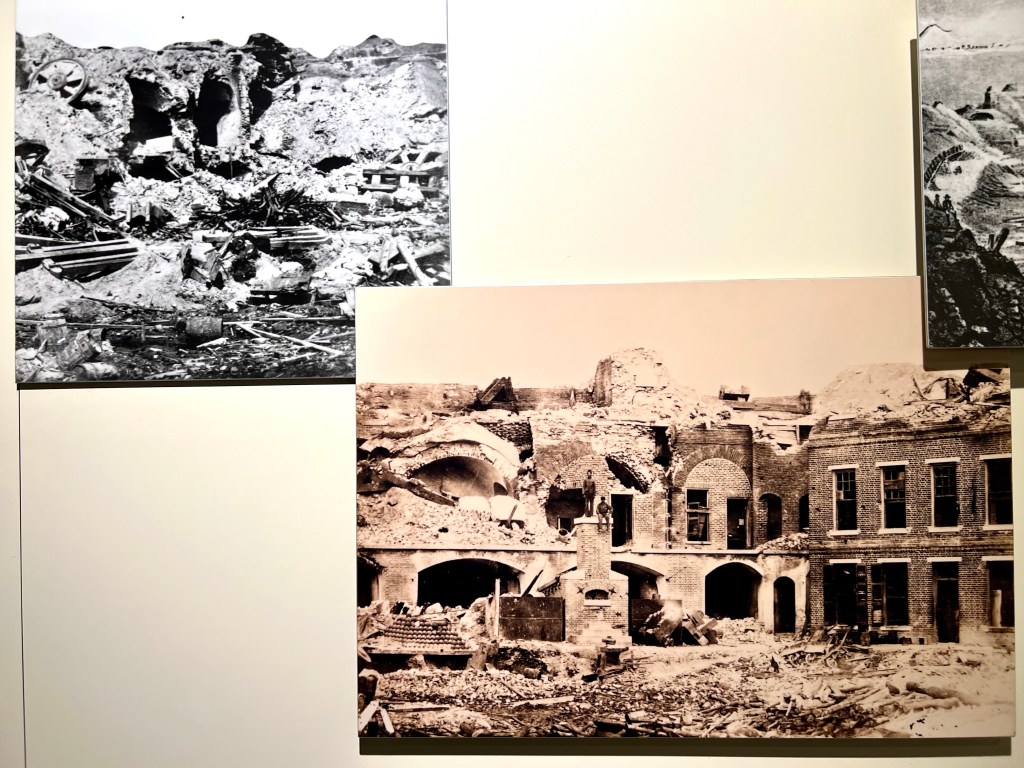
The Fort as it looked pre Civil War.
.
.
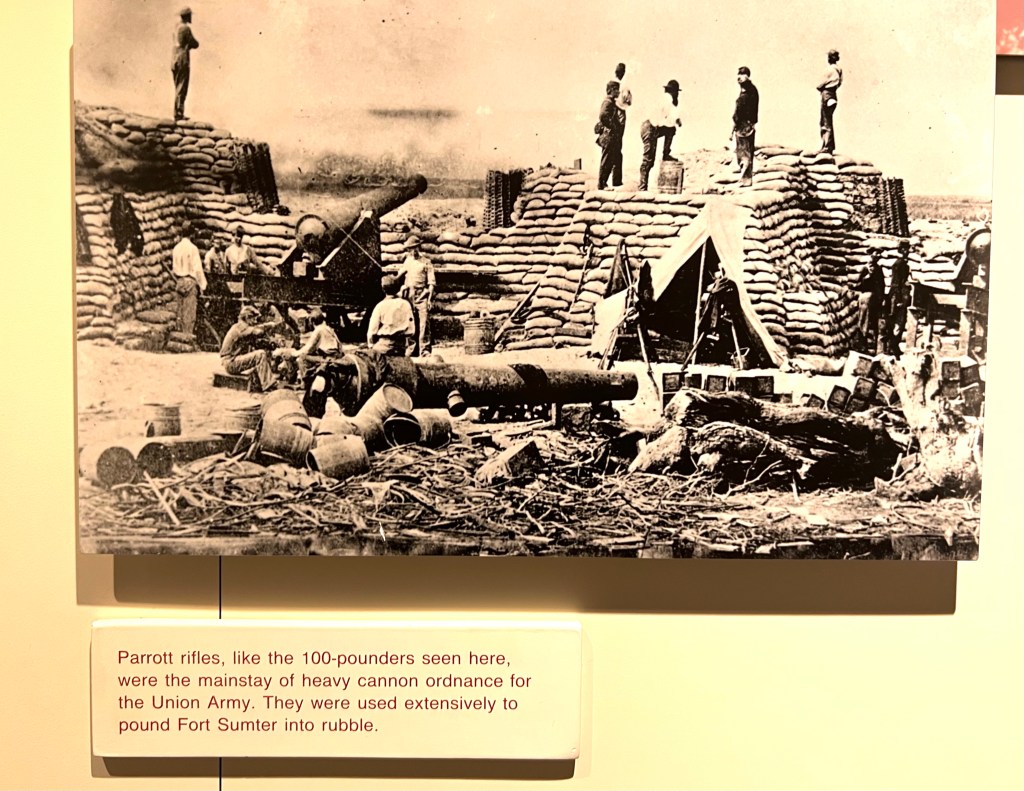
During the war…
.
.
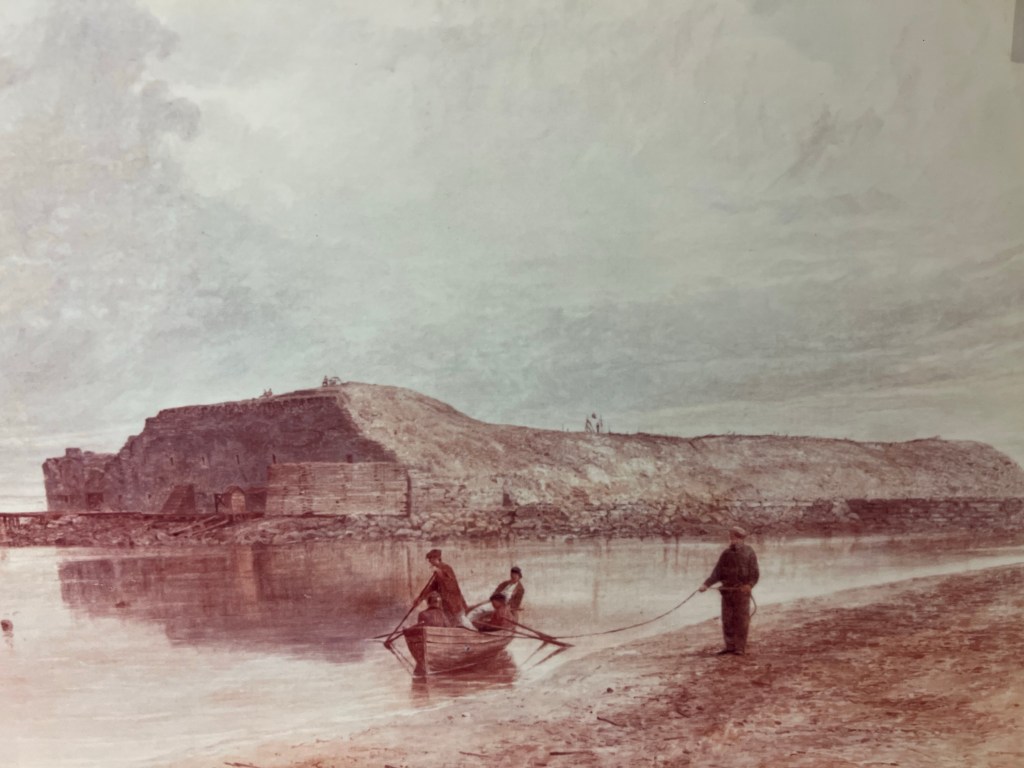
And after.
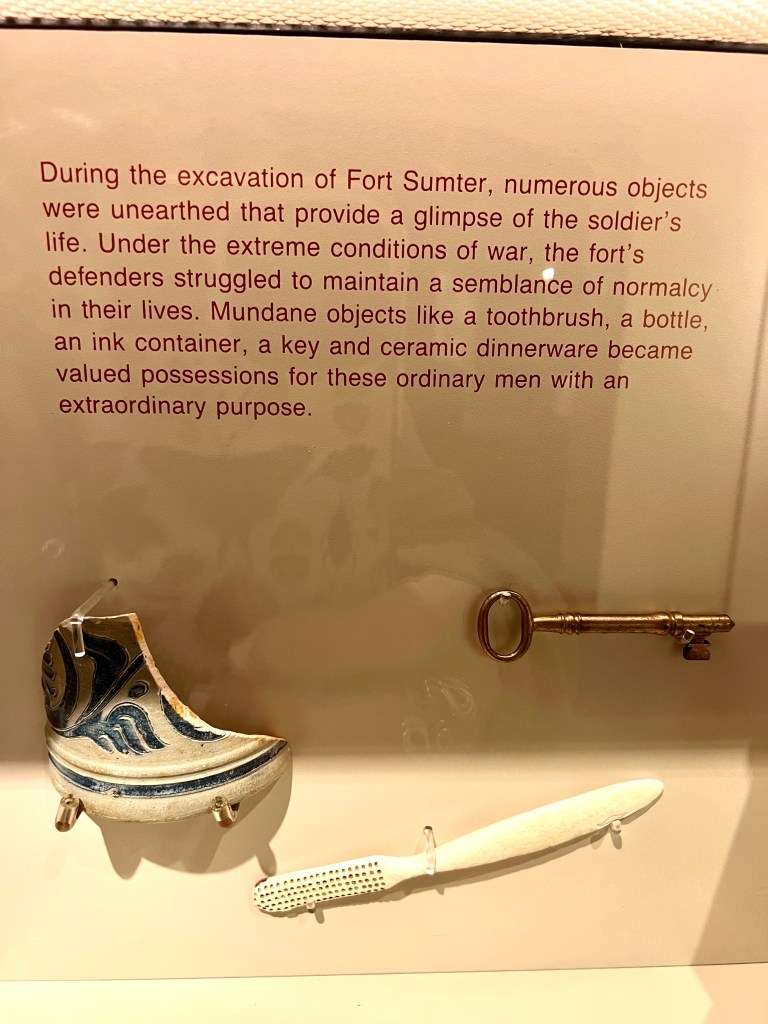
The museum itself was small, with lots to read but very few artifacts.
.
.
But a Civil War toothbrush? That’s history nerd buff gold.
.
.
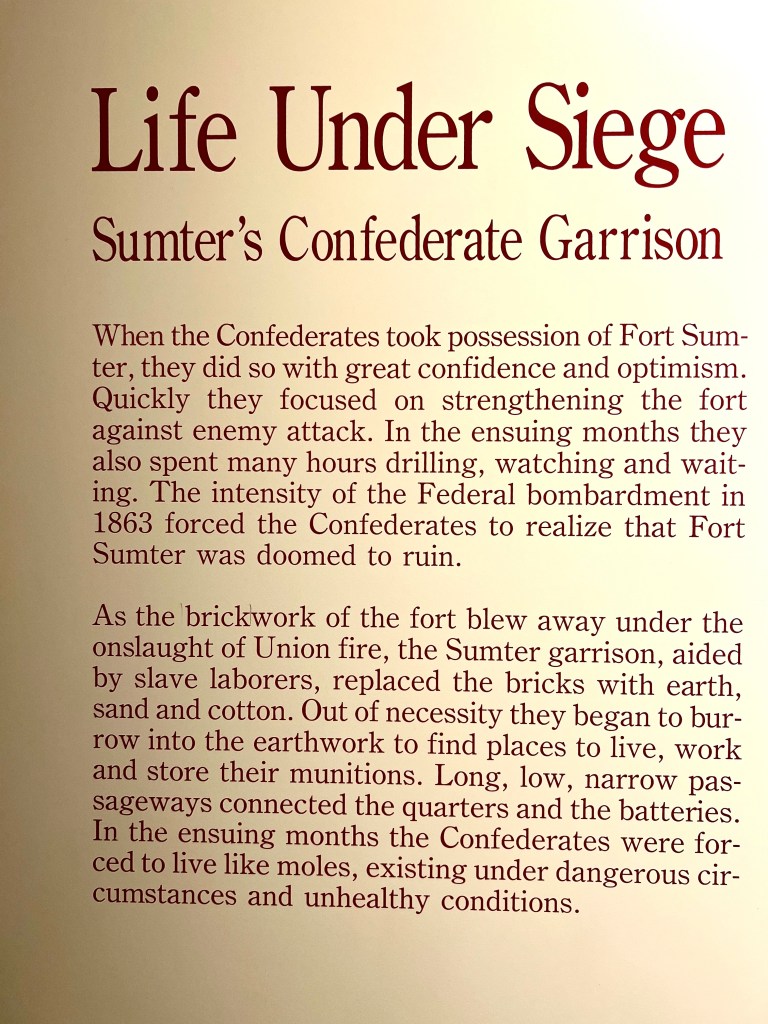
I won’t bore you with a lot of history but this was especially poignant to me.
.
.
Those Who Would Be Free African-Americans and the Fight for Fort Sumter.
Thousands of African-Americans were involved in the Civil War, either by force or by choice. The South used slaves as laborers at war points within the Confederacy. The North enlisted more than 170.000 free men of color in the Union Army. These willing soldiers saw action in virtually every theatre of the war, including Charleston. As soon as war commenced in 1861, slaves were gathered from Southern plantations and sent to such Confederate strongholds as Fort Moultrie and Fort Sumter. Amid the chaos of battle they repaired the forts, built batteries, mounted guns, waited on officers and acted as messengers. At Fort Sumter, slaves worked in constant danger to help defend the fort against the very forces seeking to win their freedom. African-American soldiers in the Union Army served voluntarily distinguishing themselves at such battles as the assault on Fort Wagner on Morris Island. Here, the 54th Massachusetts made history as the first African-American military regiment to ennoble themselves in battle. As word of their courage spread, thousands of other African-Americans volunteered in the war to reunite the country.
.
Imagine being forced to defend an installation that’s fighting to keep you enslaved.
.
.
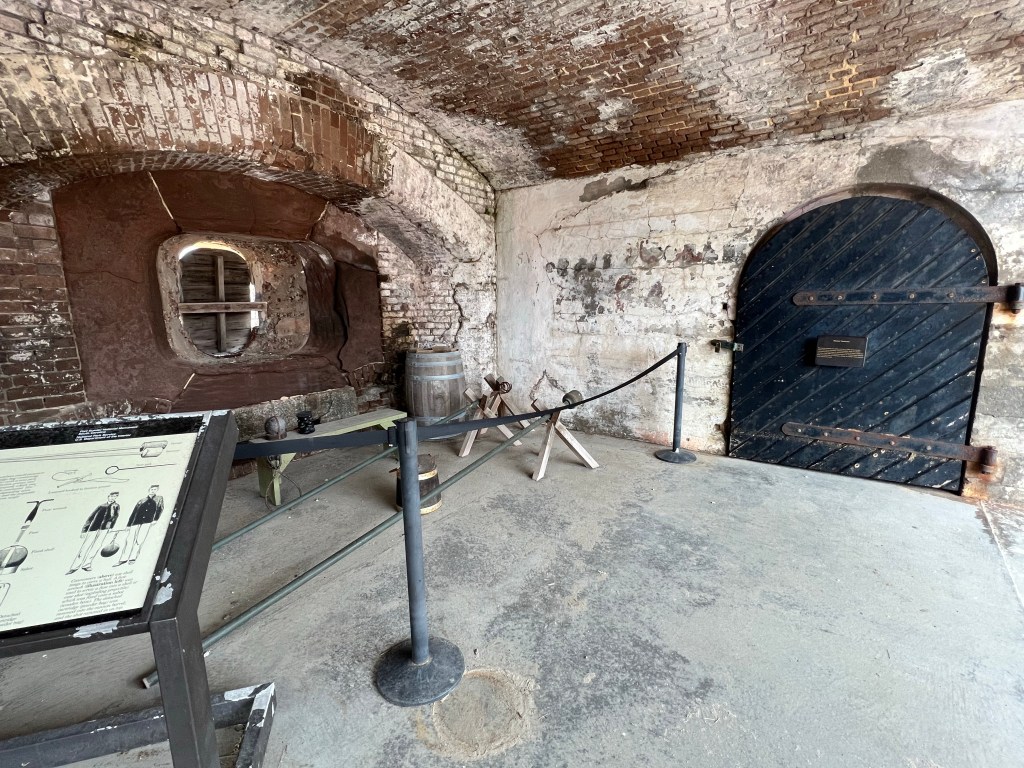
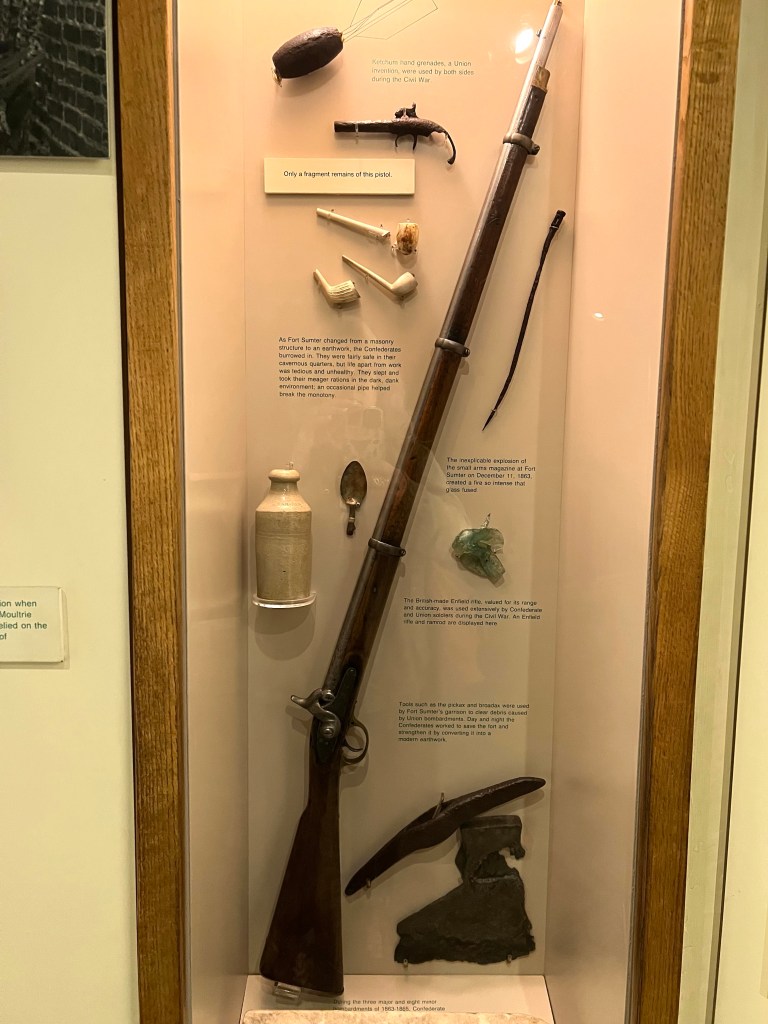
Soldiers were basically living like tunnel rats.
.
.
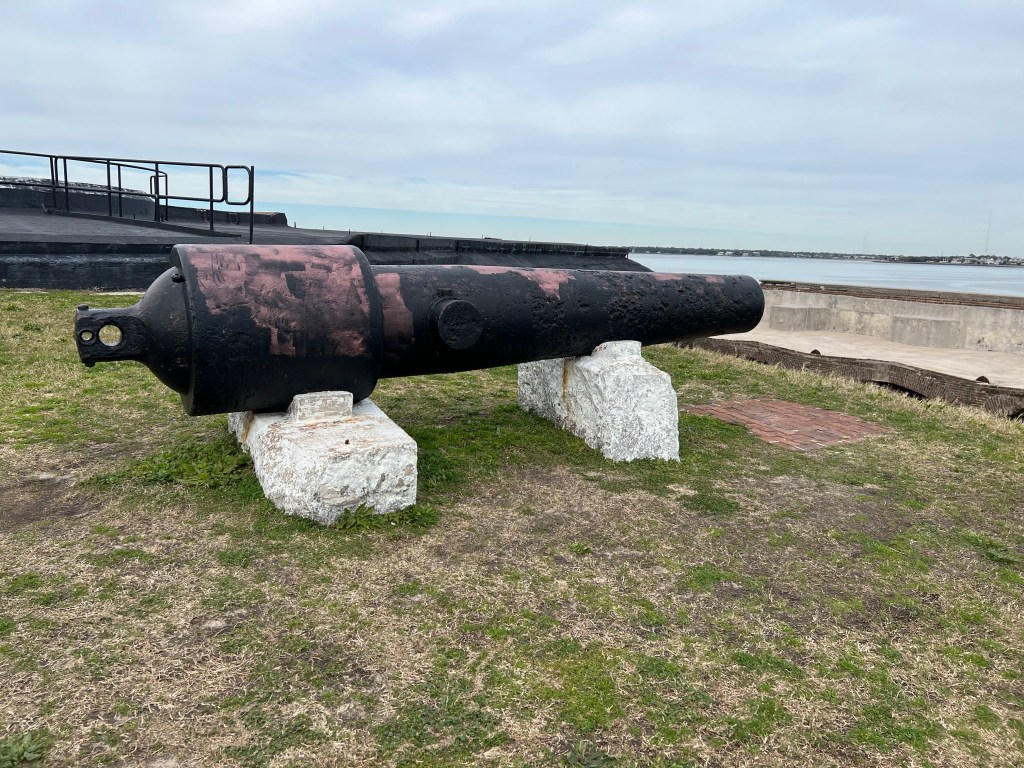
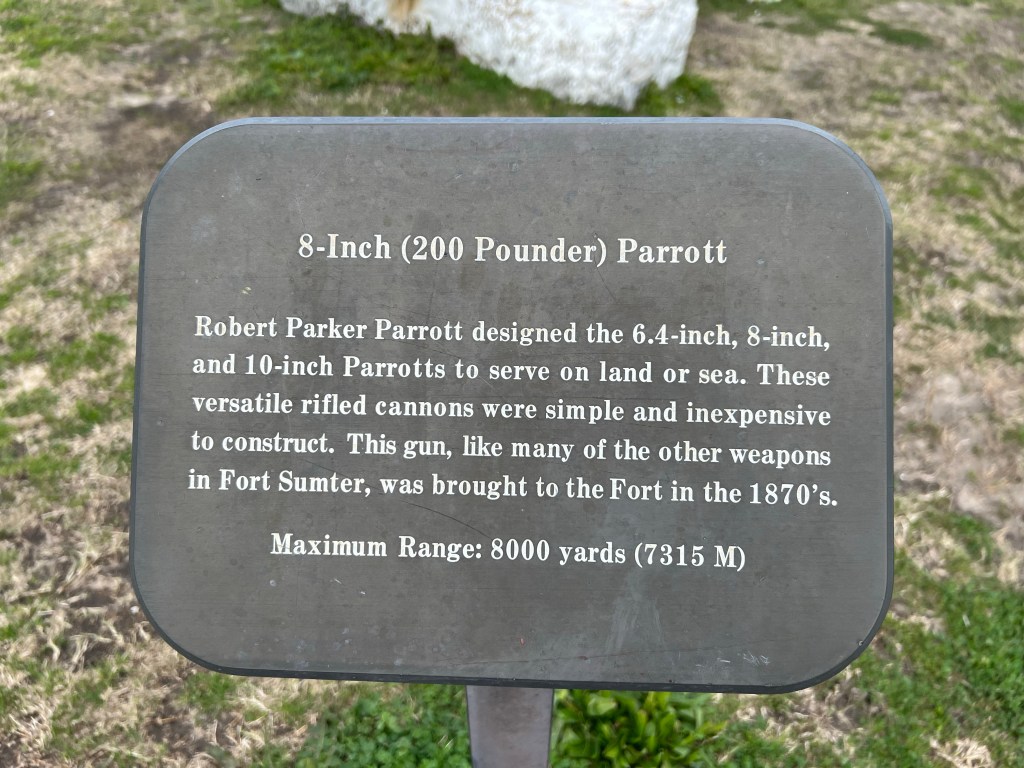
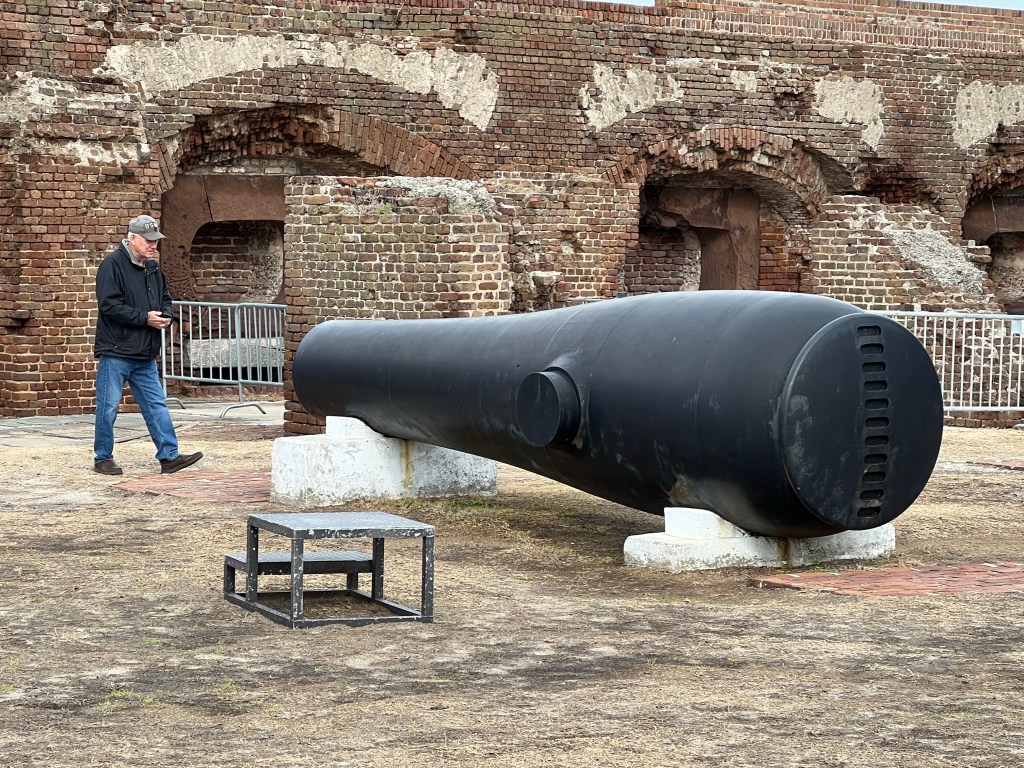
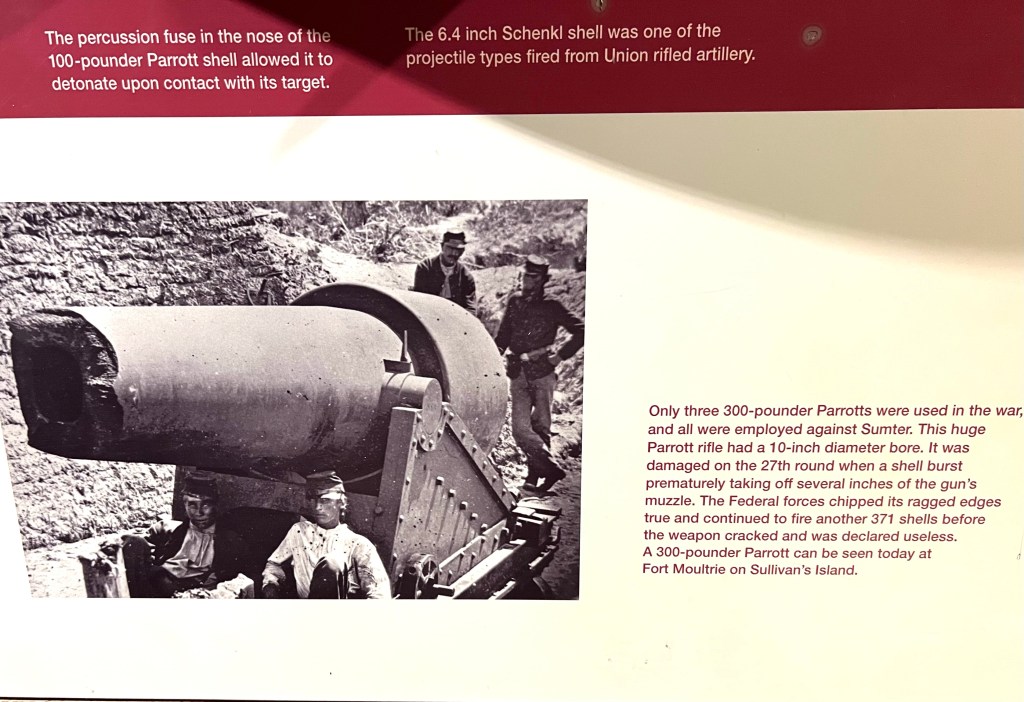
And the armament that was used back then?
Wow.
.
.
Unbelievable.
.
.
Too bad they didn’t have duct tape.
.
.
Short on time, my speed reading came in handy. Not so my husband who read one placard to my 6. That’s him in the background way back at the beginning.
.
.
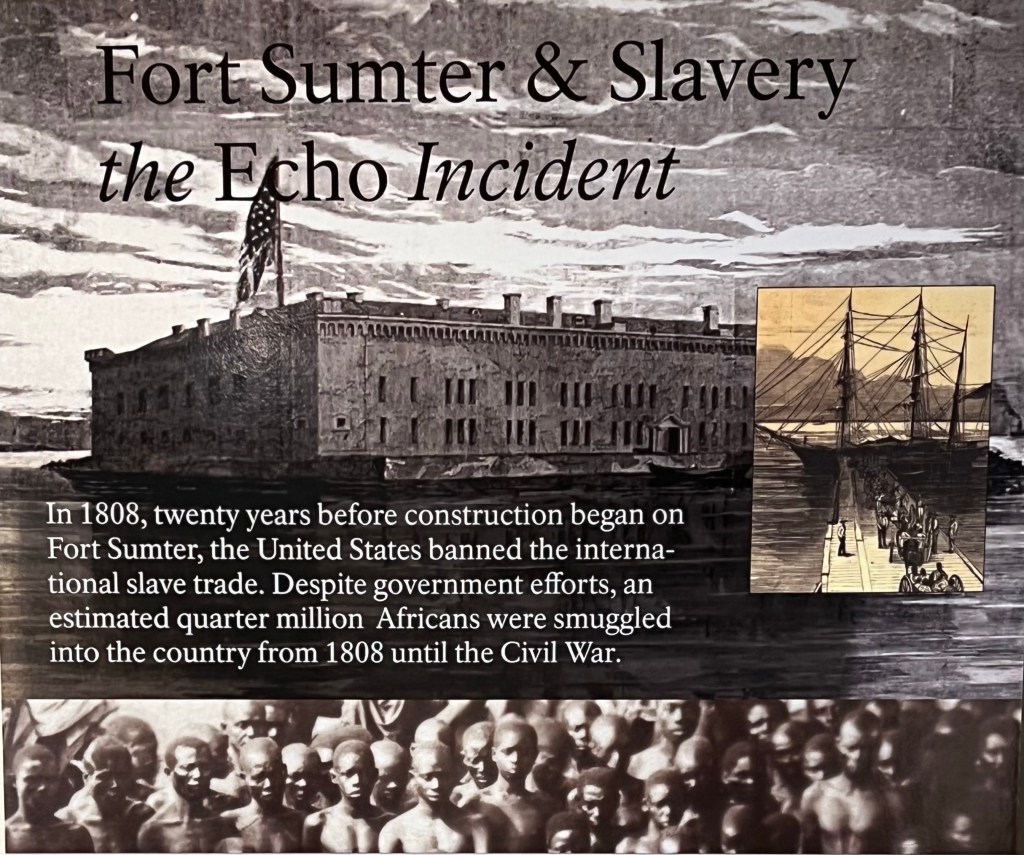
In 1858 Fort Sumter became involved in one of the most notorious episodes in slave smuggling. On August 21 the U.S. Navy captured the slave ship Echo and brought it into Charleston Harbor. Of 450 captives, mostly young African girls and boys, 144 had already died. Initially held at Castle Pinckney, the Africans were moved to the larger Fort Sumter still under construction. Following sensational descriptions of their emaciated state, entrepreneurs arranged harbor cruises to witness the grim spectacle at Fort Sumter. Thirty-five captive Africans died while kept at Castle Pinckney and Fort Sumter. Although some Charlestonians provided food and clothing, oth- ers argued that the captives should be sold into slavery. On Constitutional grounds, President James Buchanan ordered the Africans transported home onboard the steamship Niagara. Even with medical care, only 196 of the original 450 captives were still alive by the time they reached Monrovia. The captain and crew of the Echo were tried and acquitted on a technicality.
.
That’s a horrible story I knew nothing about before this visit.
One half of the museum was devoted to the Civil War, the other to its previous life.
.
.
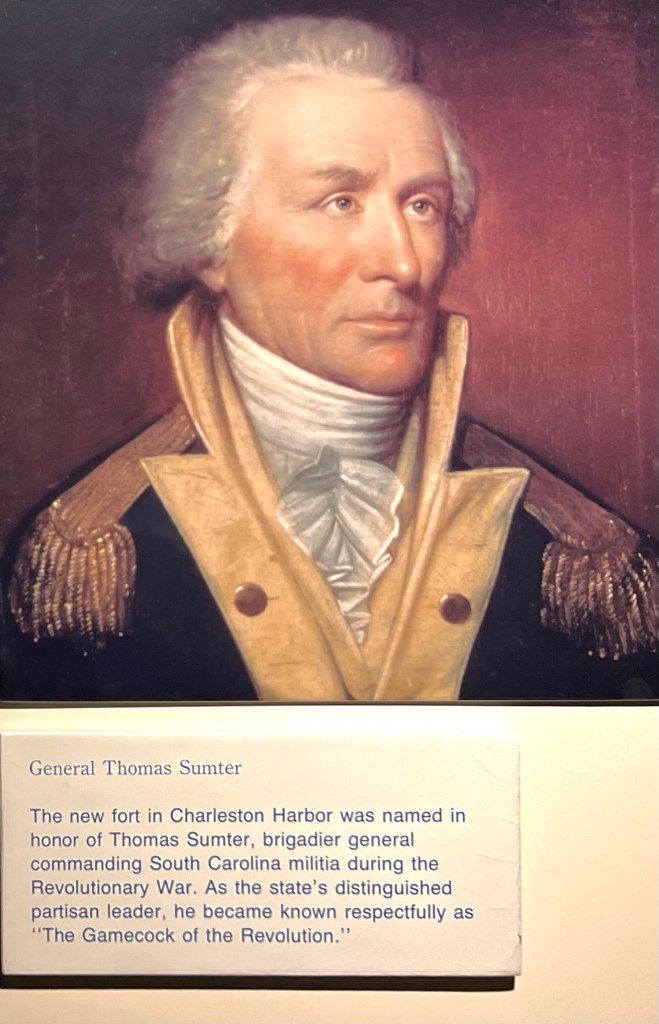
Yes, this cross eyed gentleman is the Fort’s namesake.
Sadly I had to drag the husband outside before we’d even glanced at the second half of the museum but my watch said we only had 18 minutes left and missing the boat was not an option.
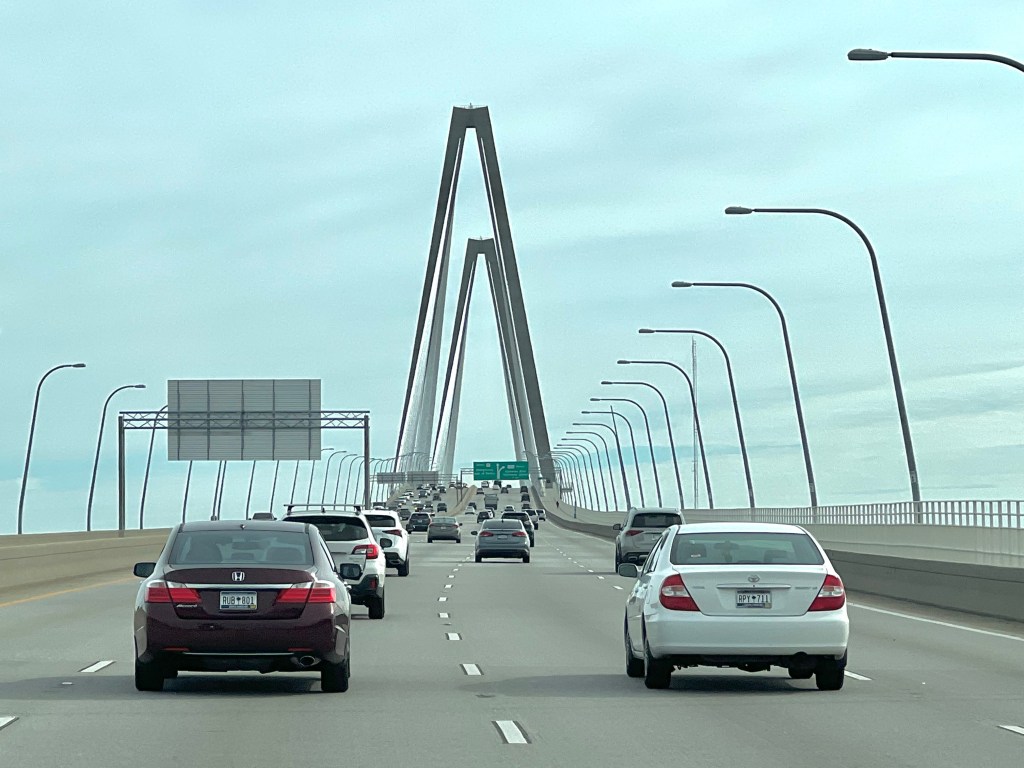
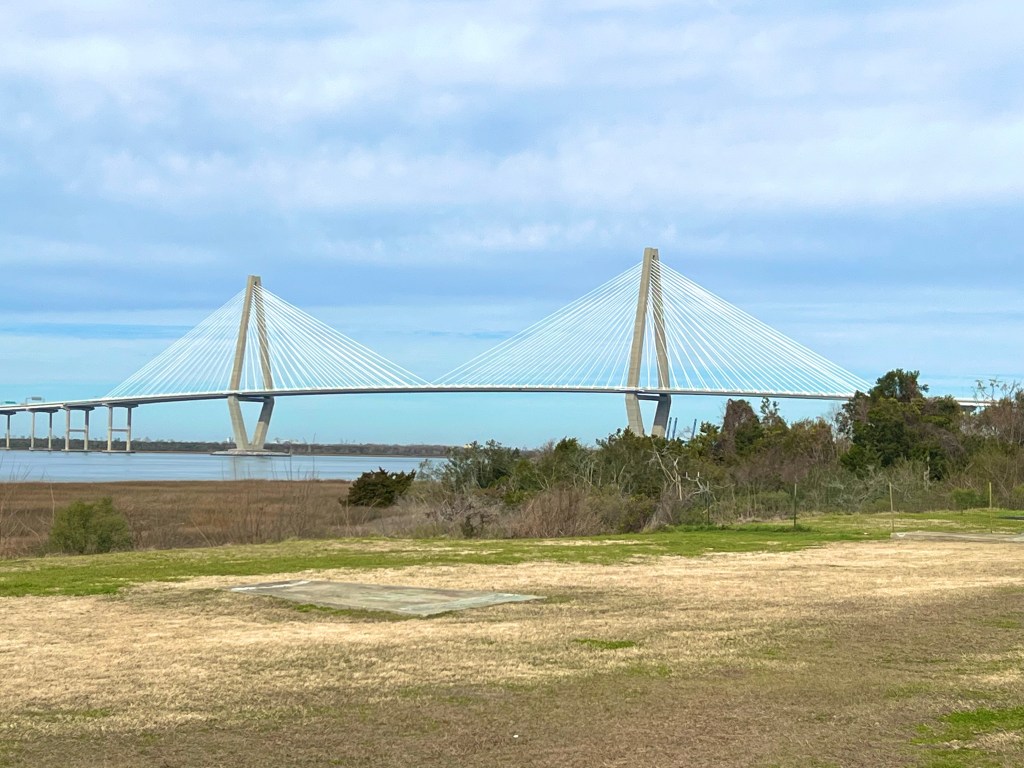
Or more precisely over the locally famous Ravenel bridge …
.
.
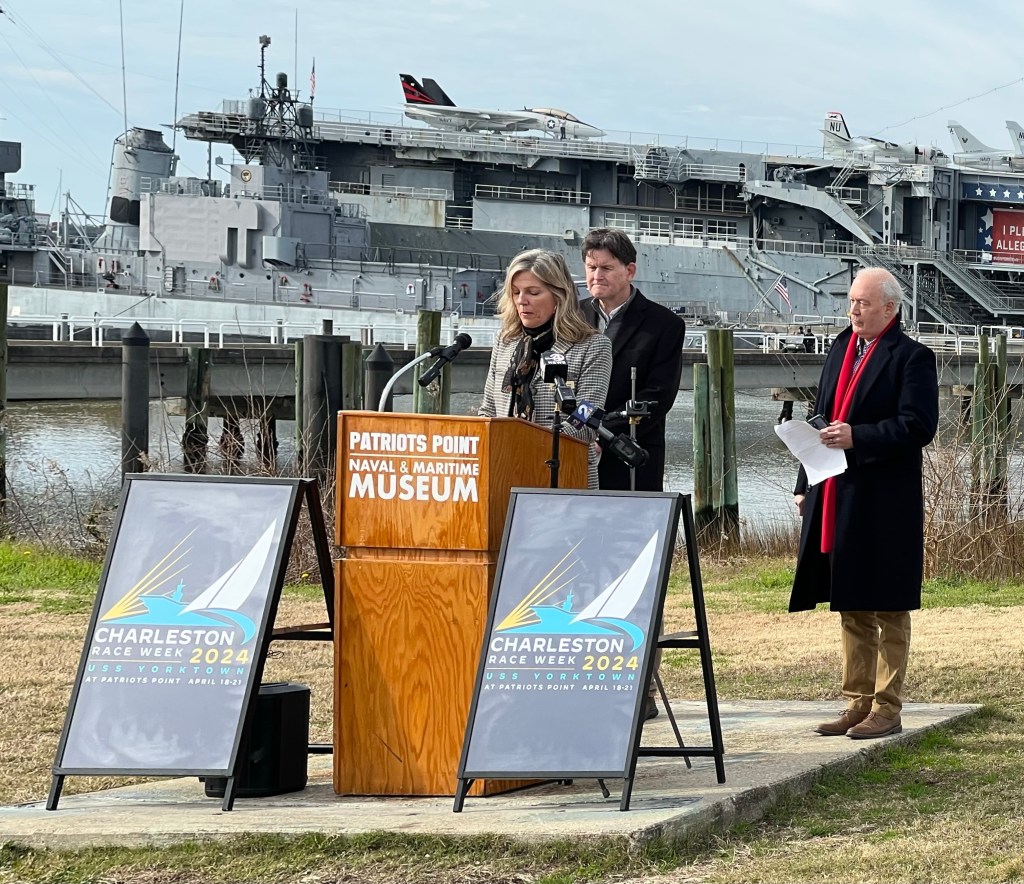
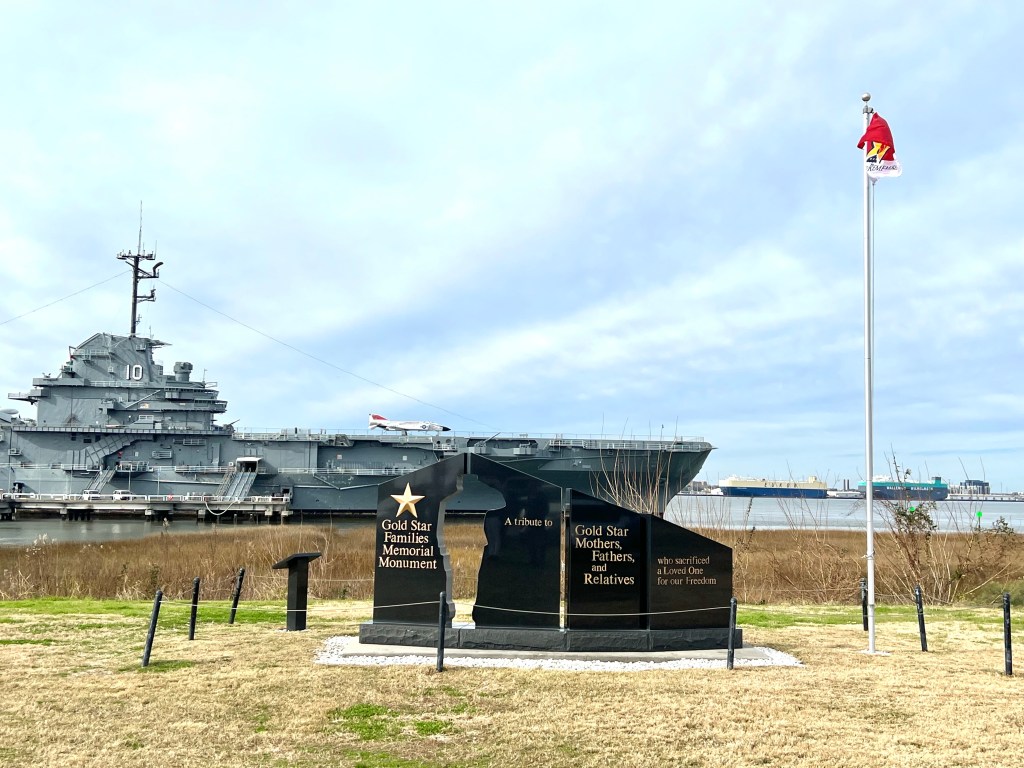
To Patriots Point where we had tickets for a ferry. We arrived early as traffic can be tricky and stumbled on a press conference in the parking lot with the USS Yorktown in the background.
.
.
The mayor and two other officials were rambling on about an upcoming spring yacht race…
.
.
Which we wouldn’t be in the area for nor cared anything about, but my husband being my husband…
.
.
Had to stand there and listen to the whole thing because at the end there was a question and answer period and he asked a question. Why? Because the man has to talk.
While he was doing that I looked around and took photos…
.
.
The bridge from Patriots Point.
.
.
The memorial and half of the Yorktown. I wish I’d known the ship was here, I would have scheduled time to tour her.
.
.
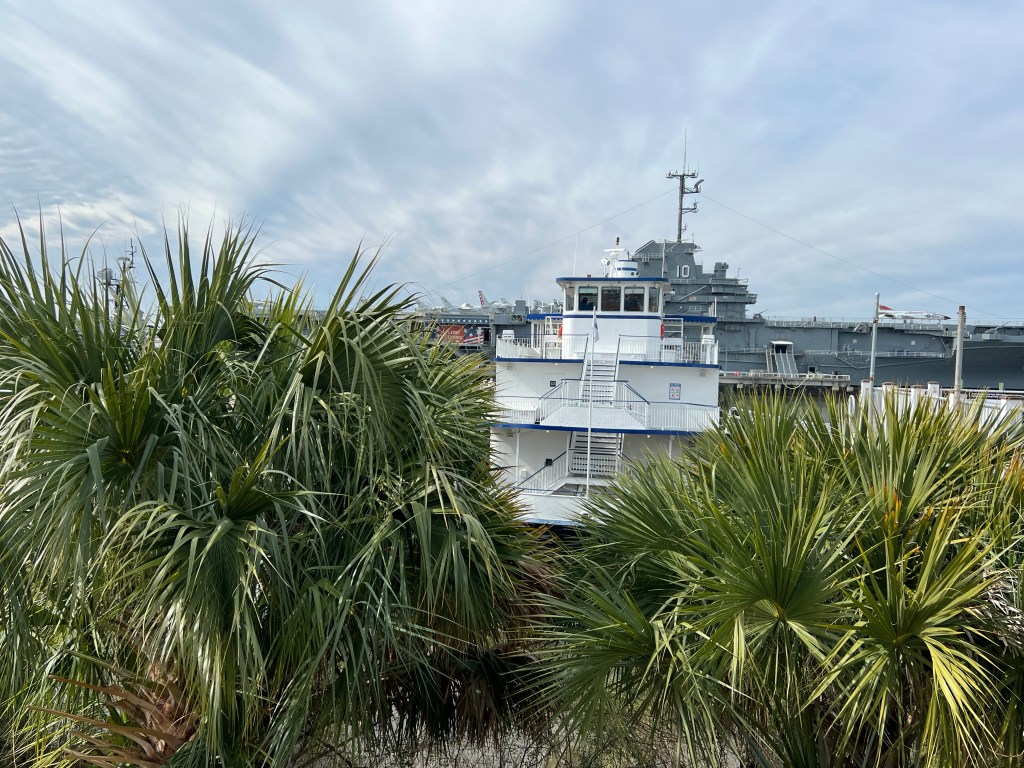
Our ferry.
.
.
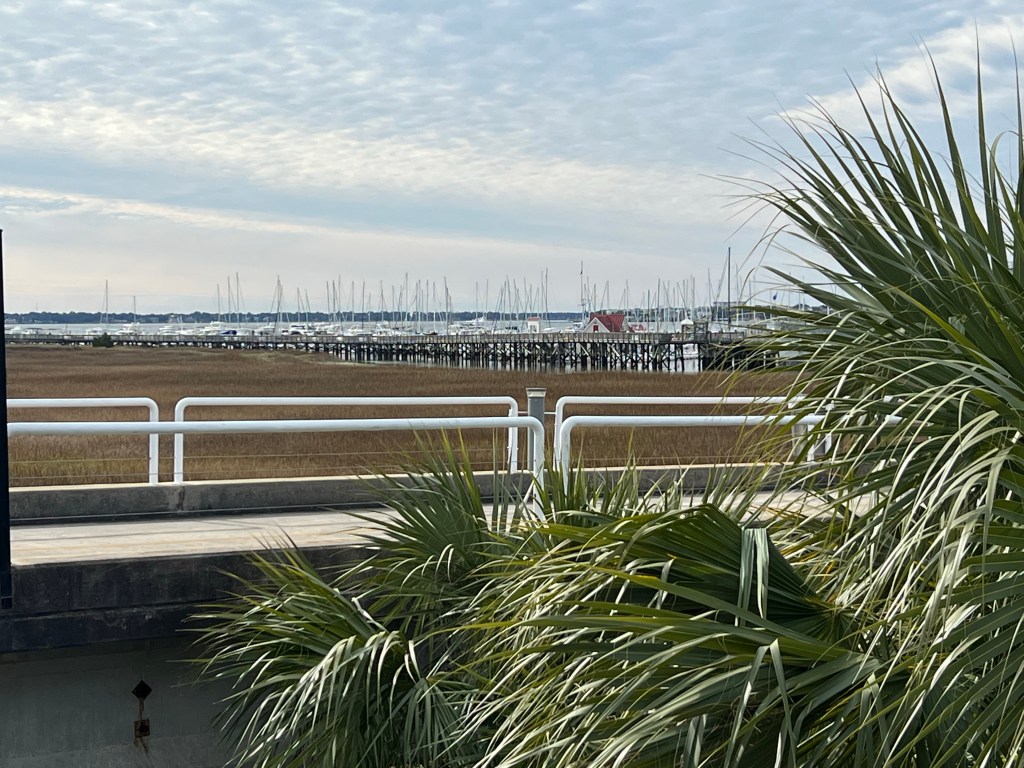
The harbor.
And since my husband was still standing at the press conference? I checked out the gift store.
.
.
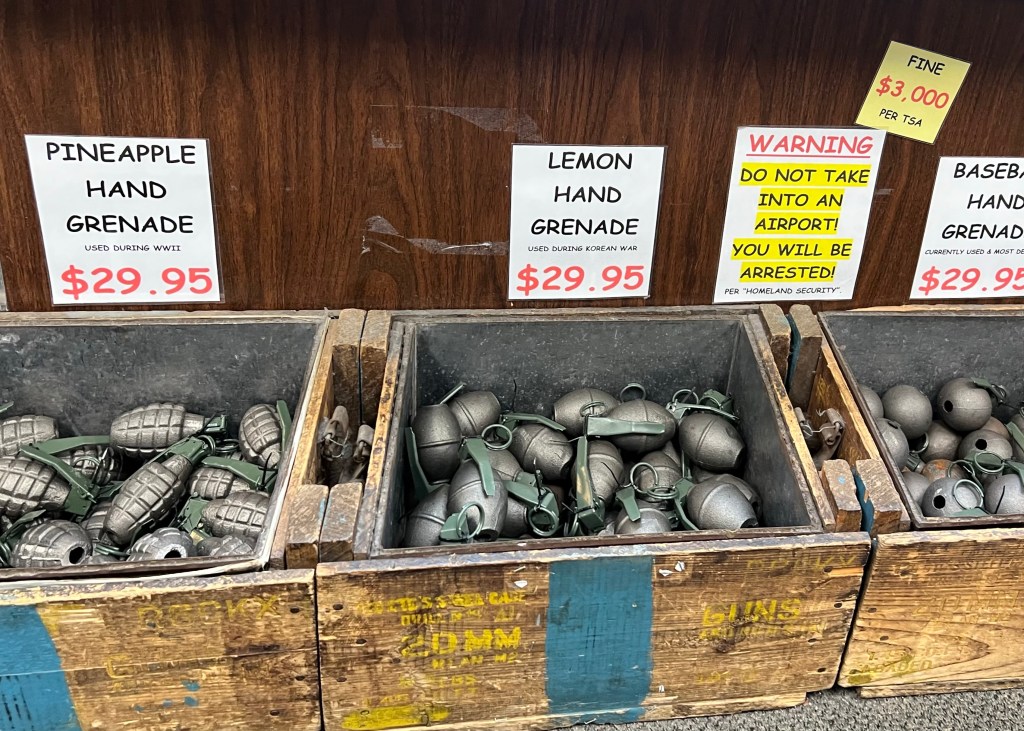
Where the gifts were decidedly low brow.
.
.
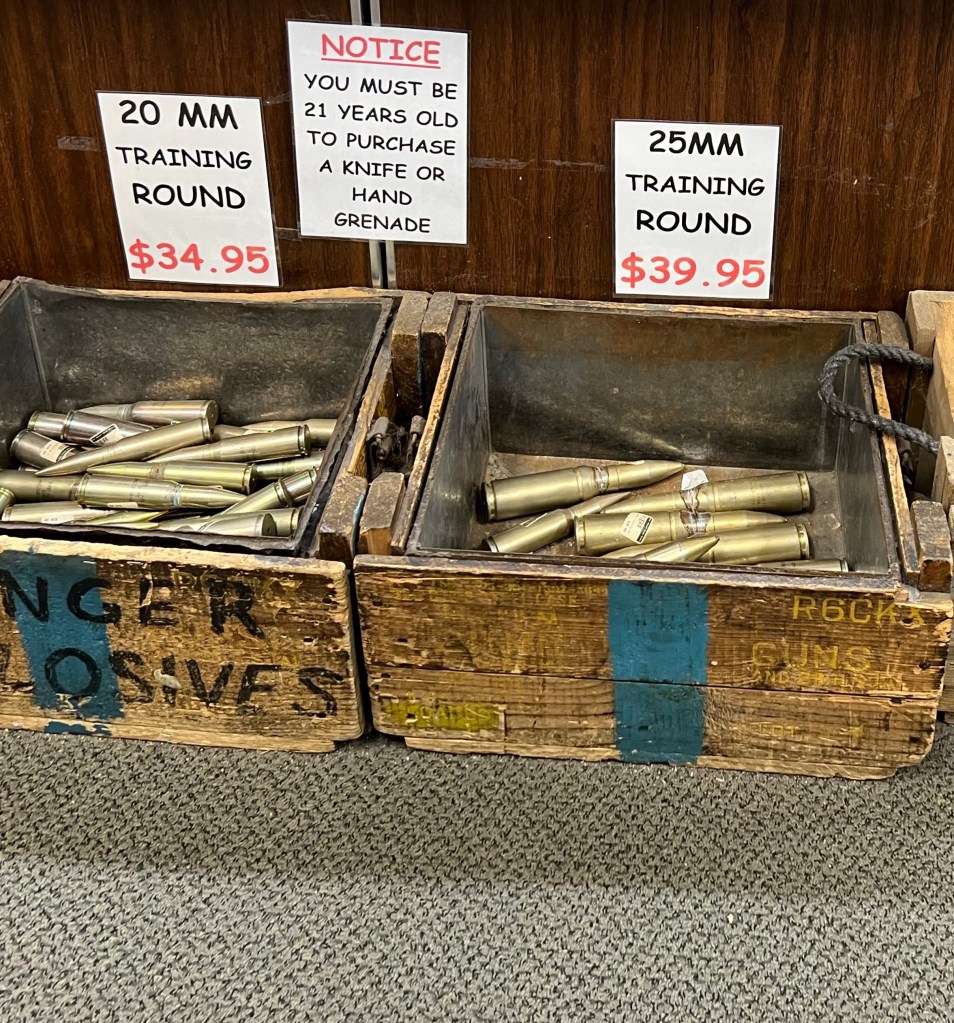
As well as deadly.
.
.
This was absolutely bizarre to me. You’d never see ammunition for sale like this in Maine. It was just sitting there on the floor, in open boxes… where any child could take one.
WTH?
.
.
Press conference over, we boarded our ferry.
.
.
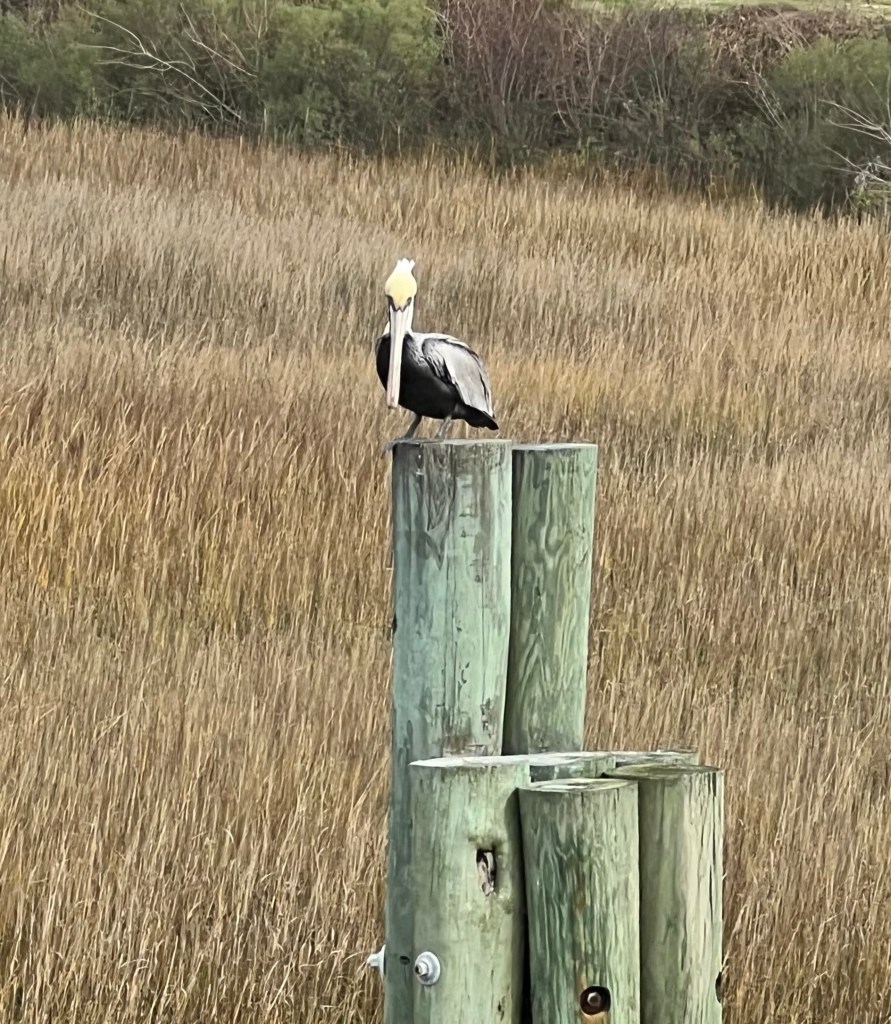
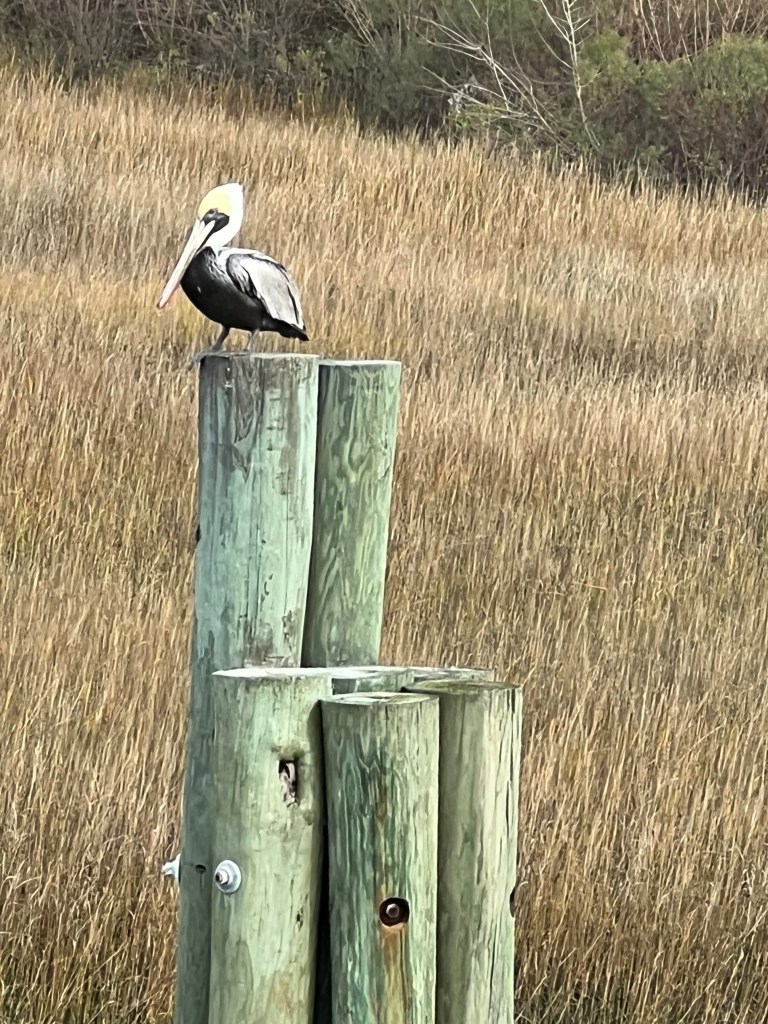
Under the watchful gaze of some pelicans.
.
.
Who pose quite nicely for tourists.
.
.
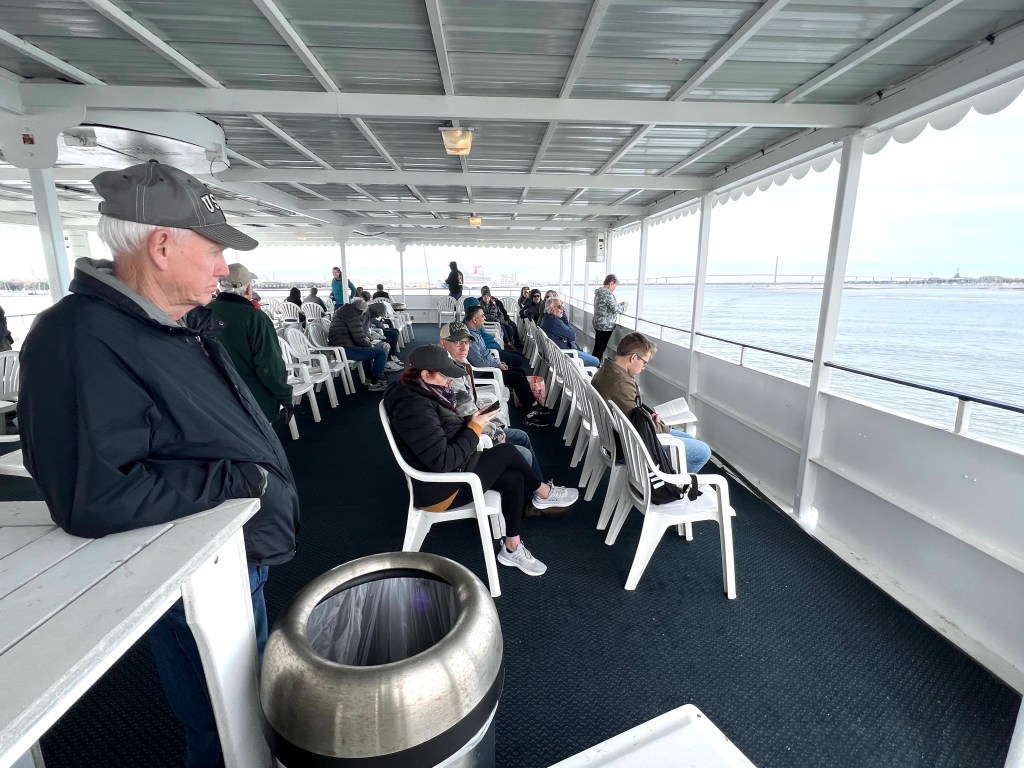
The ferry had two decks but it was a cold and windy afternoon so we went downstairs to cut the breeze.
.
.
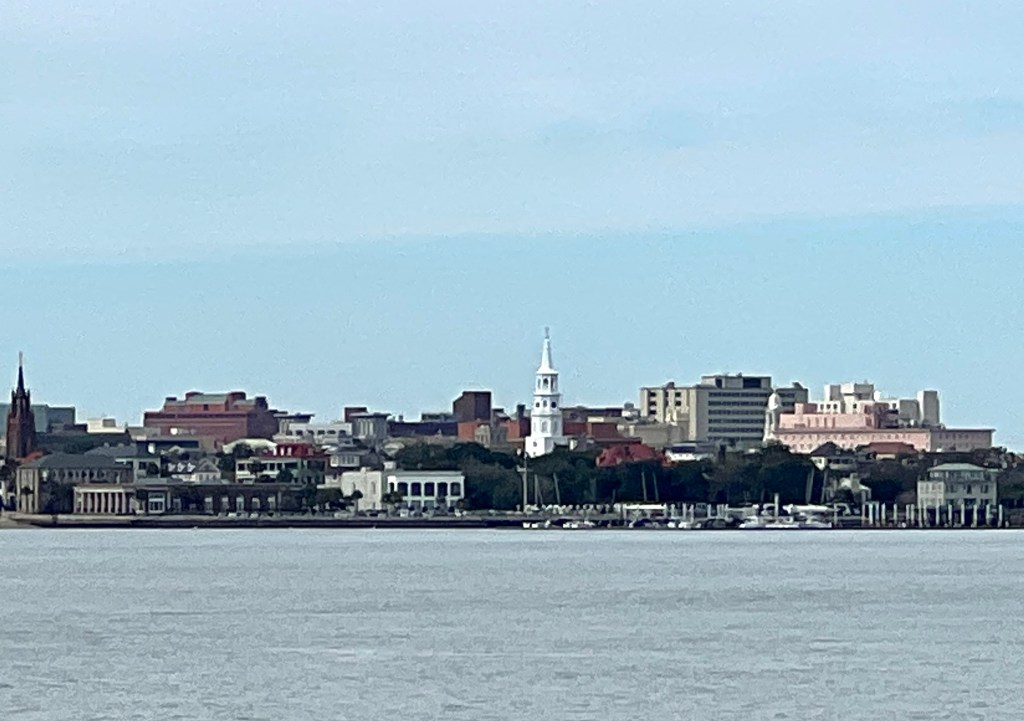
Charleston.
.
.
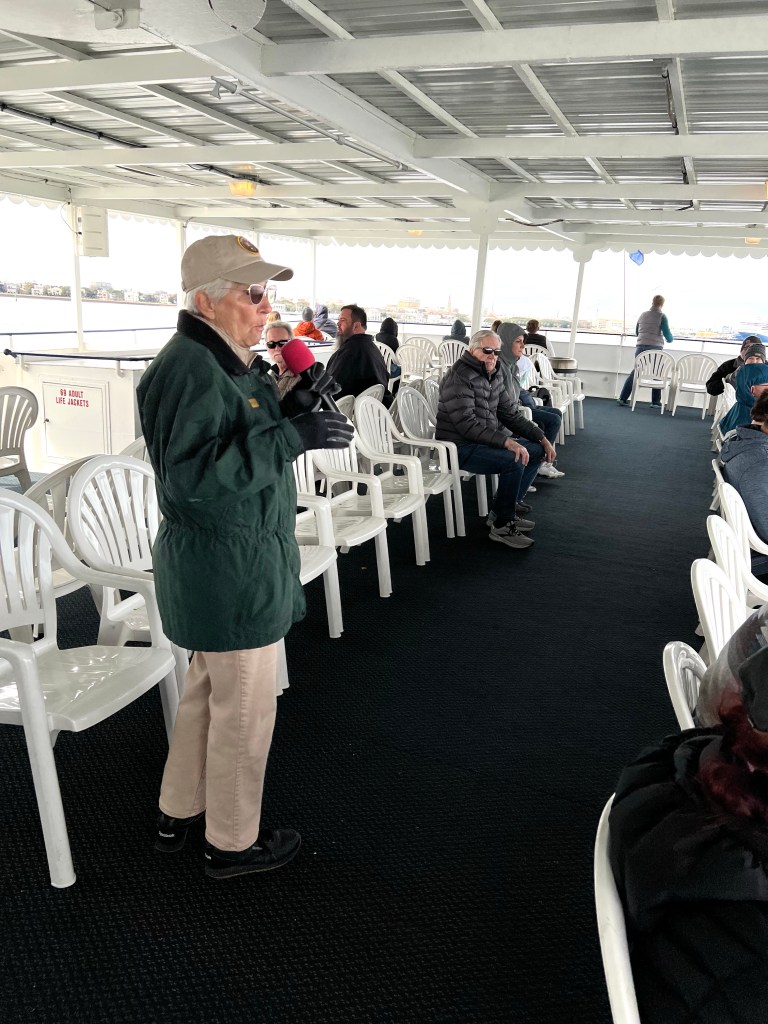
A U.S. Park ranger gave an interesting lecture on the history of the place we were going to see.
.
.
And though it was an overcast sky…
.
.
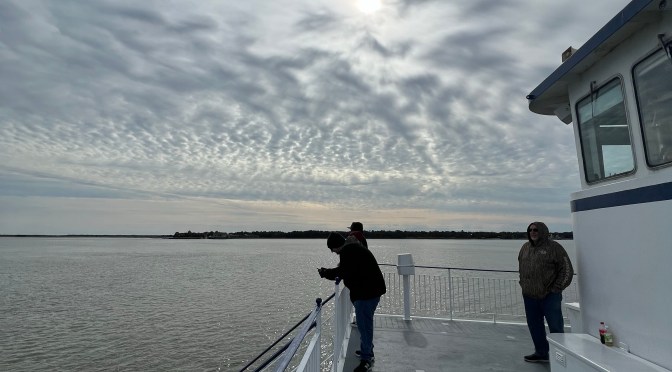
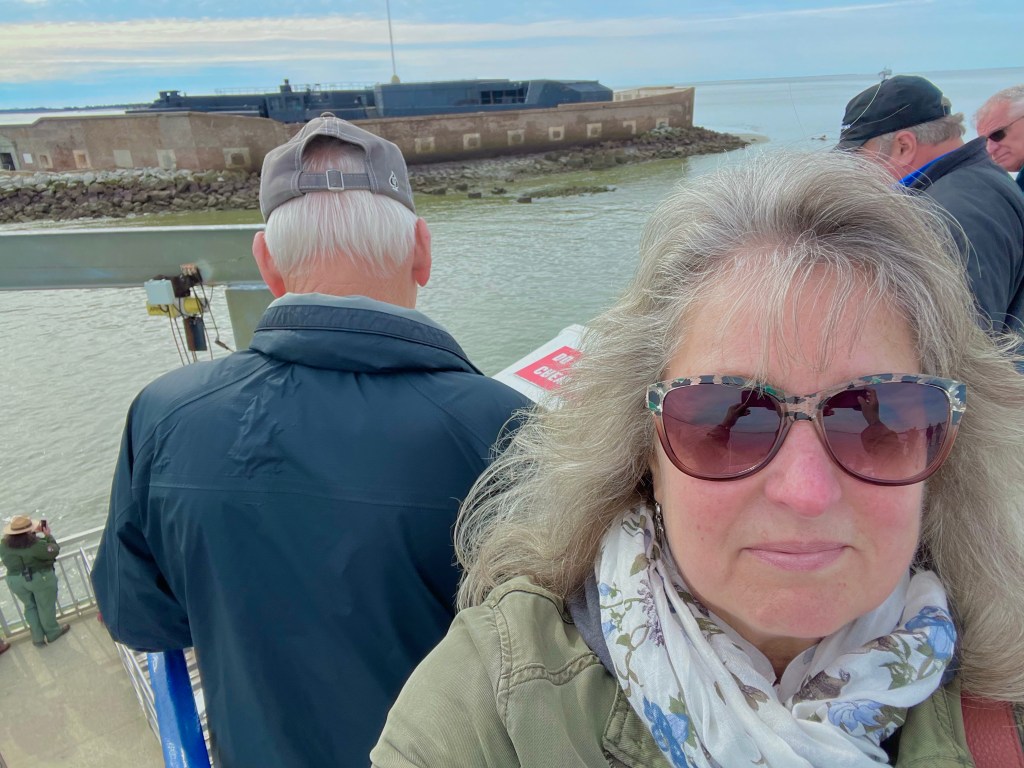
It was still a lovely ride once I dragged my wind beaten spouse upstairs to the open deck.
.
.
After 20 minutes…
.
.
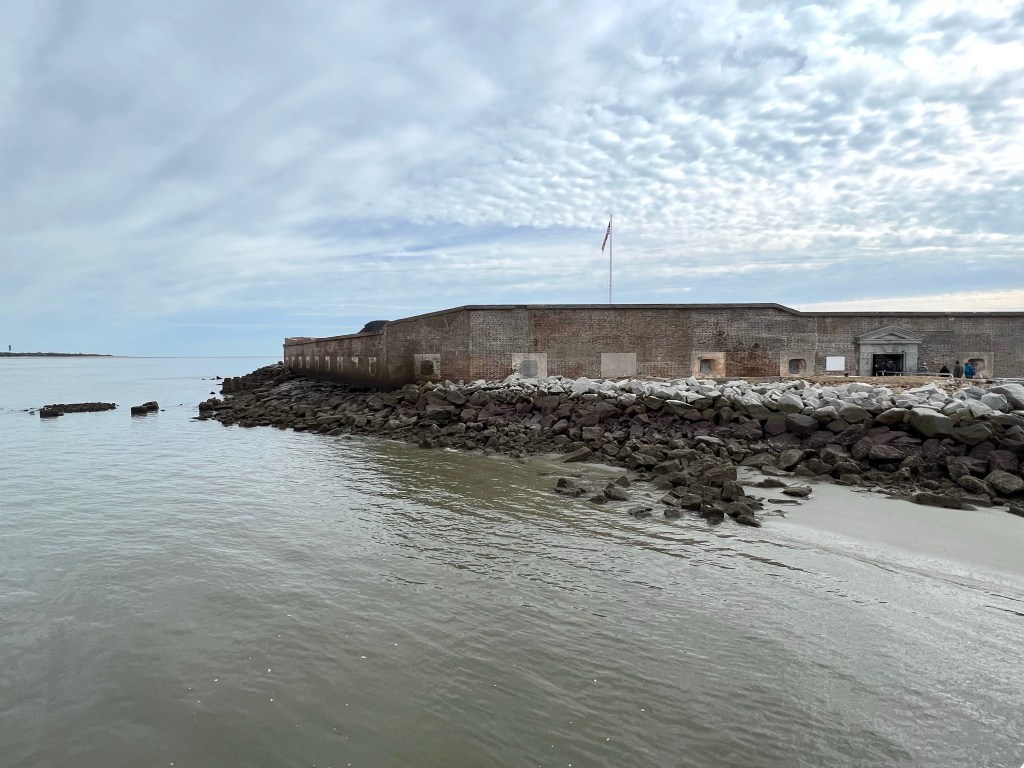
There it was.
.
.
Sitting at the mouth of Charleston harbor.
.
.
We disembarked…
.
.
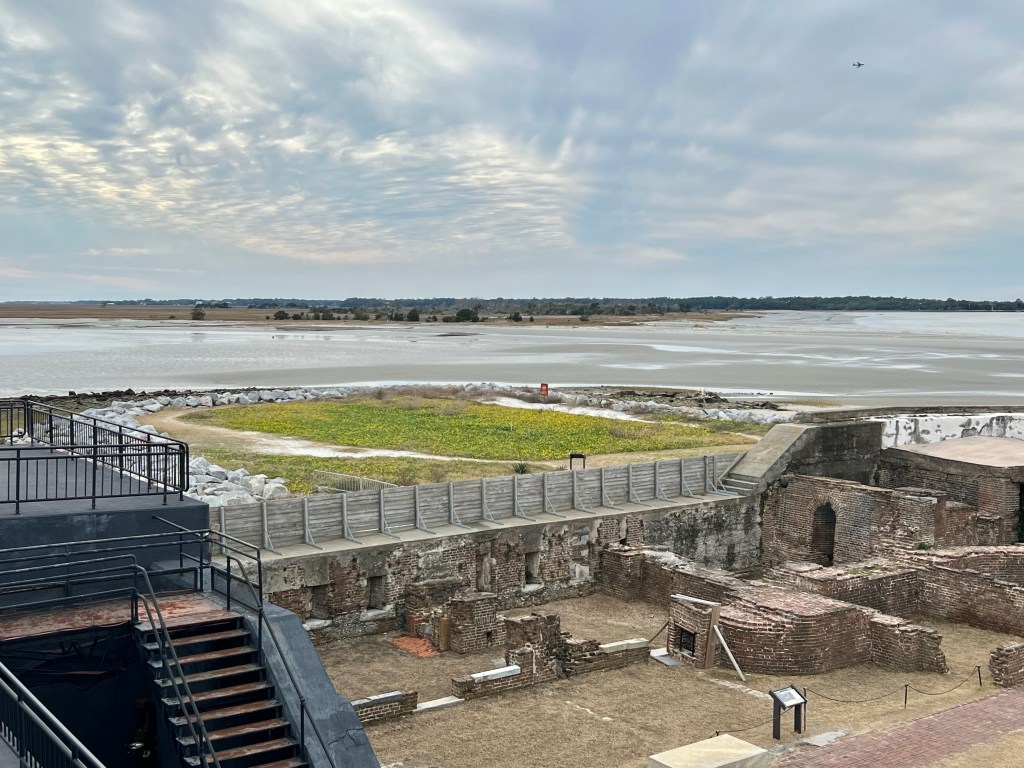
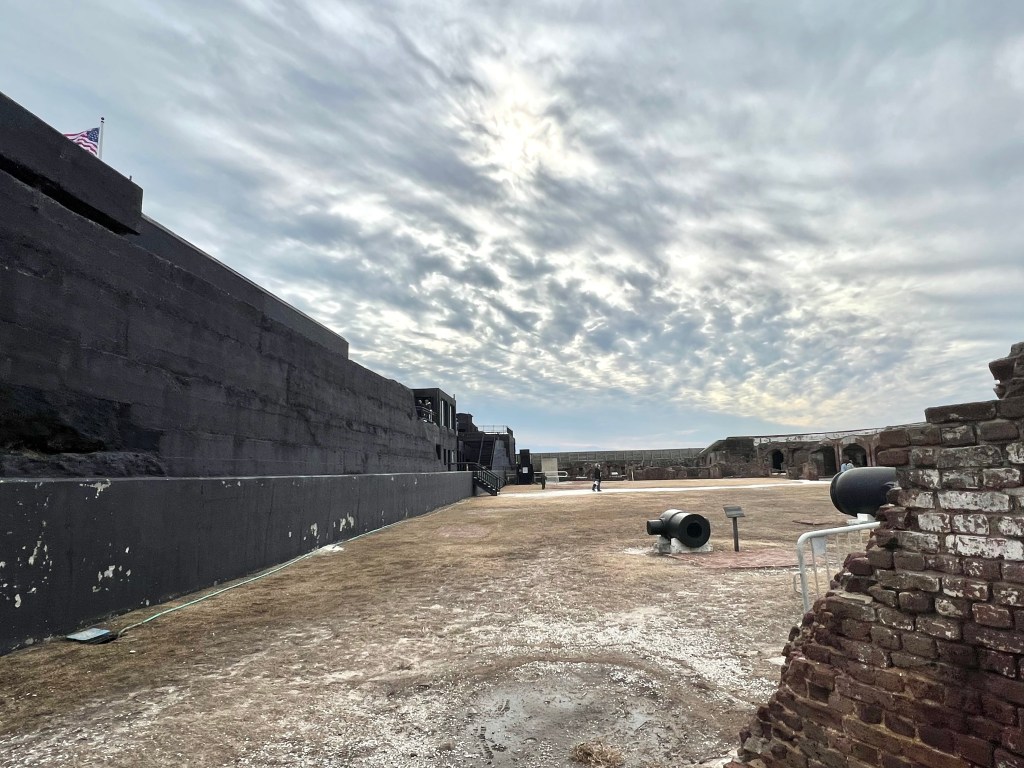
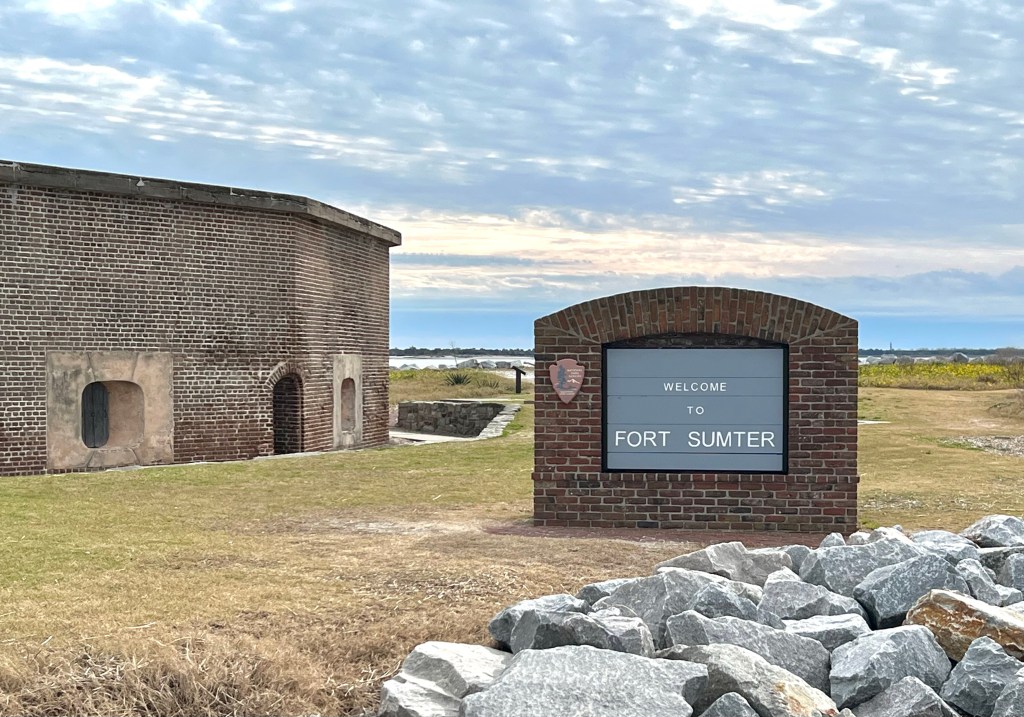
And walked on the very ground where the Civil War began.
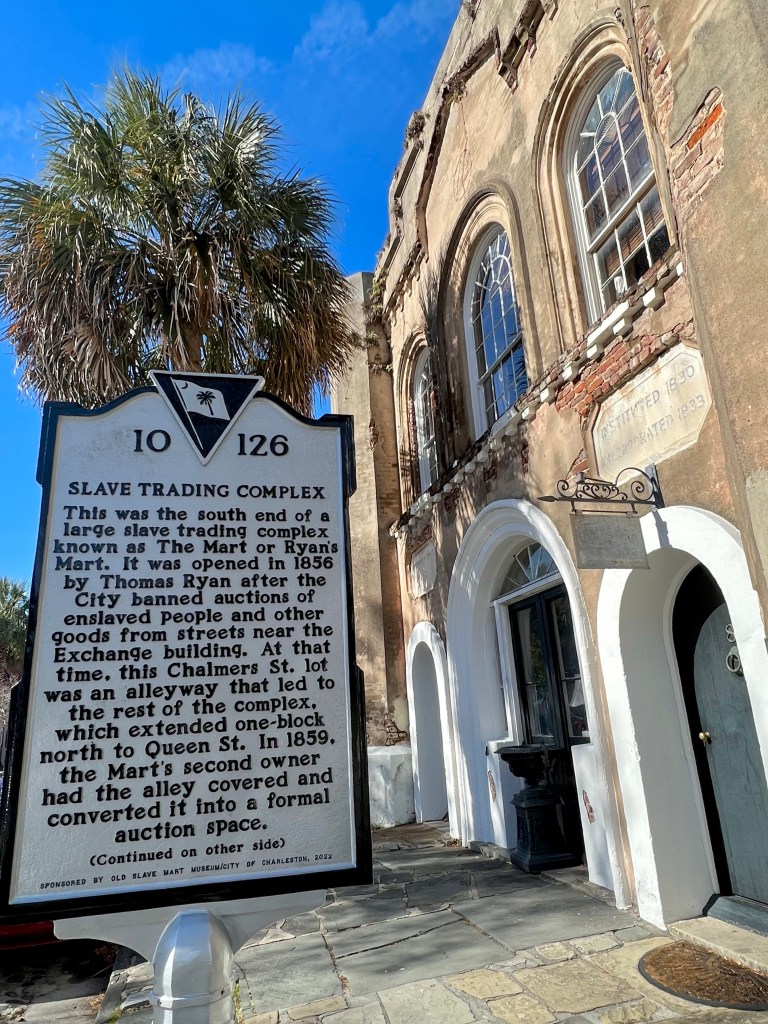
Our next stop in Charleston was a hard one but I’m glad we went.
.
.
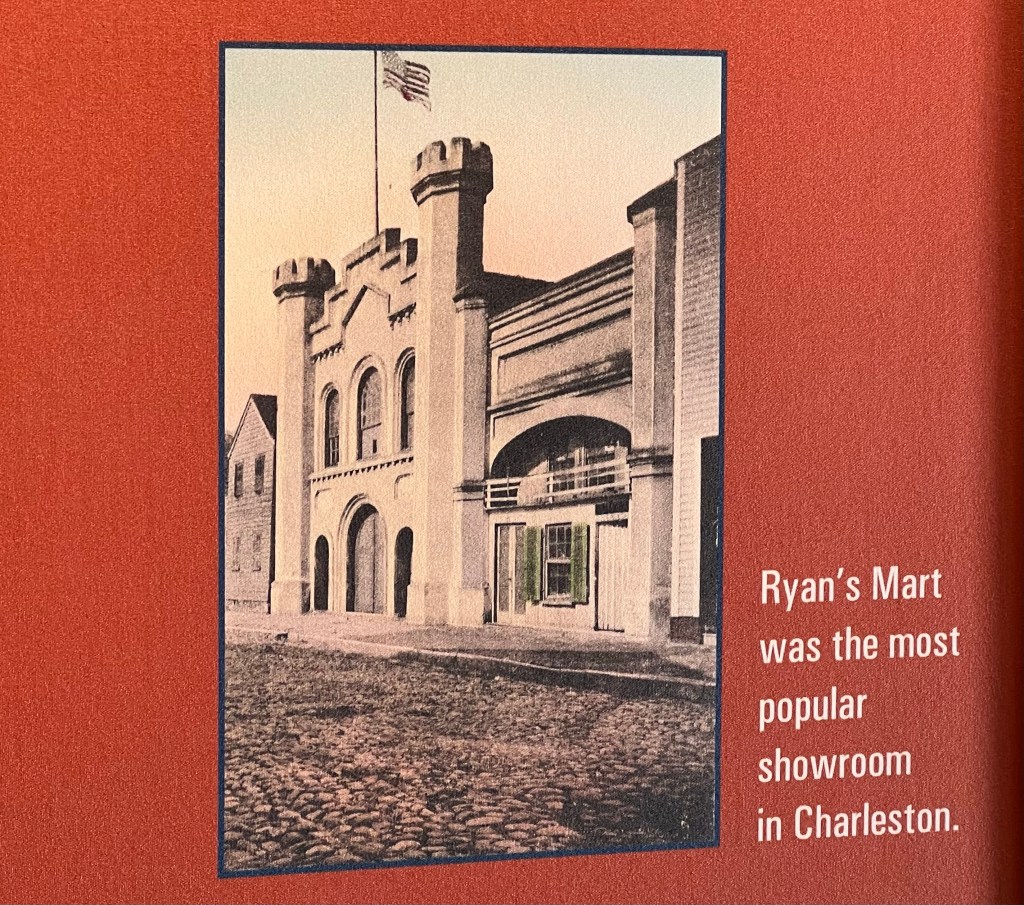
An innocuous looking building, no?
.
.
Perhaps from the outside .
.
.
But its history was written in blood.
.
.
It’s a small museum, but haunting.
.
.
.
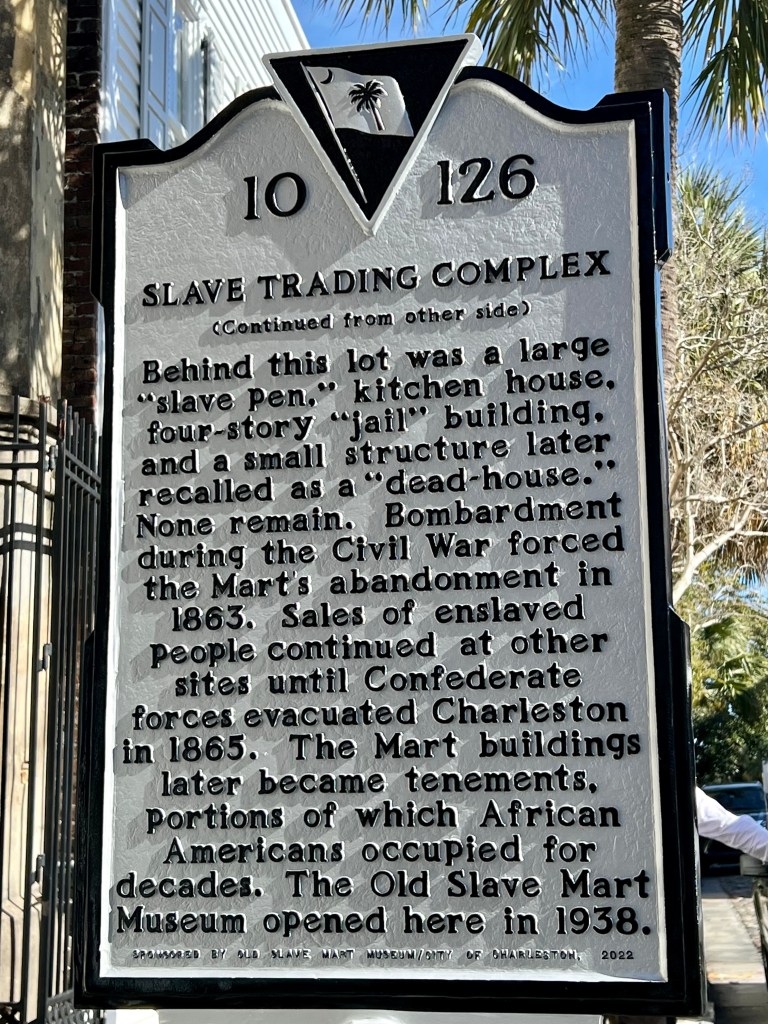
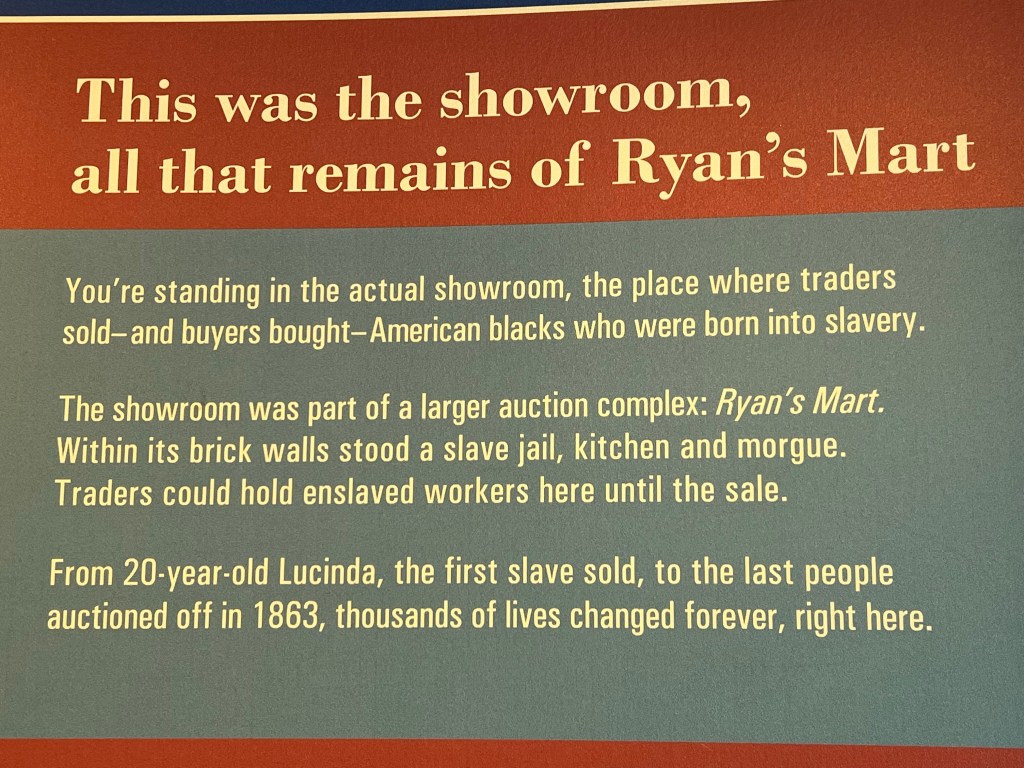
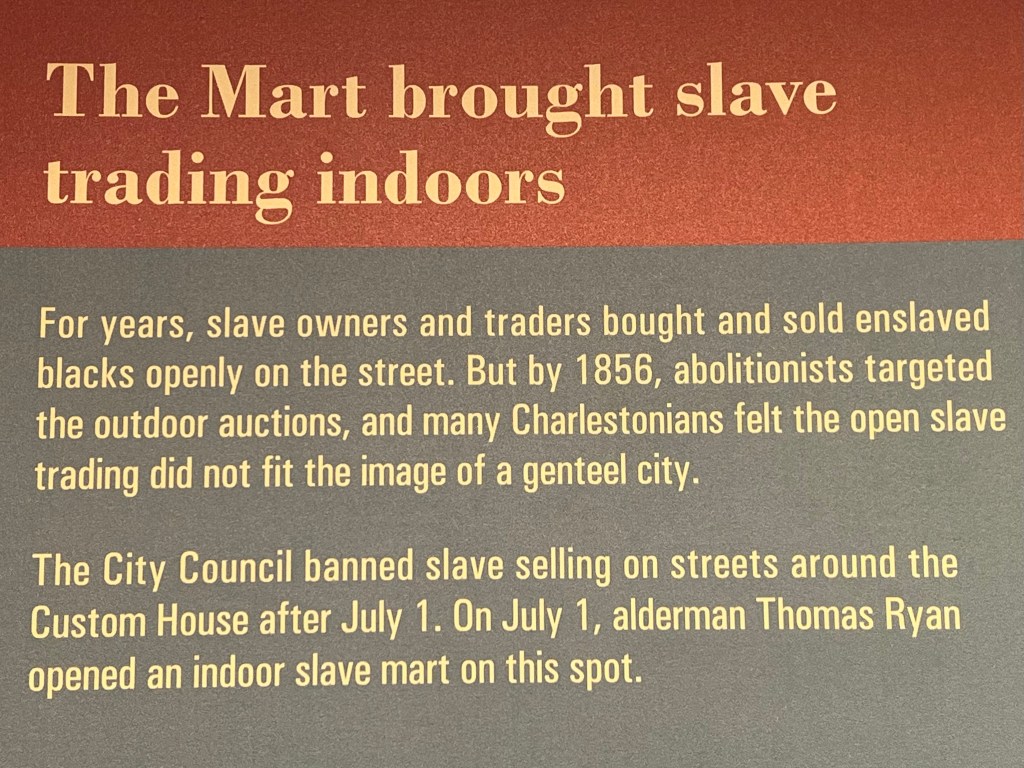
The building exists because this genteel city had to move its shameful business inside.
.
.
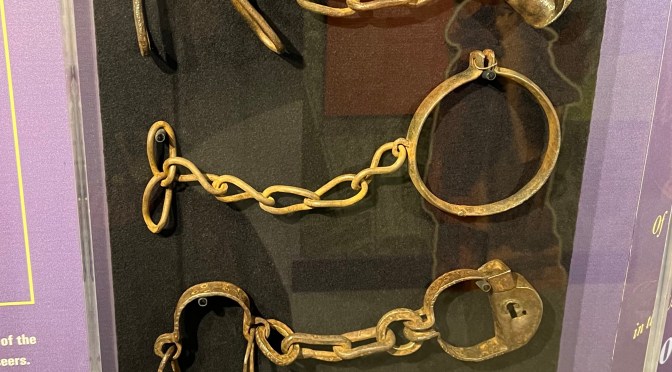
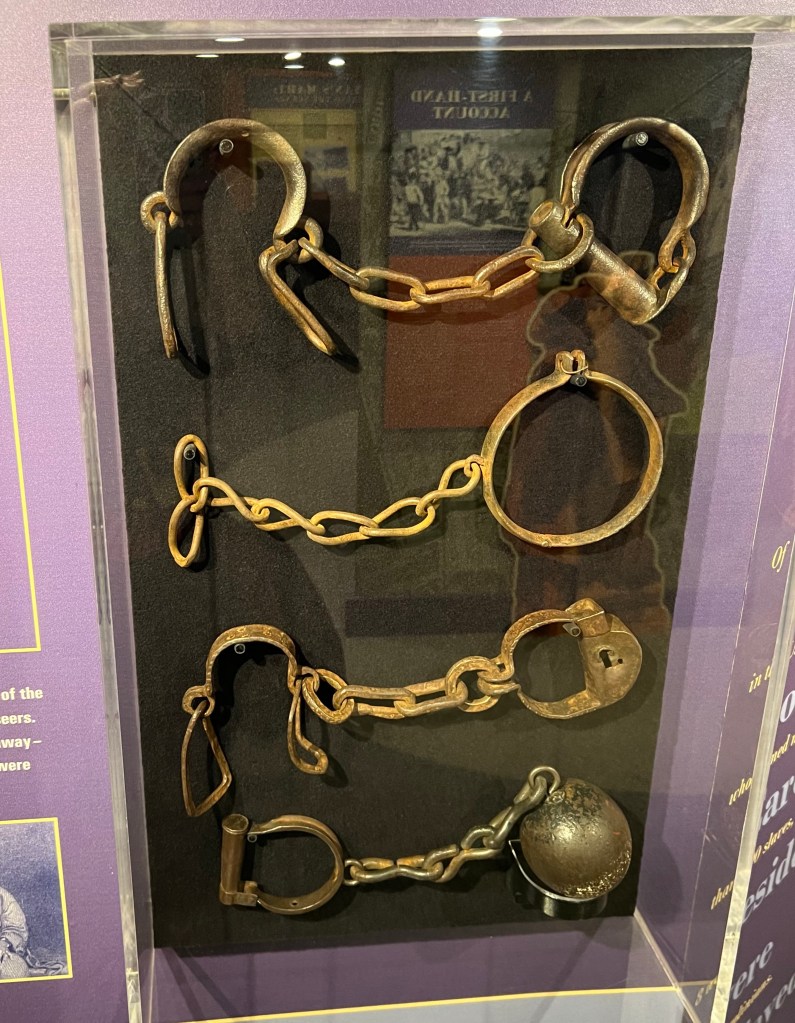
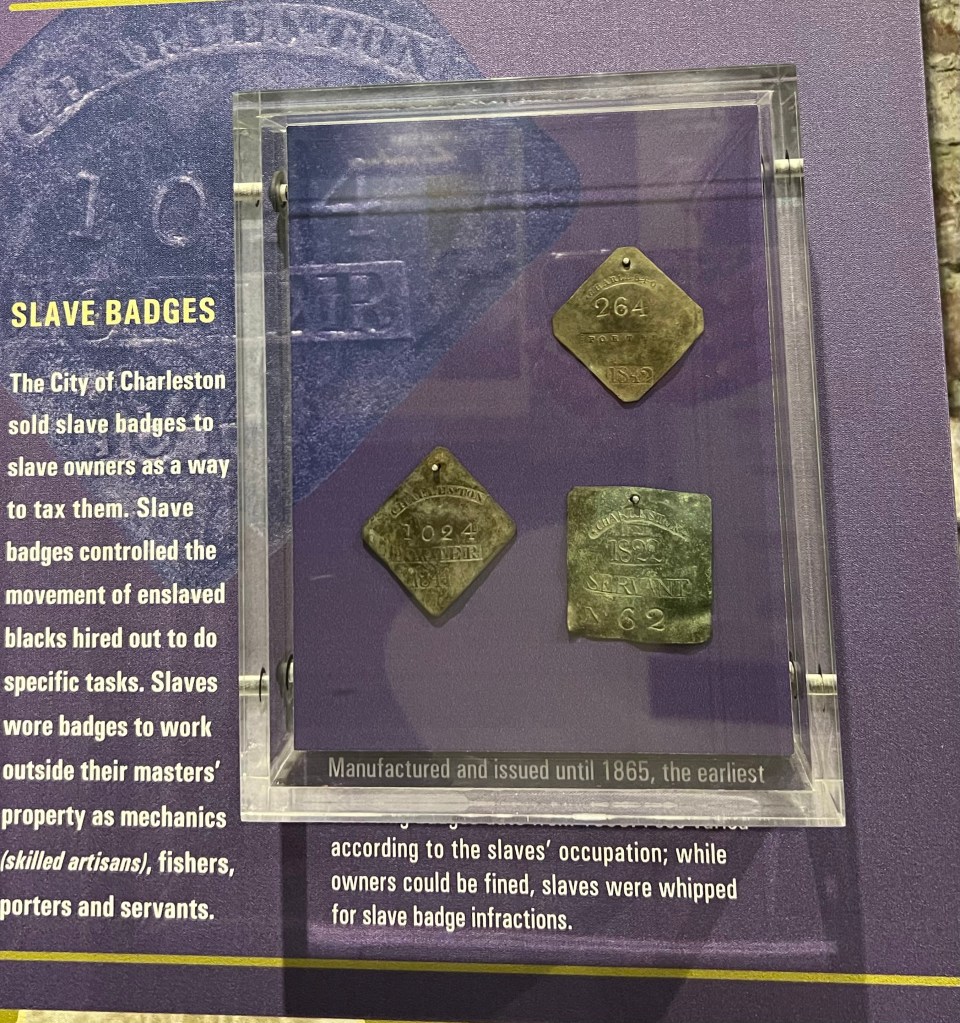
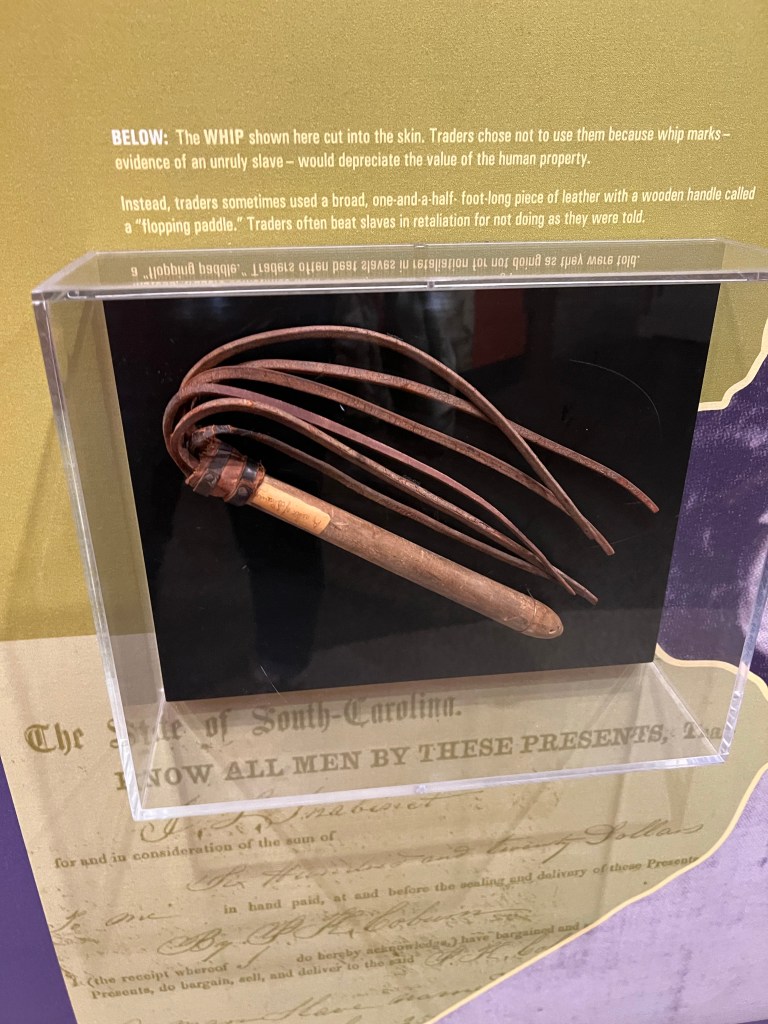
There are disturbing artifacts…
.
.
Each one worse than the last.
.
.
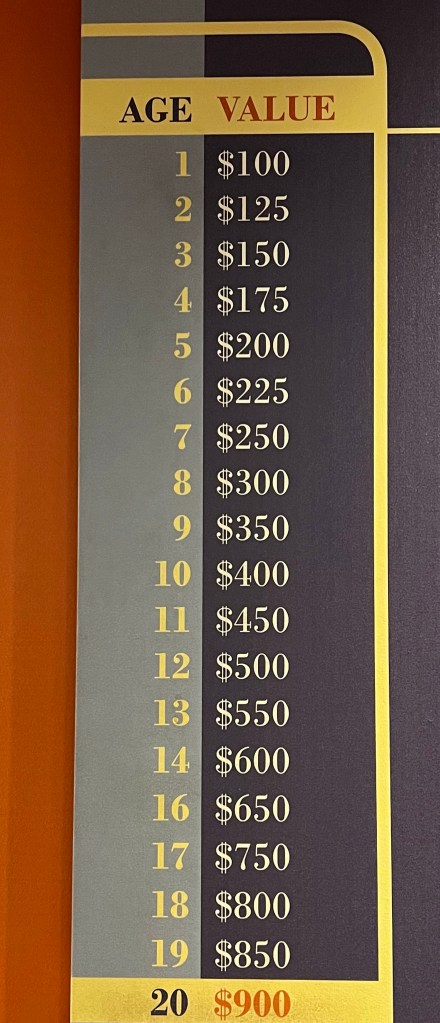
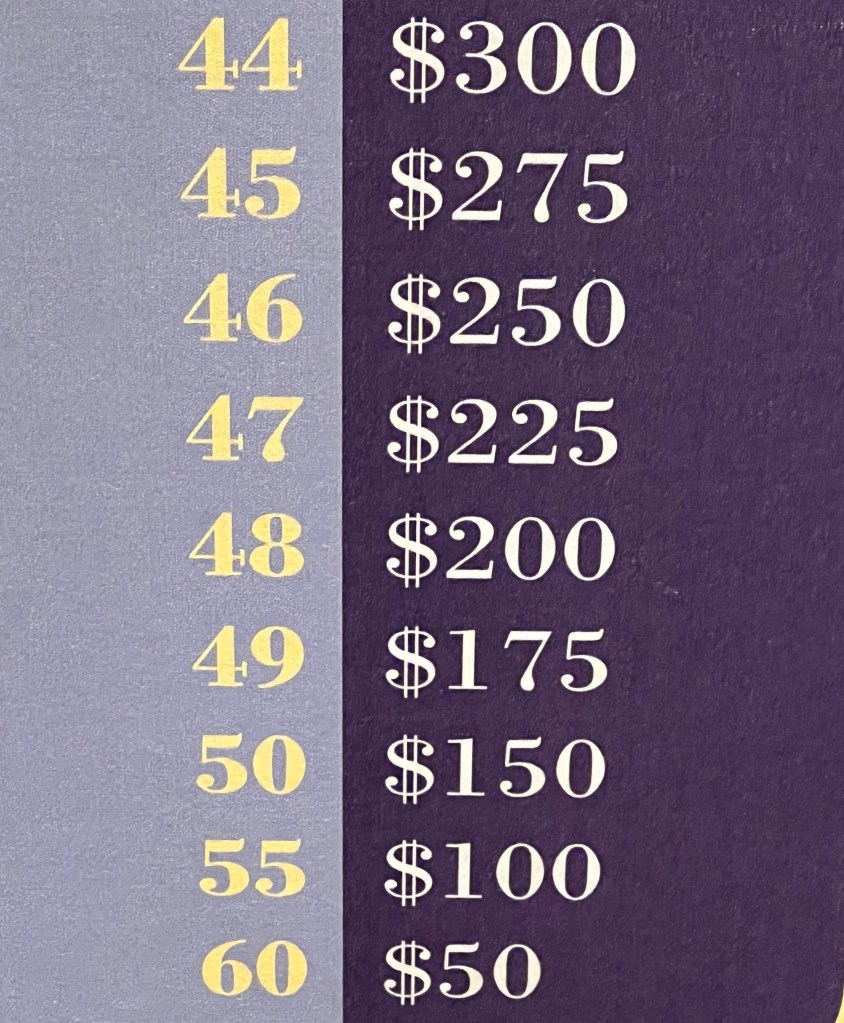
And a few eye opening facts.
What are you worth?
.
.
.
.
A guest speaker was upstairs when we were there and we sat in on her fascinating lecture.
I wish I’d thought to video it because though most of it made my jaw drop in horror, it’s our country’s history and we should all be made aware that slavery was more than the dehumanizing of a people and forced labor.
.
.
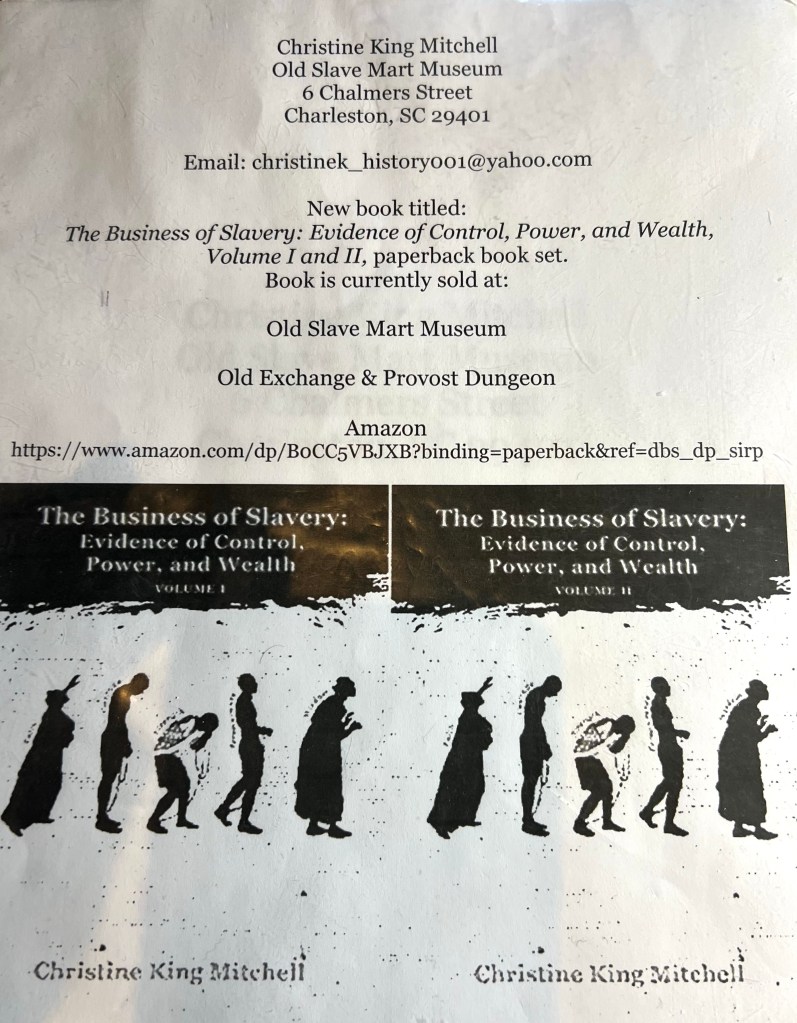
It was a profitable business and the vast array of people who reaped the economic rewards surprised even me.
😰
.
Where there's only one step from the sublime to the ridiculous.



























 River's world.....