

.
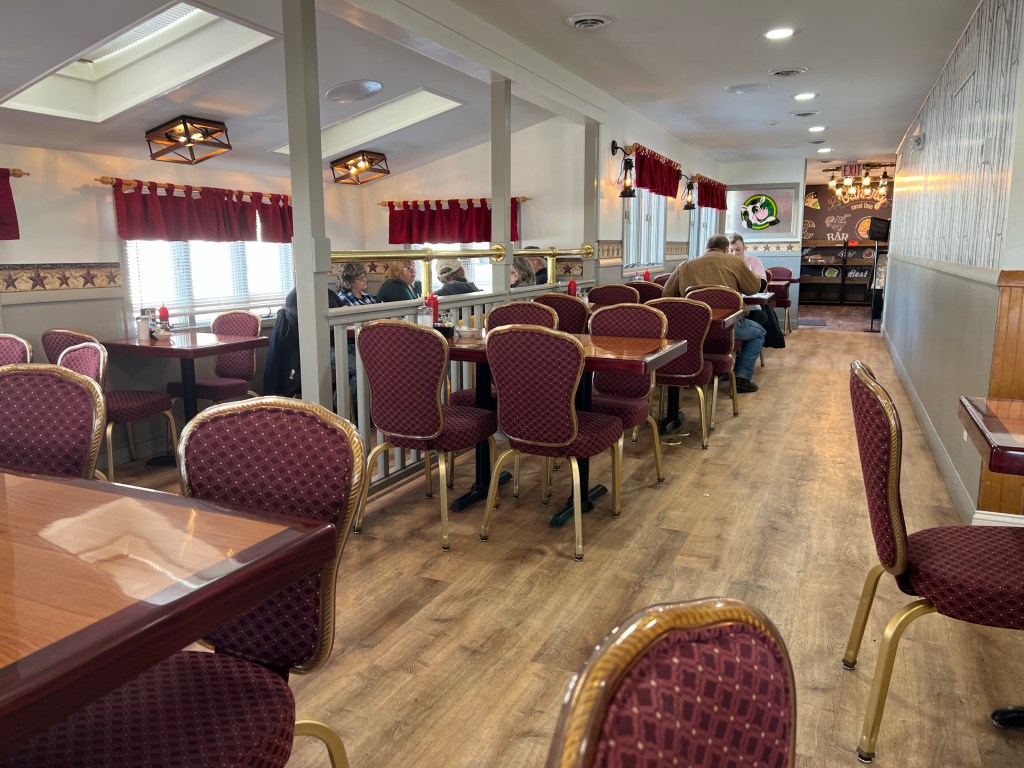
As we headed down the road for our tour of Beaufort ( say it with me now… Byoo-fert. Byoo as in beautiful, fert as in fertile. Byoo-fert. ) SC, the husband wanted a second breakfast and chose this quaint little place in Port Royal.
.

.
Cozy, and small …
.

.
The Old Schoolhouse didn’t take themselves too seriously.
.

.
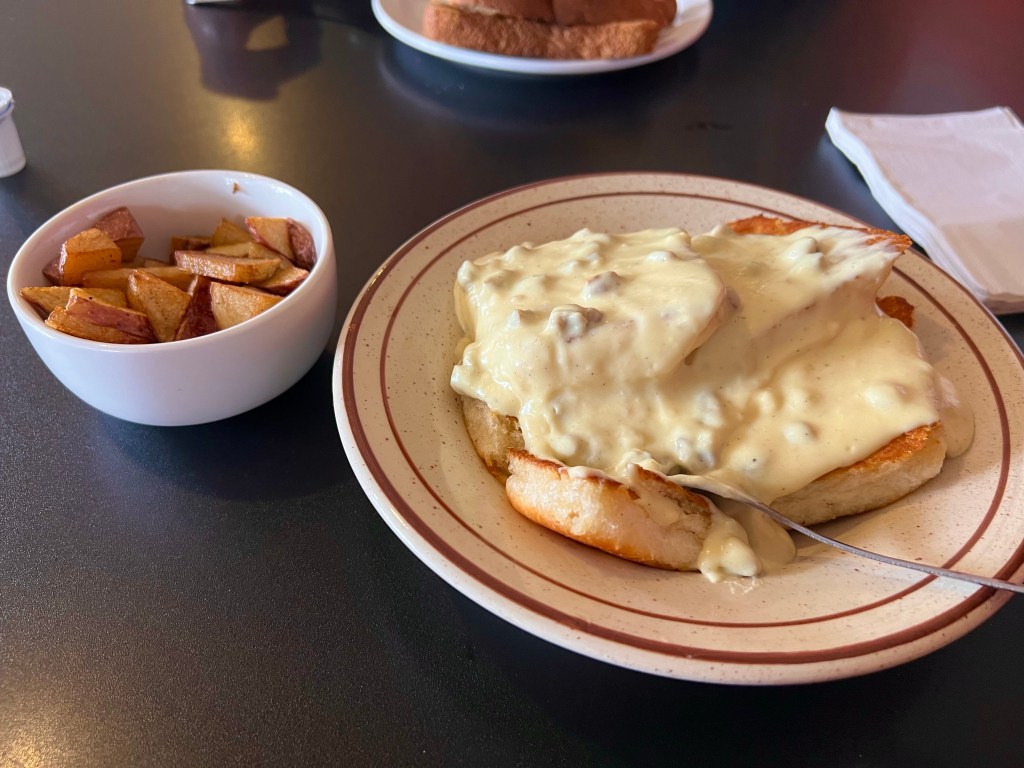
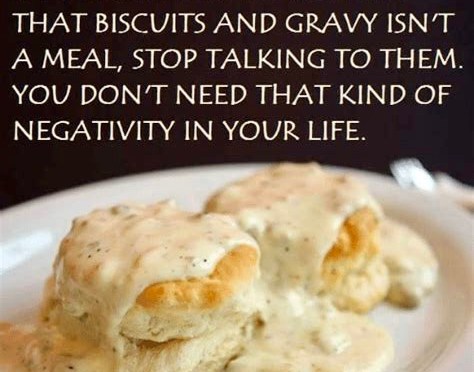
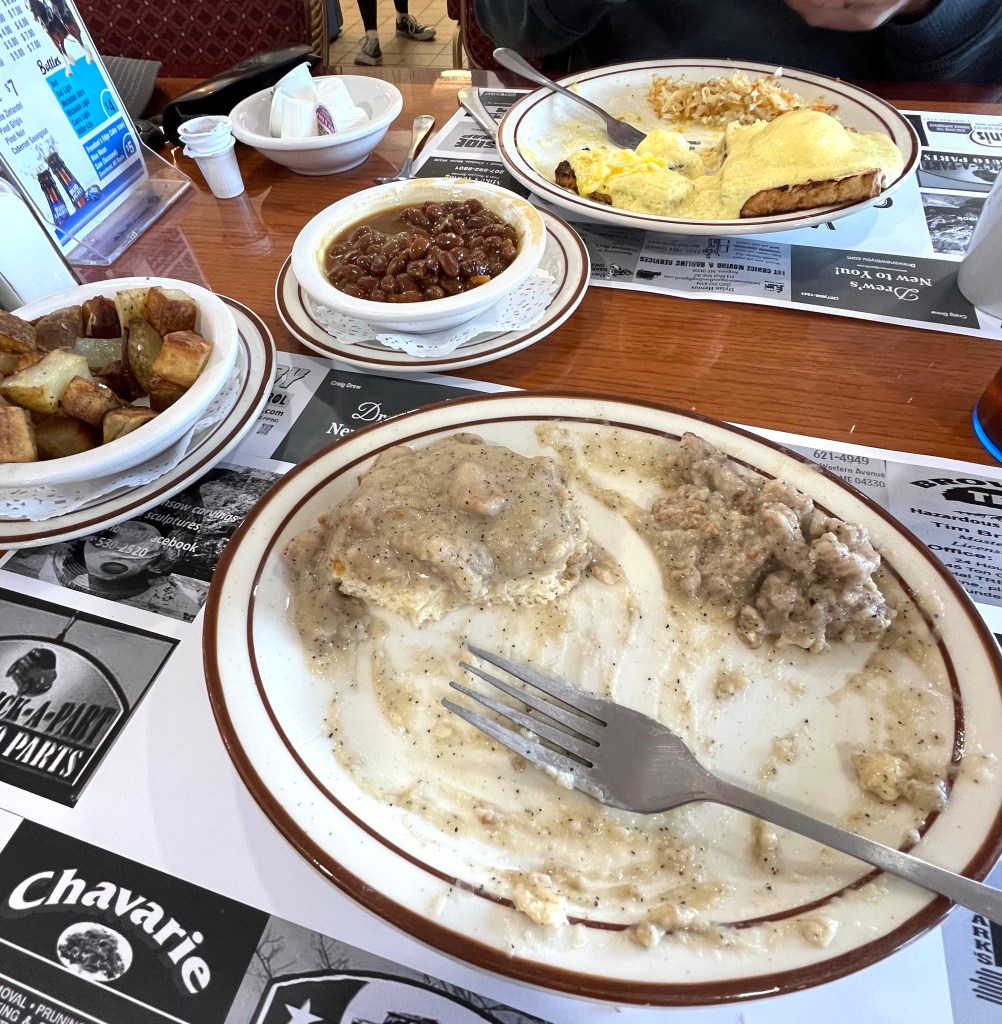
I’m not a big breakfast person, but since it looked like this might be lunch as well, I looked forward to some true southern biscuits and gravy. Finding that dish in Maine is a rare occurrence so I was fully prepared to splurge.
.
.
To say I was disappointed with this (yellow… WTH?) measly batch of gravy with very little sausage (not to mention flavor) is an understatement. I was in the south…
Y’all are supposed to do this right!
Unsatisfying breakfast/lunch over, we made it to Beaufort. (Did you say Byoo-fert in your head? Good. Let’s continue. )
.
.
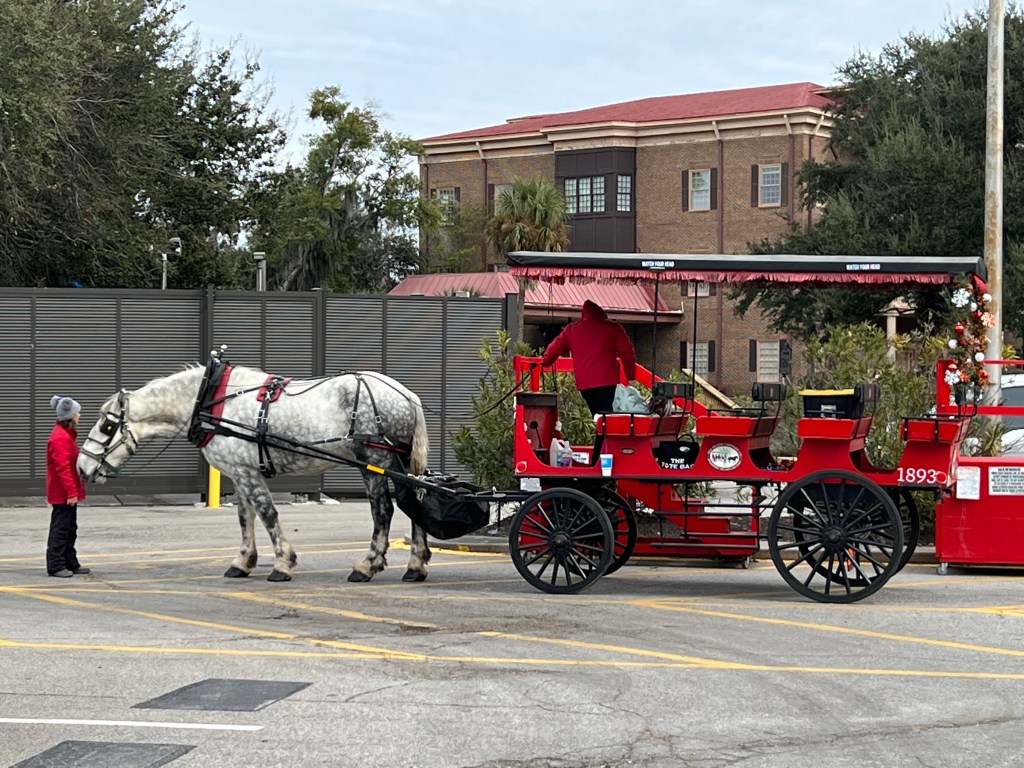
Where we had tickets for a horse drawn carriage tour around the city. That white horse was in training…
.
.
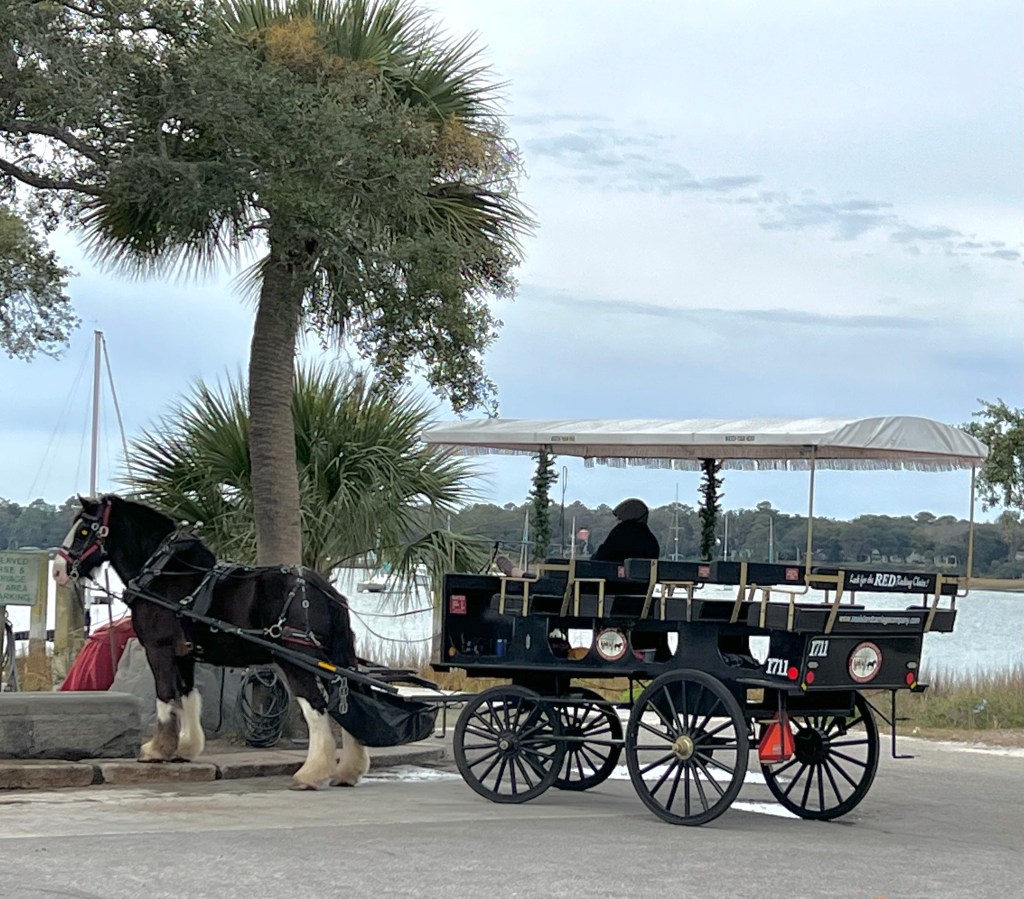
So we had Angus.
.

.
My husband rolled his eyes when I said I wanted to do this, but after a few minutes into the historic tour? He was hooked.
.
.
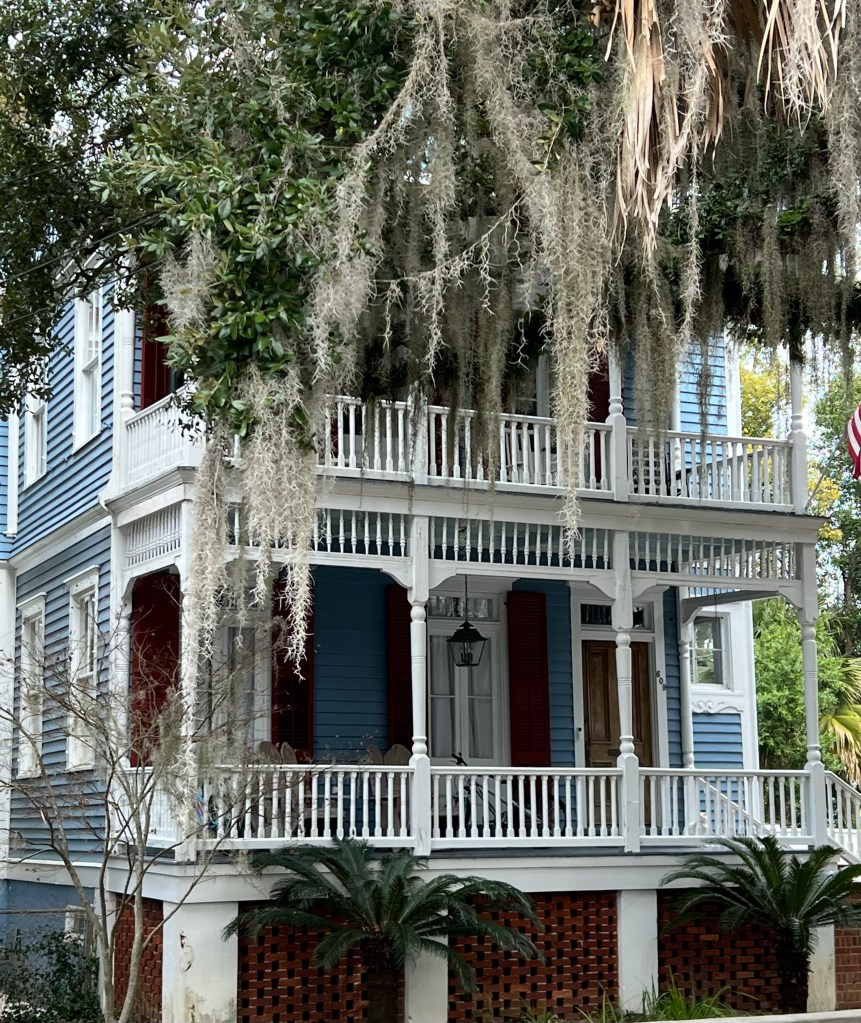
Our tour centered on The Point. The old section of Beaufort filled with beautiful Civil War era homes.
.
.
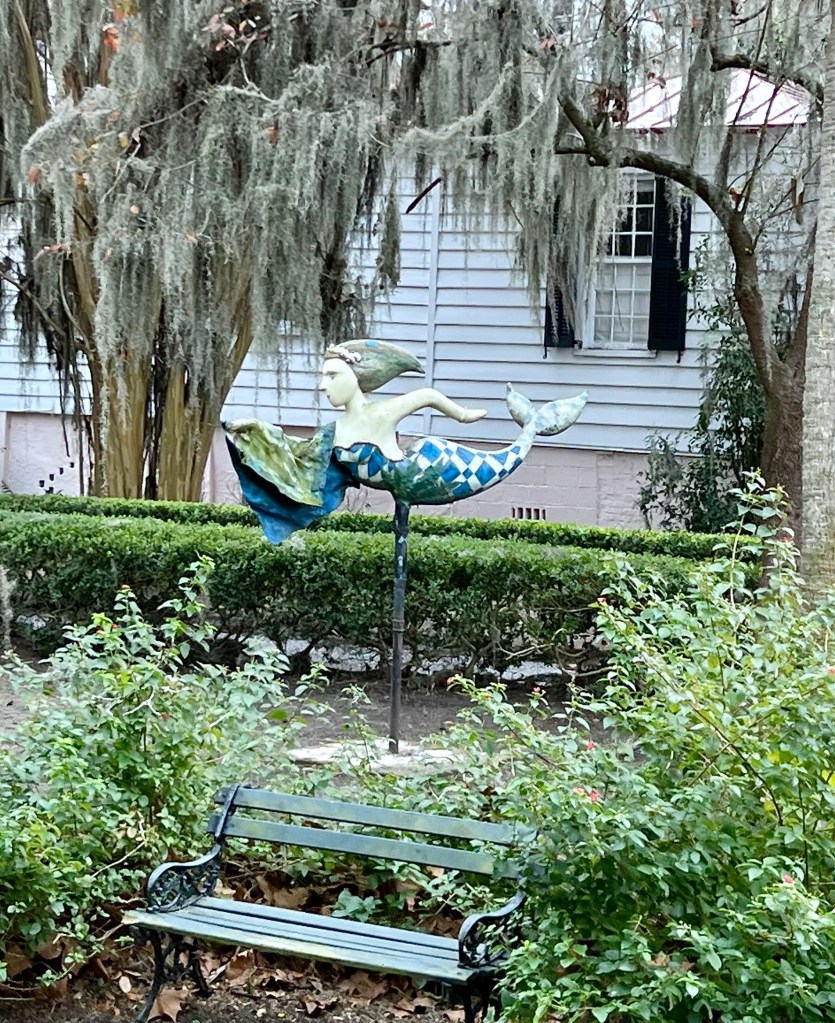
And some quirky art.
.

.
At the beginning of the war the savvy residents of Beaufort took part in what is now known as the Great Skedaddle.
In the panic of The Great Skedaddle of 1861—the hasty escape of white residents from Beaufort, South Carolina, six months after the start of the Civil War—anything that could not be buried or carried was abandoned. Enslaved people were left behind along with all the wealth accumulated from nearby cotton plantations: expensive furniture, horses, and clothing. When the Union Army arrived, there was only one white man left in town and he was dead drunk, or so the legend goes.
As history would have it, what drove white Beaufortonians from their homes was ultimately what saved the town they left behind. Unlike burned and battle-scarred Charleston, 50 miles to the north, the Union Army claimed Beaufort without a fight. Setting up operations in the town’s stately mansions rescued them from destruction. To this day, Beaufort has more surviving antebellum architecture than almost anywhere else in the South.
.
.
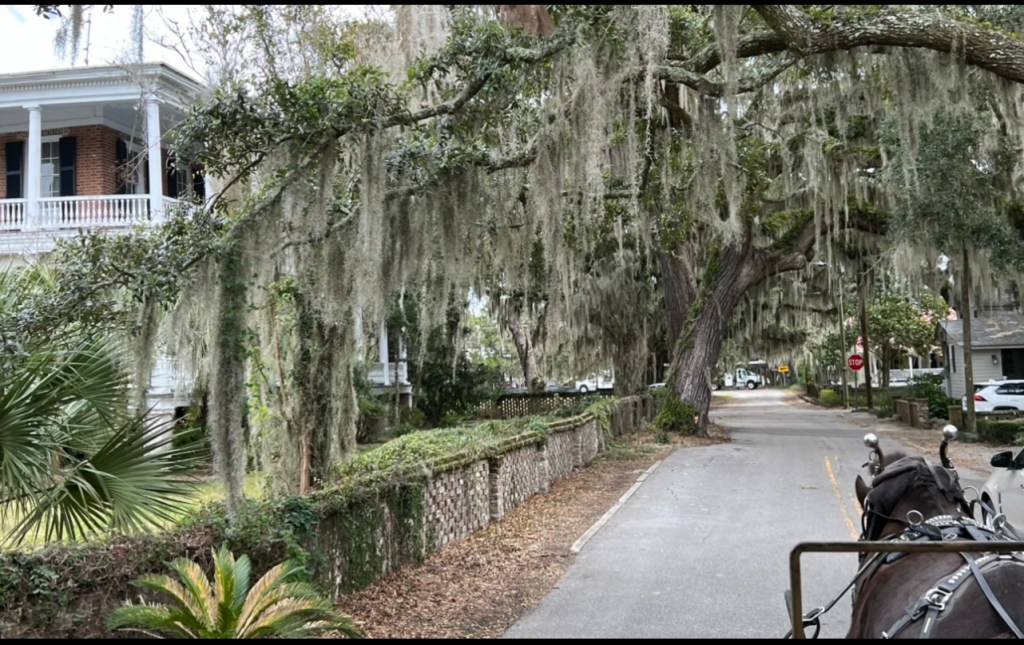
It’s a lovely area, literally lost in time and lovingly preserved.
.
.
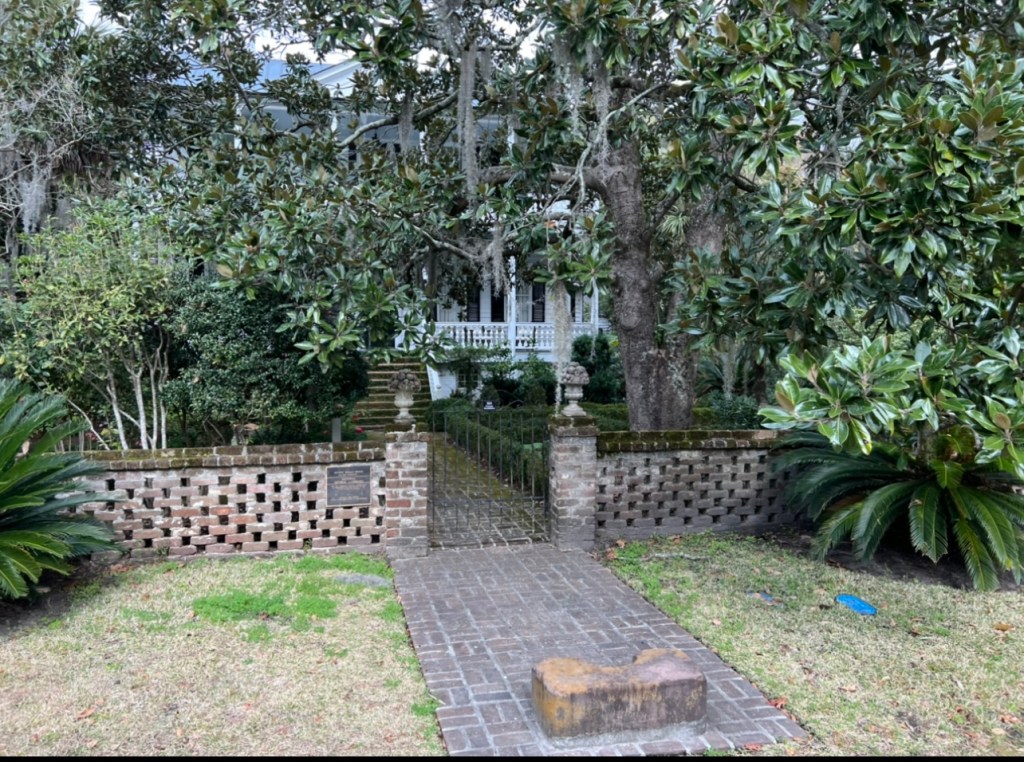
That stone out front? A step for women to board carriages without displaying their ankles. Only shameless hussies flashed those.
.
.
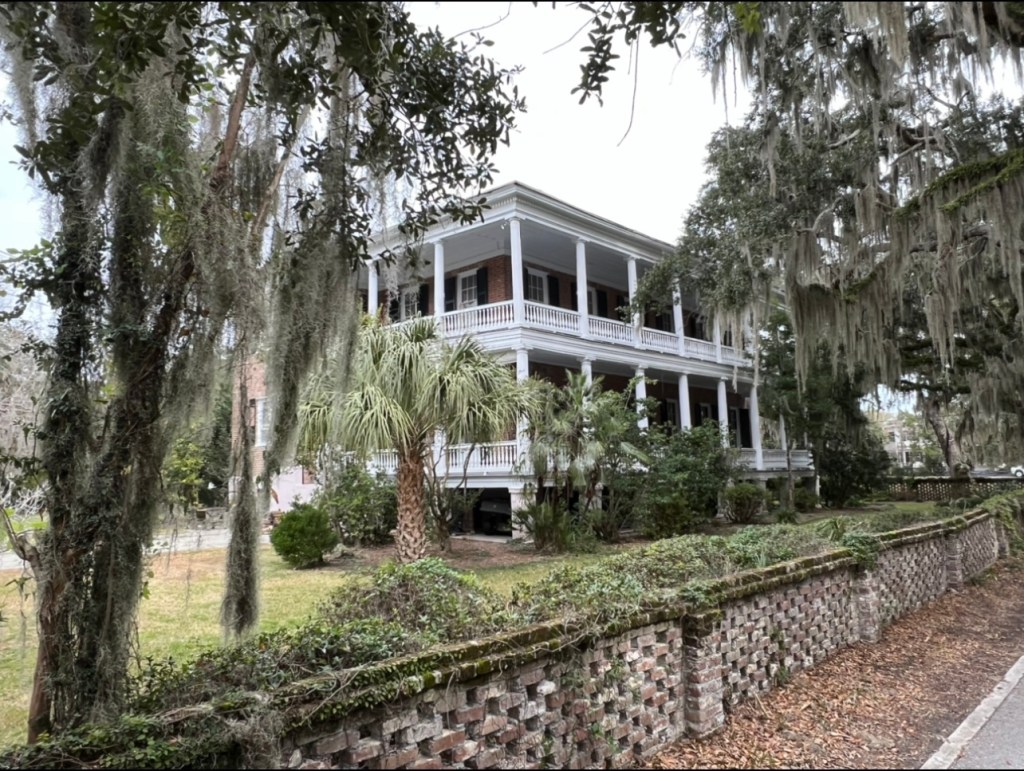
This wall is called pigeon hole brick and is completely original.
.

.
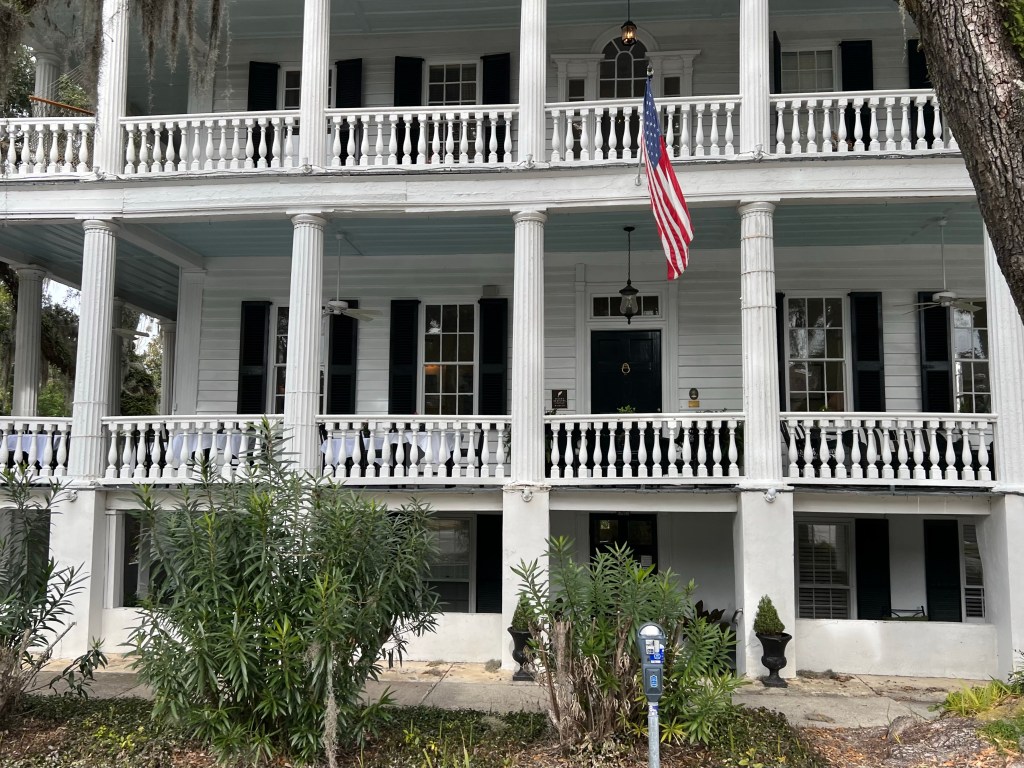
The grand old homes…
.
.
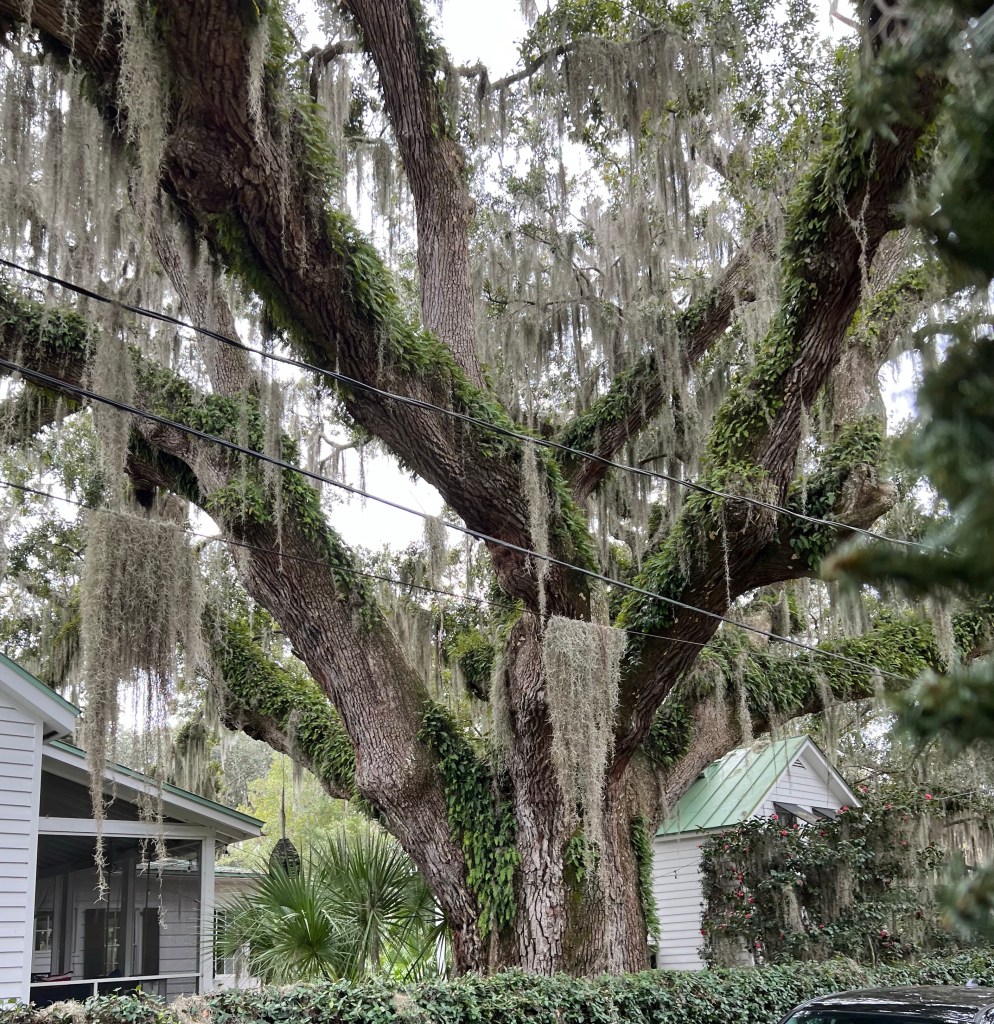
The live oaks, the moss…
.
.
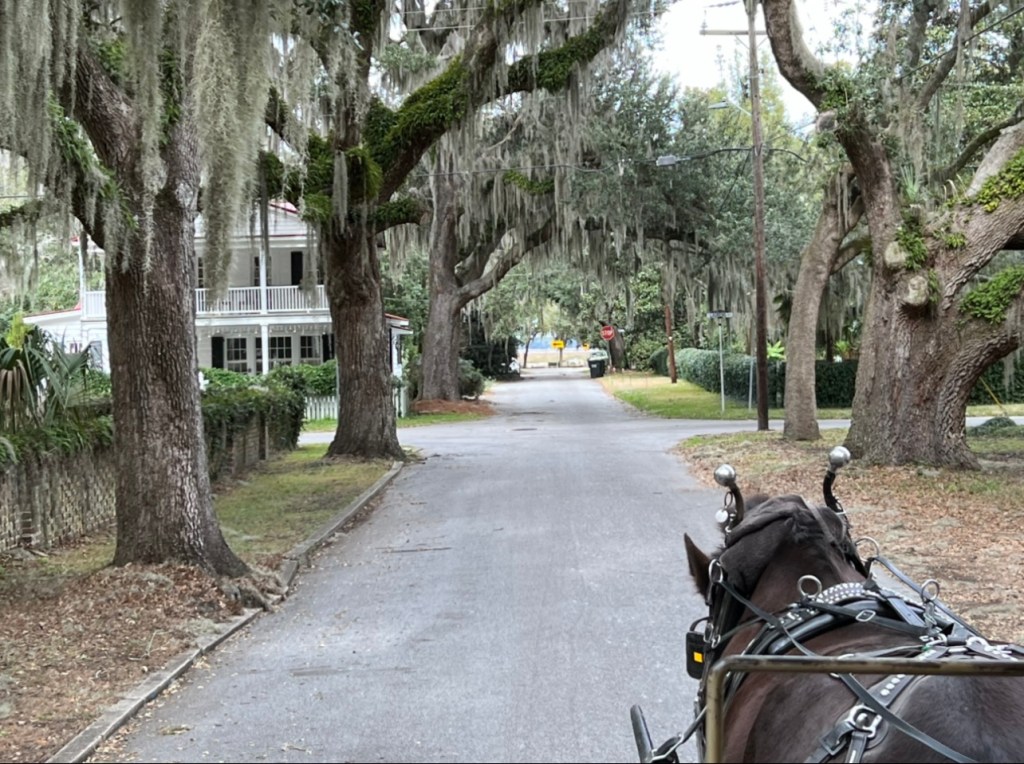
The clomp of Angus’s hooves.
.
.
It was like being transported back 160 years.
.

 River's world.....