

.
Are you ready to be blown away by the physiological changes of space travel?
.

.
Free floating organs is a disturbing enough thought… but I haven’t had a uterus since my hysterectomy in 2015, so what’s my colon kicking back on now?
.
.
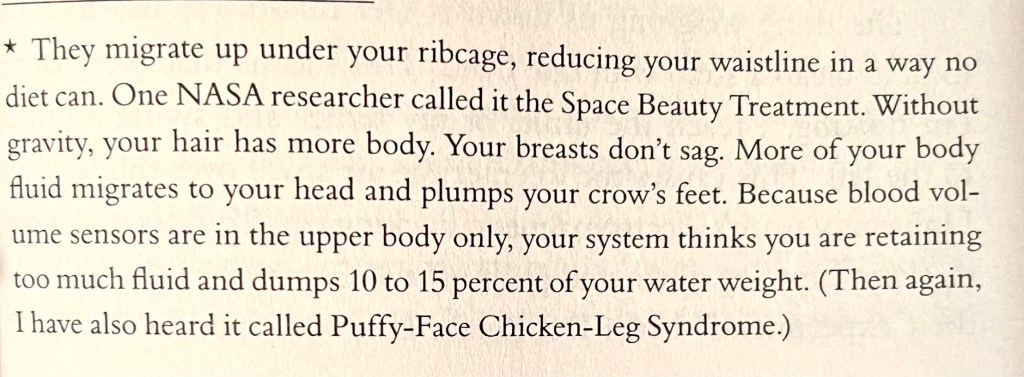
No wrinkles, smaller waist and the ability to jettison my bra? Sign me up.
.
Veins in the leg muscles normally constrict when we stand, to help keep blood from pooling in our feet. After weeks without gravity, this feature stops bothering to work. Compounding the problem is the fact that the body’s blood volume sensors are in the upper half of the body. Where, without gravity, more of the body’s blood tends to pool; the sensors mis-
interpret this as a surplus of blood, and word goes out to cut back on production. Astronauts in space make do with 10 to 15 percent less blood than they have on Earth. The combination of low blood
volume and lazy veins makes astronauts lightheaded when they return to gravity after a long stay in space. It’s called orthostatic hypotension, and it can be embarrassing. Astronauts have been known to faint during postmission press conferences.
.
These are the types of things I never thought about in connection with astronauts. Clearly the human body is not meant to be without gravity.
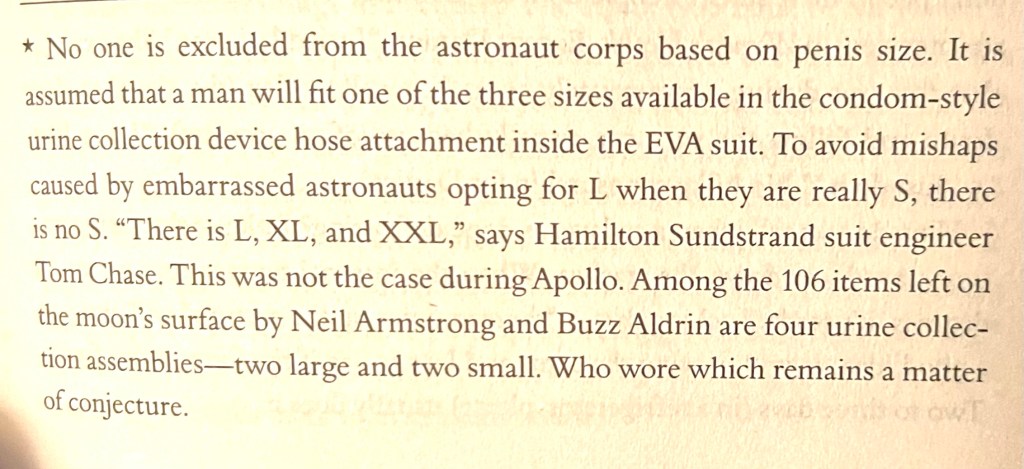
Another thing I never thought about?
.
.
But now I can’t think of anything else.
🤣
.
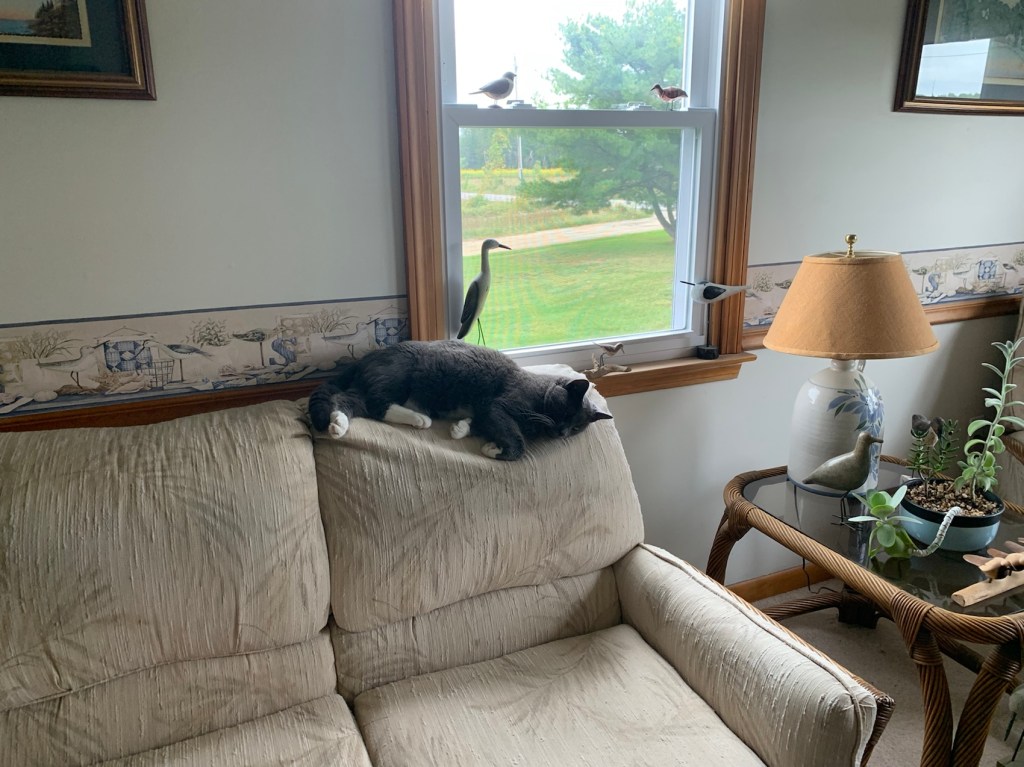
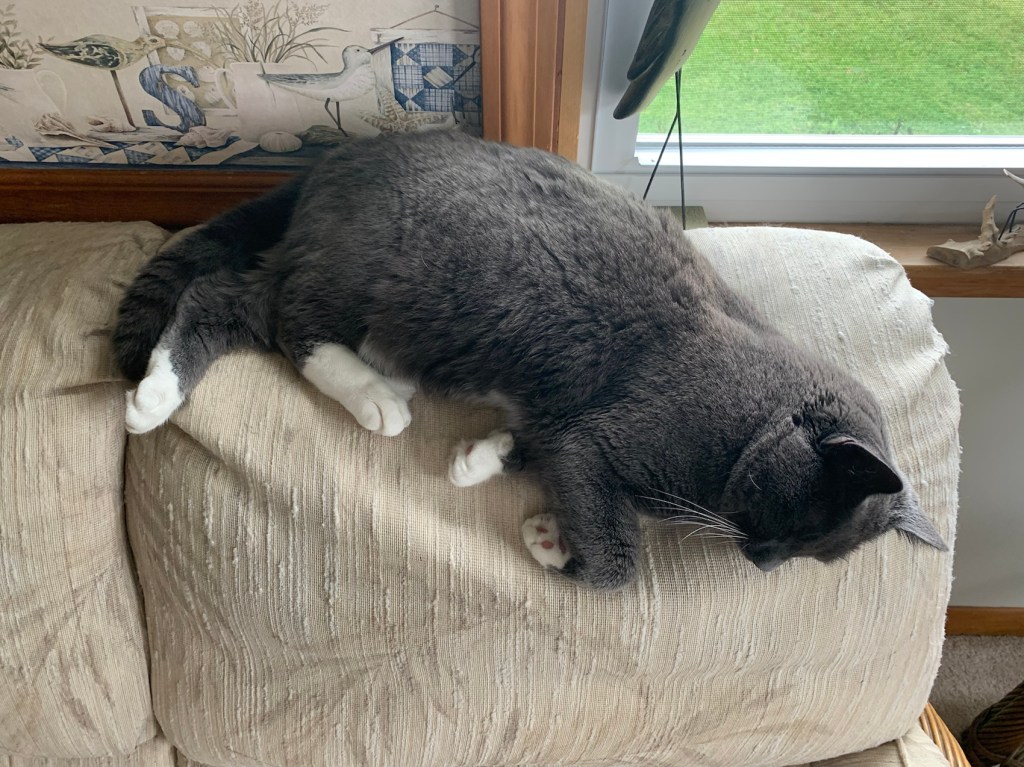
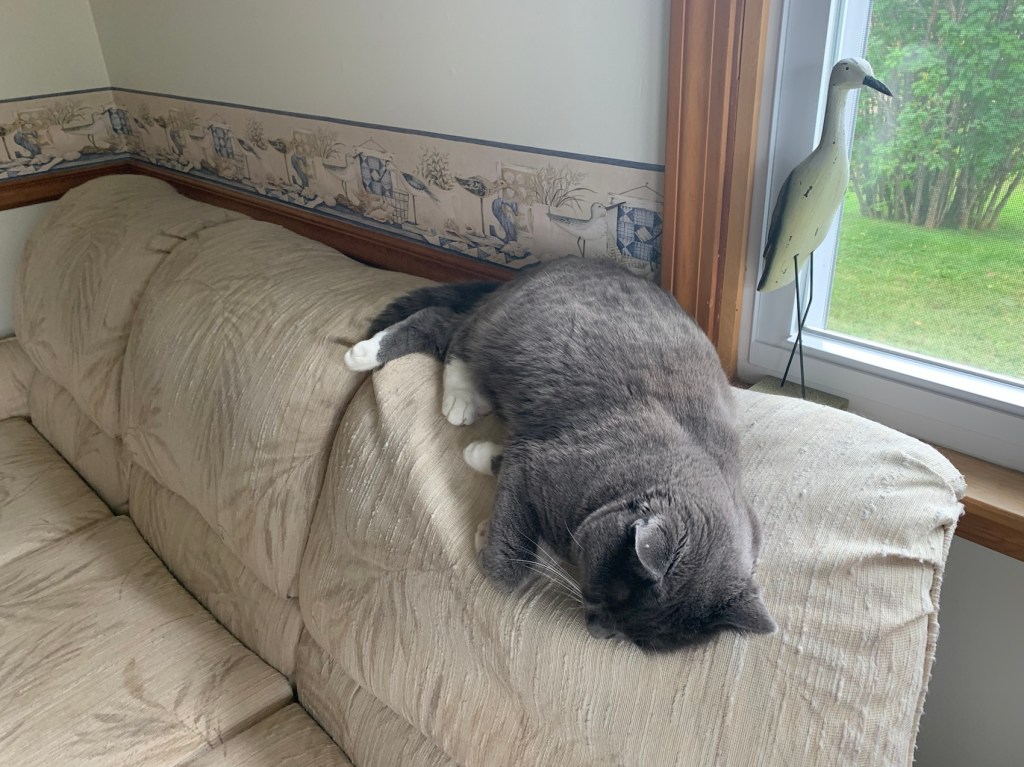








 River's world.....