We were beginning to discover a strange thing about the Historic Triangle area in Williamsburg ,Virginia…. everything is done in triplicate. National Parks, State Parks and tourist venues all cover the same history and it can be a bit confusing when choosing a place to visit. So after finishing the Revolutionary War Museum and the Yorktown re-creation, we headed to the actual Yorktown site and found a National Parks visitors center.
It had a small museum with most of the same information we had just seen… and a broken heating system which rendered the building slightly less cold than the Arctic tundra. Needless to say, we didn’t linger.
There was a ship.

A one fourth size replica of the one that sunk in the neighboring York River.

So we boarded her…
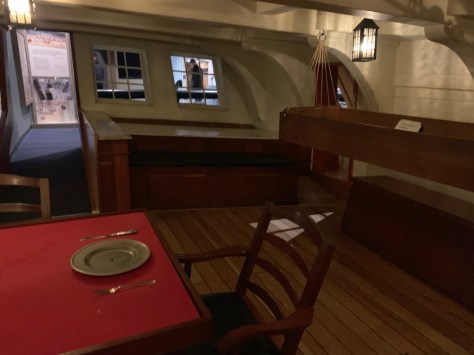
Explored… and then moved on.
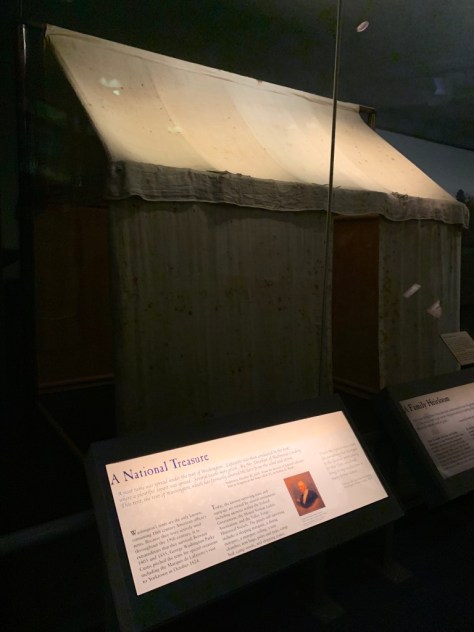
To some tents.
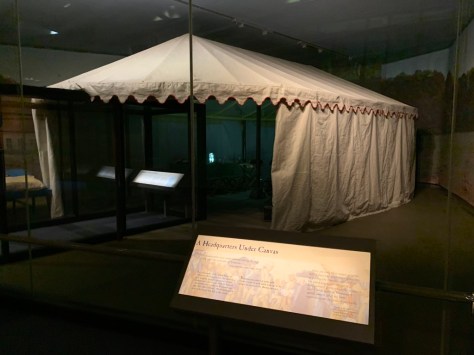
But not just any old tents.

These were literally George Washington’s tents.
Delivered by Philadelphia upholsterer Plunket Fleeson in May 1776, Washington’s original set of campaign tents included a large dining tent — which also served as his headquarters and meeting room — and two additional tents that provided space for the general to sleep and store his baggage.
Though made of rugged worsted wool and linen, several of these tents succumbed to rough treatment during the war, requiring Washington to order replacements. Still more abuse took place after the deaths of the general and his wife, when their stepson — George Washington Parke Custis — began snipping off pieces of the historic fabric to give to guests at his celebrated outdoor parties.
Later, the tents accompanied the Marquis de Lafayette on his triumphant 1824 tour of the nation he helped create. Yet even at historic Fort McHenry, where they were reverently displayed under the original Star-Spangled Banner, the increasing fragile artifacts were handled with a recklessness that’s hard for curators to imagine today.
Greater still was the threat from Union Army pillagers who seized the Arlington estate of Custis’ heir — Mary Custis Lee — and her husband, Confederate Gen. Robert E. Lee, during the Civil War. Only a word of warning from a Lee family slave named Selina Gray persuaded federal officials to seize them for safekeeping, thus saving the irreplaceable relics.
Returned in 1901, the outer elements of both the dining and sleeping tents were quickly sold; they ended up in the collections of the Smithsonian Institution and what is now the American Revolution Center at Valley Forge, Sundberg said. The Park Service acquired the dining tent ceiling and sleeping tent chamber from the Lee family in 1955, putting both on display at what was then the new Yorktown Visitor Center.
And pardon my geekdom, but I think that’s pretty damned cool!
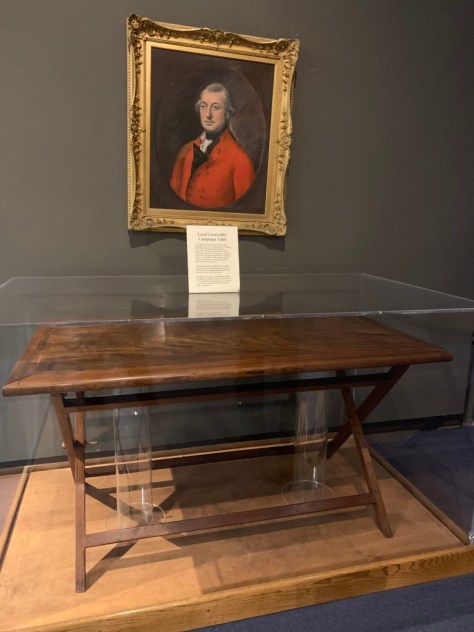
Heck, they even had Lord Cornwallis’s table he used during the war.
But by that time we were freezing and had to go outside to warm up. Wanting to see the actual Yorktown battlefield…. we started the driving tour with directions from the park rangers.
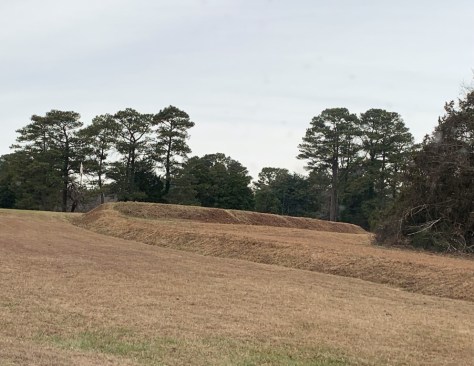
I’m not quite sure what I was expecting.

But what I got were a bunch of humps.
Humps here.
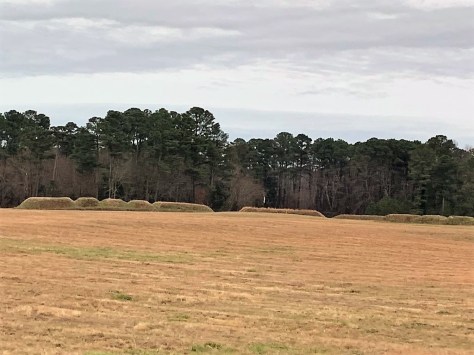
Humps there.
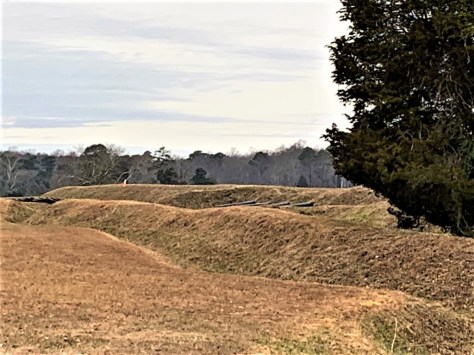
Humps everywhere.
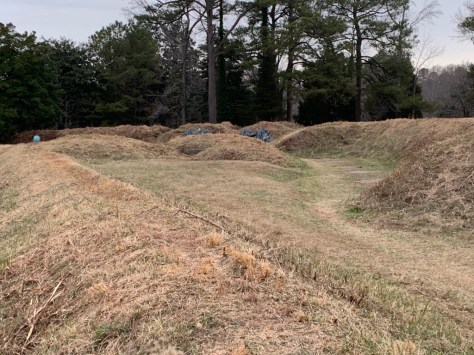
Apparently they’re called redoubts.
Cornwallis had his men construct a main line of defense around Yorktown that consisted of ten small enclosed forts (called redoubts), batteries with artillery and connecting trenches. The Americans and French marched from Williamsburg to Yorktown on September 28 and began digging a trench 800 yards from the British defense line to begin a siege. By October 9, the allies’ trench was finished and their artillery had been moved up. Firing at the British continuously, they had virtually knocked the British guns out of action by October 11. Cornwallis had the additional misfortune to learn at that time that Clinton’s departure from New York had been delayed.
During the night of October 11, the allies began a second trench 400 yards from the British. The next days were spent bringing up artillery and strengthening the new line. The new line could not be completed, however, without capturing British redoubts 9 and 10. On the night of October 14, 400 French stormed redoubt 9 and 400 Americans stormed redoubt 10, capturing them in less than 30 minutes. Nine Americans and 15 French died in this brief and heroic action.
|
And not be outdone, we had humps as well.
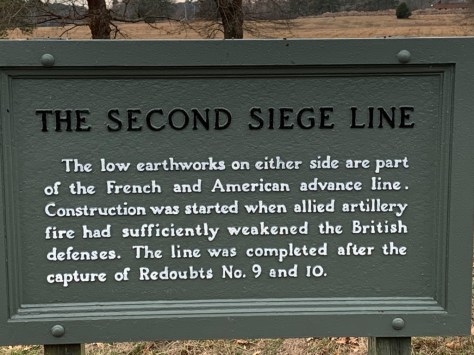
I believe there were 10 of them on the tour, but come on. Once you’ve seen a few humps?
You’ve seen them all.
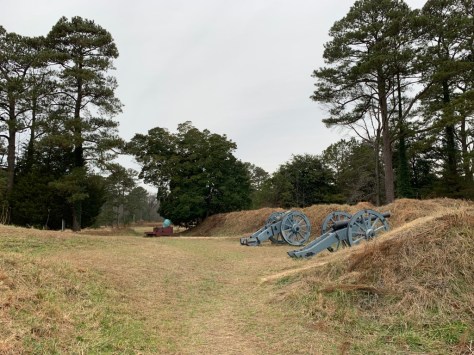
Though this one had cannons, which I photographed from the top of a hump……
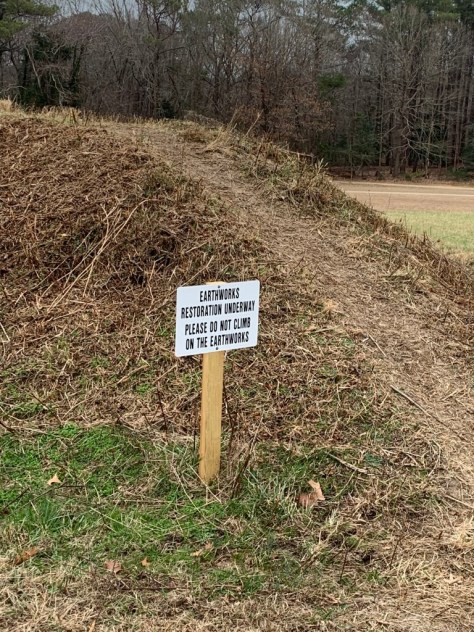
Before realizing you weren’t supposed to climb to the top of the humps.


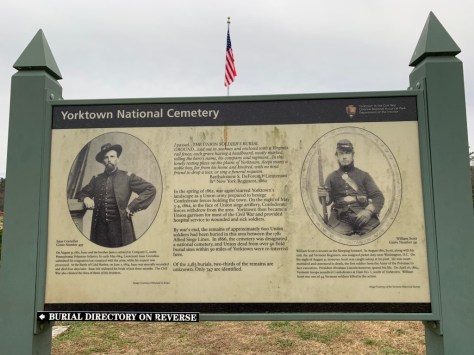










 River's world.....